
|
|
 |
 |
|
|
 |
 |
Ken
Burns has been making documentary films for more than twenty
years. Since the Academy Award nominated Brooklyn Bridge
in 1981, he has gone on to direct and produce some of the most
acclaimed historical documentaries ever made. Stephen Ambrose,
the historian, has said of Ken's films, "More Americans
get their history from Ken Burns than any other source."
Mark
Twain, a two-part, four-hour portrait of one of America's
funniest and most popular writers, was co-produced with Ken's
long-time collaborator Dayton Duncan and aired on PBS in January,
2002. In January, 2001, Jazz,
the third in Ken's trilogy of epic documentaries, which began
with The Civil War and continued with Baseball,
was broadcast on PBS. Co-produced with Lynn Novick, this 19-hour,
ten-part film explored in detail the culture, politics and dreams
that gave birth to jazz music, and follows this most American
of art forms from its origins in blues and ragtime through swing,
bebop and fusion. Jack Newfield of the New York Post
said: "Jazz
is the best American documentary film I have ever seen. Period."
NBC’s Tom Brokaw wrote: "Jazz
is a masterpiece of American television." John Carmen of
The San Francisco Chronicle wrote: "Jazz
informs, astonishes, and entertains. It invites joy, tears,
toe-tapping, pride, and shame and maybe an occasional goose
bump." Jazz
premiered on PBS in January of 2001.
Not
For Ourselves Alone: The Story of Elizabeth Cady Stanton and
Susan B. Anthony, winner of the prestigious Peabody
Award, was co-produced with Paul Barnes and aired on PBS in
November 1999. This dual biography tells the story of the two
women who almost single-handedly created and spearheaded the
women's rights movement in America, changing for the better
the lives of a majority of American citizens. As Bob Herbert
of The New York Times stated: "The latest splendid
effort from...Ken Burns is about two women who barely register
in the consciousness of late-20th century America, but whose
lives were critically important to the freedoms most of us take
for granted." The 2000 Peabody Award citation for the program
reads: "Remarkable...It is an inspiring story of hopes,
dashed dreams and dogged determination...NFOA...brings heart,
soul and considerable poignancy to the stories of these two
leaders of the women's suffrage movement."
Frank
Lloyd Wright, co-directed and produced with Lynn Novick,
premiered at the Sundance Film Festival in January 1998, and
aired on PBS in November of that year. The film, which tells
the riveting story of America's foremost architectural genius
is, according to Janet Maslin of the New York Times,
a "towering two-and-one-half-hour(s)...sure to have a high
profile because of the turbulent, colorful life of the architect
and the austere magnificence of his work, which is thoughtfully
assessed." Kenneth Turan of the Los Angeles Times
said the film "...has the unbeatable combination of exceptional
interview material and beautiful architectural photography put
at the service of an astonishing life." In 1999, it won
the Peabody Award.
In November 1997, Lewis
and Clark: The Journey of the Corps of Discovery
was released to critical acclaim and garnered the second-highest
ratings in PBS history. This four-hour film, co-produced with
Dayton Duncan, chronicles the corps' journey westward on the
first official expedition into uncharted spaces in United States
History. Tony Scott of Weekly Variety called the film
"...a visually stunning account...Striking photography,
superb editing, informative reportage and little-known anecdotes
characterize the latest fine documentary work from Burns,"
and Don Heckman of the Los Angeles Times wrote: "...superb...a
vast landscape that, even on the television screen, underscores
the sense of awe reported by Lewis and Clark in their journals."
Thomas
Jefferson, a three-hour portrait of our third president,
aired in February 1997. This film explores the contradictions
in the man who was revered as the author of the most sacred
document in American history and condemned as a lifelong owner
of slaves. Walter Goodman of the New York Times said:
"...Thomas
Jefferson is a considerable accomplishment, a thoughtful
and affecting portrait of the intellectual who captured the
essence of a new nation's hopes in phrases that continue to
resound around the world." And George Will, in the Washington
Post, said: "...Ken Burns presents a timely corrective,
a visually sumptuous and intellectually judicious appraisal
of Jefferson."
In the fall of 1996, The
West, an eight-part, twelve-hour film series on the
American west was released. The
West is
the story of one of the great crossroads in human history, a
place where, tragically and heroically, the best of us met the
worst of us and nothing was left unchanged. Ken Burns was executive
producer and creative consultant for this highly praised series,
directed by Stephen Ives, which won the 1997 Erik Barnouw Prize.
Ken Burns was the director, producer, co-writer, chief cinematographer,
music director and executive producer of the PBS series Baseball.
Four and a half years in the making and eighteen-hours in length,
this film covered the history of baseball from the 1840's to
the present. Through the extensive use of archival photographs
and newsreel footage, baseball as a mirror of our larger society
was brought to the screen over nine nights during its premiere
in September, 1994. It became one of the most watched series
in PBS history, attracting more than 45 million viewers. David
Bianculli of the The New York Daily News said, "[Baseball]...resonates
like a Mozart symphony." Richard Zoglin of Time
wrote, "Baseball is rich in drama, irresistible
as nostalgia, and…an instructive window into our national
psychology." Baseball received numerous awards,
including an Emmy, the CINE Golden Eagle Award, the Clarion
Award, and the Television Critics Awards for Outstanding Achievement
in Sports and Special Programming.
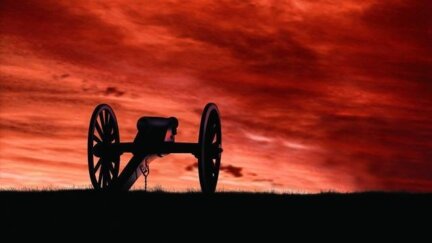
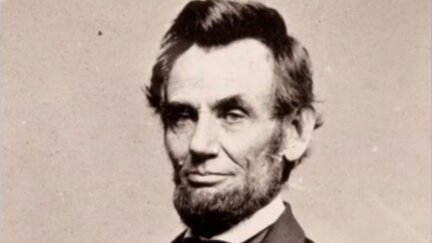
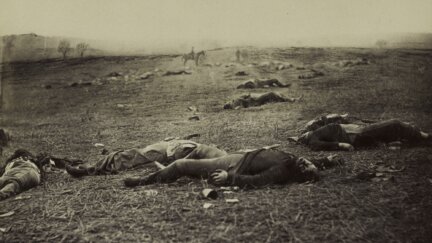
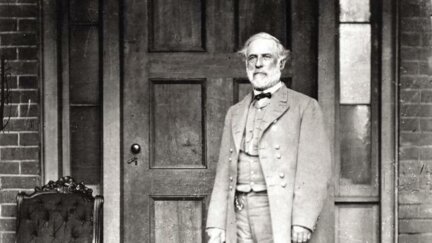
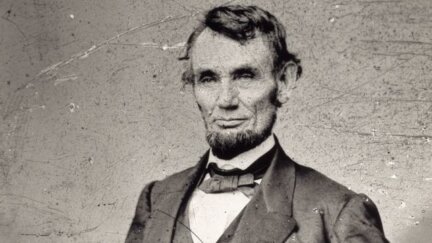
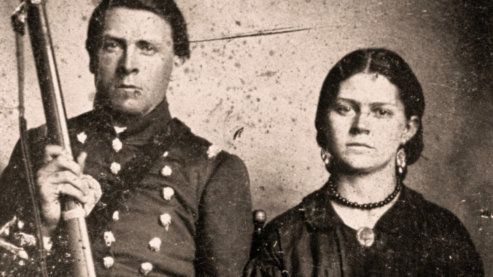
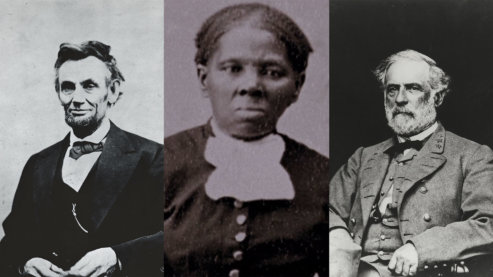
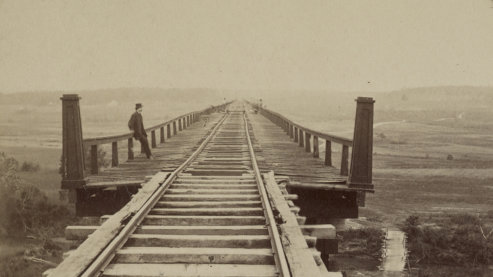
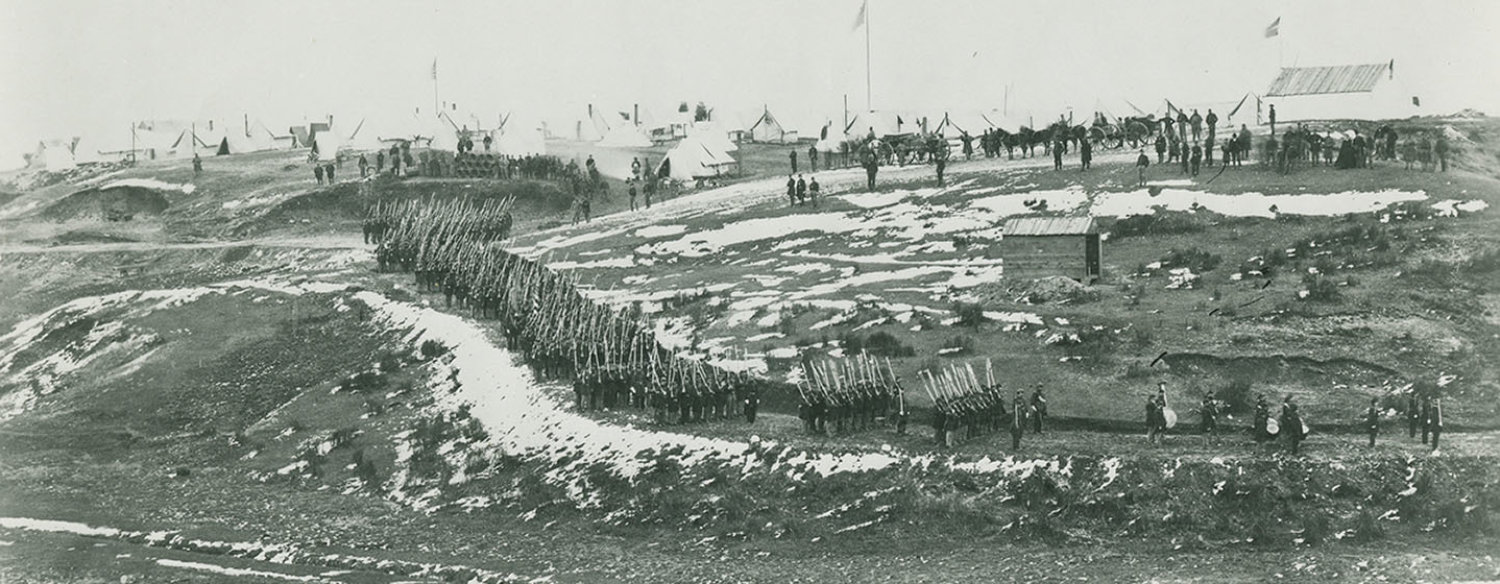
Ken Burns was the director, producer, co-writer, chief cinematographer,
music director and executive producer of the landmark television
series The Civil War. This film was the highest rated
series in the history of PBS and attracted an audience of 40
million during its premiere in September 1990. The New York
Times said that Ken Burns "takes his place as the
most accomplished documentary filmmaker of his generation."
Tom Shales of The Washington Post said, "This
is not just good television, nor even just great television.
This is heroic television." Columnist George Will said,
"If better use has ever been made of television, I have
not seen it and do not expect to see better until Ken Burns
turns his prodigious talents to his next project." The
series has been honored with more than 40 major film and television
awards, including two Emmy Awards, two Grammy Awards, Producer
of the Year Award from the Producer's Guild, People's Choice
Award, Peabody Award, duPont-Columbia Award, D.W. Griffiths
Award, and the $50,000 Lincoln Prize, among dozens of others.
In 1981, Ken Burns produced and directed the Academy Award-nominated
Brooklyn Bridge. He has gone on to make several other
award-winning films, including The Shakers: Hands to Work,
Hearts to God; The Statue of Liberty, also nominated for
an Oscar; Huey Long, the story of the turbulent Southern
dictator, which enjoyed a rare theatrical release; The Congress:
The History and Promise of Representative Government; Thomas
Hart Benton, a portrait of the regionalist artist; and
Empire of the Air: The Men Who Made Radio. Ken Burns
has also produced and directed two films, William Segal
and Vezelay, which explore the question of search and
individual identity through the work and teachings of philosopher
and painter William Segal.
Ken was born in Brooklyn, New York in 1953. He graduated from
Hampshire College in Amherst, Massachusetts in 1975 and went
on to be one of the co-founders of Florentine Films. He resides
in Walpole, New Hampshire.
|
|
|