
Title: The Unconventional Artist and Leader
Grade: 7-12
Subject: Social Studies
Estimated Time of Completion: 3-4 hours
I. Summary
II. Objectives, Standards, Prerequisites
III. Procedures
IV. Classroom Assessment
V. Extensions and Adaptations
VI. About the Author
I. Summary
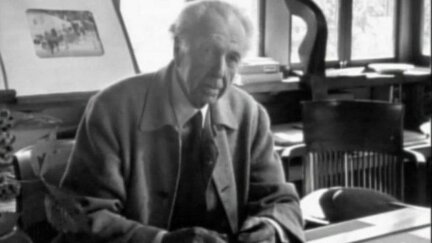
In this lesson students will discuss Frank Lloyd Wrights unconventional personality traits and will explore some common personality characteristics of creative artists and leaders. Theyll conclude by assessing the personality characteristics of a contemporary artist with whom they are familiar.
II. Objectives, Standards, and Prerequisites
Objectives:
- Students will write paragraphs describing typical personality traits of artists and leaders.
- Students will watch clips from the film that illustrate Wrights unconventional personality characteristics, and theyll discuss these characteristics.
- Students will visit Web sites describing personality characteristics of some famous historical artists and leaders.
- Students will discuss whether Wright was immune to the constraints of societal conventions because of his role as a creative artist.
- Students will discuss whether there is a true artist or leader personality.
- Students will choose a present-day artist with whom they are familiar, and theyll write a report describing this persons artistic and leadership traits and whether this person should be bound by societys behavioral conventions.
BEHAVIORAL STUDIES STANDARDS from McREL standards at
http://www.mcrel.org/standards-benchmarks/docs/toc.html
- Understands that group and cultural influences contribute to human development, identity, and behavior
- Understands that interactions among learning, inheritance, and physical development affect human behavior
LIFE SKILLS STANDARDS from McREL standards at
http://www.mcrel.org/standards-benchmarks/docs/toc.html
- Understands and applies the basic principles of presenting an argument
- Understands and applies basic principles of logic and reasoning
SOCIAL STUDIES STANDARDS from the National Council for the Social Studies at http://www.ncss.org/standards/2.0.html
- Social studies programs should include experiences that provide for the study of the ways human beings view themselves in and over time
- Social studies programs should include experiences that provide for the study of individual development and identity
Prerequisites:
- A copy of the Ken Burns PBS documentary, Frank Lloyd Wright, a television, and a VCR
- Computers with Internet access
- Pencil and paper
III. Procedures
- Ask each student to write a paragraph describing what he or she thinks would be the typical personality characteristics of an outstanding artist and of a successful political leader. Are these artist and leader traits the same or different? Can they all be considered positive traits, or would some of them be considered undesirable for the "typical" person who is not an artist or leader? Students may supplement their responses with names of people from history or the present day.
- If there is not enough time to show the entire film, show the following clips from the film and ask students to pay particular attention to Wrights personality traits and behaviors.
-
Tape 2, 11:27modernist/International School, including Wrights disdain for this style
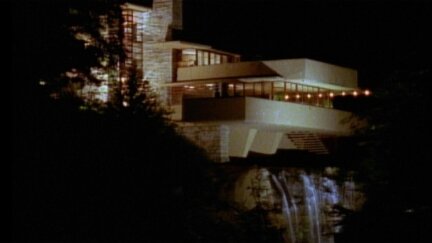
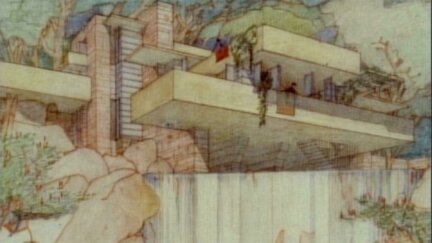
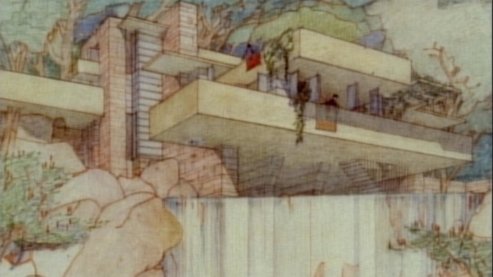
- Tape 2, 17:10Hosana! A Client!; Wright designs plans for the Kaufmann home at the last minute
- Tape 2, 27:56Usonian houses; subordinating your life to the building
- Tape 2, 43:55Taliesen Wests isolation from the outside world
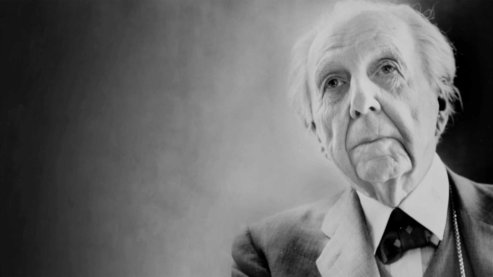
- Tape 2, 48:36Wright in his old age, and his relationship to the media
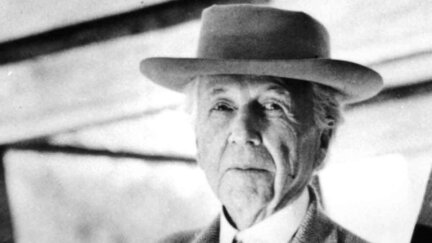
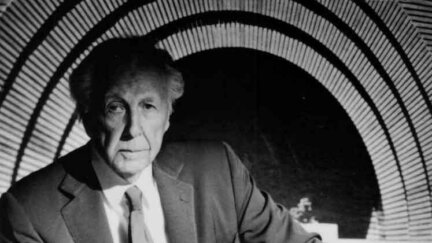
- Remind students that Frank Lloyd Wright was both an artist and a leader. Many artists and leaders in history and the present have displayed unconventional personality traits and behaviors. What were Wrights unconventional characteristics? Ask the class to discuss and write down as many examples as they can think of from both his personal and his professional life. Then have them write the words artist or leader next to each quality to distinguish the two types of characteristics. If they feel that a characteristic demonstrates both the artistic and the leadership tendencies of Wrights personality, they may write both words next to that trait. Then have students place a + or sign next to each characteristic to illustrate whether society would have thought that characteristic was positive or negative. Discuss students lists as a class.
- Have students research some well-known historical figures to find out some basic information on these individuals personality characteristics. Each of these individuals is generally considered to have been highly effective and influential in his field. They can conduct research in the school library and/or visit the respective Web sites. For each person they read about, they should list the unconventional personality characteristics. They should then determine whether each person was an artist, a leader, or both, and should write their response under the list for each individual. Students can do this section in groups to make the best use of computer time. (Note: These links will take you away from PBS Online.)
- Pose the following questions to the class and discuss students responses:
- Do you think that Wrights personality was typical of a creative artist or a genius, which many believe him to have been?
- Was Wright justified in arguing that a creative artist should not be bound by the same conventions as others in society?
- Does knowing about some of Wrights less admirable behaviors and attitudes make you any less inclined to admire his architectural accomplishments? Why or why not?
- Do an artists personality characteristics make a difference when assessing that persons work? Why or why not?
- Do a political leaders personality characteristics make a difference when assessing that persons work? Why or why not?
- If the response to this question is different than for the previous question, why?
- Is there a true artists personality?
- Is there a true leaders personality?
- What other historical figures can you think of who may have had unconventional personality characteristics but who were nevertheless very highly regarded in their professions?
- Ask each student to choose a well-known present-day artistic figure, such as a musician or actor, and write a report on that persons personality characteristics and behaviors. They should respond to the following questions in their report:
- Is this person an artist, a leader, or both?
- Does this person exhibit any unconventional behaviors? If so, what are they?
- What traits does this person have in common with Frank Lloyd Wright?
- Does this person get away with behaviors that other, regular, people couldnt get away with? Do you think this is justified?
- Do you think that different people should be held accountable to different societal standards of behavior and ethics? Why or why not?
V. Classroom Assessment
Since every class is different, every teacher will assess students in slightly different ways. However, areas of consideration should include the following:
- Participating in all classroom discussions.
- Writing a thoughtful and descriptive introductory paragraph.
- Following directions in creating their lists of personality traits for Wright and the historical figures they locate on the Internet.
- Writing clearly-constructed reports on their chosen artists, including specific examples of these artists behaviors.
- Including a clearly-written comparison between their chosen artists and Wright.
V. Extensions and Adaptations
- Engage the class in a more thorough discussion of whether its important to consider personality traits when assessing an artists or a leaders competencies. Use examples from current events, including well-publicized accounts of artists and politicians behavior.
- Have students perform more thorough research on one of the historical figures theyve read about on the Internet, and have them use the Internet or the library to locate reviews of or commentary on these artists or leaders works. Ask them to determine whether these commentaries contain any statements about the individuals personalities.
VI. About the Author
Betsy Hedberg is a teacher and freelance curriculum writer who has published lesson plans, student activities, and teachers guides in a variety of subjects. She received her Secondary Teaching Credential in Social Studies from Loyola Marymount University and her Master of Arts in Geography from UCLA. In addition to curriculum writing, she presents seminars and training sessions to help teachers incorporate the Internet and other technologies into their classrooms. In 1997, she founded Curriculum Adventures, a curriculum development, publishing, and consulting business.
|