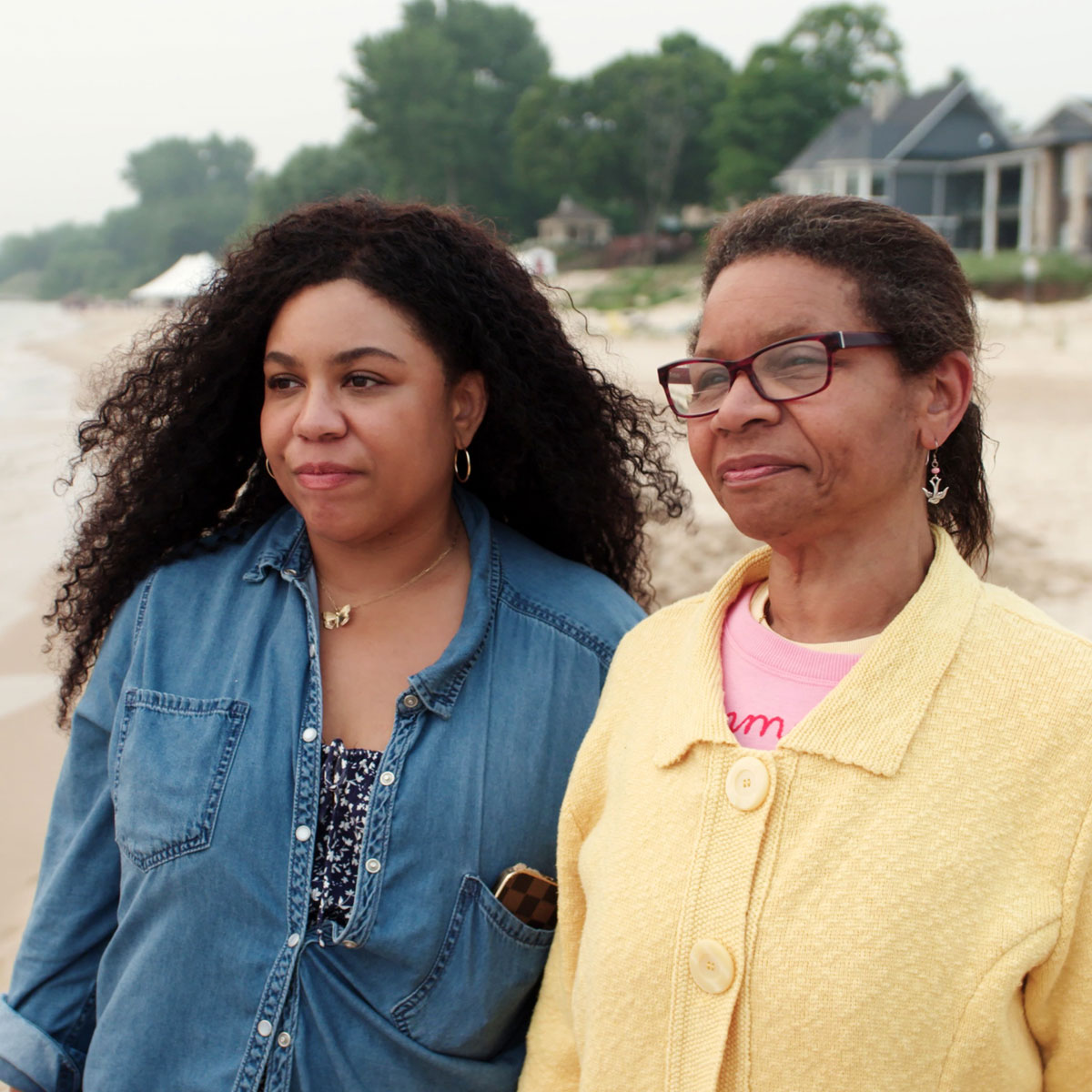
The Filmmakers
|
From filmmaker Gonzalo Arijón:
…This film tells the story of what happened to a…group of young people who…came from two Catholic colleges in the wealthy part of Montevideo…. Many of these young men were quite spoilt; they had had very good educations, had done a lot of sports and also shared very strong Catholic religious values that they had been taught in school.
…How does this very homogeneous group act in a dramatic situation such as the one they had to face? How did they manage to work together? Don’t forget they’re rugby players, and this is a game that requires a lot of group sacrifice. How did they negotiate all the obstacles that they were faced with—one after the other—in a situation that only got worse and worse as time passed?
Those of us watching the film probably wouldn’t be able to cope with a tenth of what happened to them. So how was this very particular group able to overcome all the difficulties?
There were no confrontations…or internal wars between them. No one was murdered. They managed to get out, as a group, with a system of rotating leadership, with no chief or leader being declared and no worker ants. The energy circulated. Sometimes one of them had a bit more energy than the rest, and everybody was nourished by this one’s energy. Then it circulated to someone else.
…After the avalanche, which is when the group really becomes totally united, Survivor Fito Strauch says, “It was like a 19-body organism. There was no room for anyone to do anything that was against the general interest.”
That’s the first message I want to put across: Man is capable of doing things this way, which goes against the general idea that Man is essentially individualistic and will necessarily try to get rid of the weakest members to get ahead. This story proves the contrary—that everyone who possibly could, got out of there alive. Even today, the group is very united and needs to remain close; this is the value that seems to be the most important to point out.
The second value I want to put across is that with courage, intelligence and sangfroid, Man can face up to the most incredibly adverse situations and succeed in negotiating and overcoming them, which is both individually and collectively a great moral lesson.
And third comes the story of the way the Survivors have passed on their experience to their children. This comes in a scene towards the end of the film, where they are all standing around the collective grave on the mountain—Juan Pedro Nicola (whose parents died in the crash)…traveled there with his own son, and is there with the Survivors who…no doubt had to feed on the bodies of his parents in order to survive. And he accepts this with affection and fraternal feelings as they all hold arms around the grave.
…There are the Survivors, looking at the grave or memorial to their friends, facing their own children who are now the same age as their friends were when they died—and there’s this transmission from generation to generation of the strength of this experience. And as one of their young children puts it: “They lent you their muscles so you could get out alive.” In fact, it’s a story about love, as Survivor Fito Strauch explains to his daughter, “Sixteen of us got out alive and now, if we count all the children and even grandchildren, there are over a hundred of us.”
His three favorite films:
Blow Up by Michelangelo Antonioni
Barry Lyndon by Stanley Kubrick
La Nuit Américaine by François Truffaut
His advice for aspiring filmmakers:
The world is incredibly exciting, and it’s a great deal easier to make a film today. First of all, technically. Financially, there are many more sources of funding to produce documentary films—at least for television.
People talk about a crisis—the world’s in a crisis—but not documentary filmmaking; it’s never been more flourishing. So it’s a great time to go out with a camera and take a look at what’s happening in the world.
So, my advice is: Go out there. Don’t be scared. It’s not more dangerous out there than in your own garden. There’s a huge demand for programs for all the channels that exist and that keep on being created. It’s a wonderful time if you’re 20 years old and you want to be a filmmaker; get stuck there! Believe in yourself…take risks. Once you’ve taken the first step, you’ll find out that the second is a lot easier.
His most inspirational food for making independent films:
You need to eat chili con carne, paellas, Brazilian feijoada and plenty of sea food. And wine; wine is very important. You need to eat good dishes with plenty of good wine.
Filmmaker Bios
Gonzalo Arijón
Director
A childhood friend of many of the young men who survived the crash of flight 571, Gonzalo Arijón was born in Montevideo, Uruguay in 1956. A student of film and anthropology, Arijón moved to France in 1979, where he now lives.
During the past two decades, the award-winning filmmaker has made numerous documentaries including Lulu’s Brazil: Managing a Dream; Far, Very Far From Rome…; The “Dark Side” of Milosevic; Carl Lewis/Mike Powell 43’ and 52’; Goodbye “Coquelicots;” Rio de Janeiro: a “Vertical War” and For These Eyes.
Marc Silvera
Producer
After a varied career in the audiovisual sector, Marc Silvera founded Ethan Productions in July 2000. The company has produced several documentaries including the series Sporting Duels for Arte/TV5; Tony Blair, directed by Deborah Ford; and Maracana, directed by Amar Ahrab for Ethan Productions/France 5.