
|
|
|
|
|
  |
|
|
|
|
|
 |
|
|
Hot House
By Loren Schoenberg, Conductor and Saxophonist
Written by: Tadd Dameron
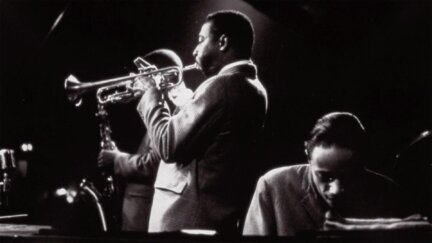
Performed by: Dizzy Gillespie and His All Star Quintet: Dizzy Gillespie, trumpet; Charlie Parker, alto saxophone; Al Haig, piano; Curly Russell, bass; Sid Catlett, drums
Recorded: May 11, 1945
Charlie Parker and Dizzy Gillespie made a series of recordings in early 1945 that rank with the Armstrong Hot Fives in terms of their lasting influence. As the result of a recording ban that began in August 1942, much of the new music being played in and around 52nd Street was not commercially available. After the dispute was settled a couple of years later, the jazz community was stunned by the new sounds. Though the reaction against it has subsequently been exaggerated, there is no doubt that there was quite a bit of controversy over what became known, reductively, as "bop." After all, "bebop" was just an onomatopoetic syllable representing the notes in a Dizzy Gillespie riff. We don't refer to Beethoven's music as "ta-ta-ta-dum" music, do we?
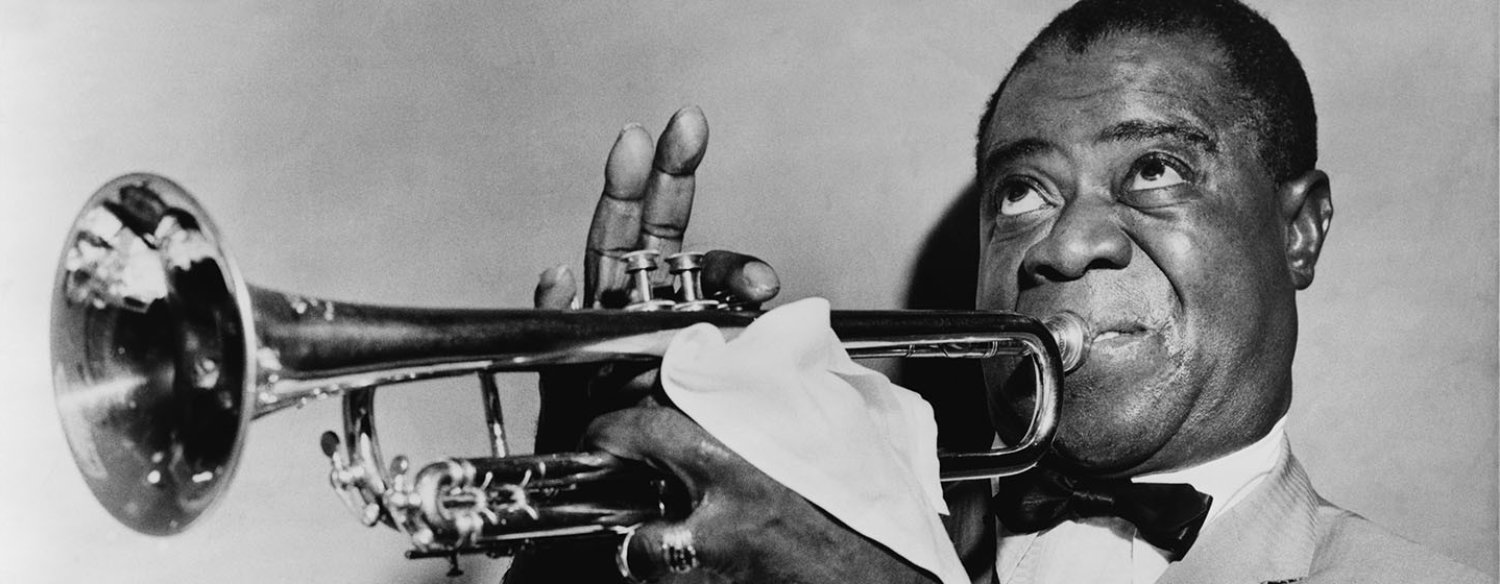
Rhythm, as Martin Williams noted in his classic book The Jazz Tradition, may well be the essential element in defining what makes jazz jazz. While the melodies and harmonies of Dizzy Gillespie and Charlie Parker's music were challenging to those hearing it for the first time, it was their rhythm sense that truly set their music apart. Louis Armstrong and Lester Young had been the primary rhythmic innovators up through the mid-1940s, and although their styles remain as vital today as they were then, there is no doubt that recordings such as Hot House showcased a new way of fashioning jazz melodies and solos.
At the distance of over half a century, it's hard to understand what was so radically different about Parker and Gillespie's music, since it has become so integrated into our contemporary musical diet. One of the first challenges it made was on the rhythm section. The drums became more active, creating a dialogue with the bass and piano in addition to the soloist. In "bop's" early days, many mistook the surface novelty of the music (in this case sunglasses, onomatopoetic titles and hip talk) for its essence, just as they at the advent of the Original Dixieland Jazz Band 30 years earlier. That ended soon enough. Parker and Gillespie reveled in complex melodies frequently played at fast tempos, and the great majority of jazz played today is still influenced profoundly by what they did. Hot House is taken at a nice medium clip, and is a superior composition by the composer/pianist Tadd Dameron, who was one of the best melodists of the era. Based on the harmonies of Cole Porter's What Is This Thing Called Love, this piece breaks away from both the original and most jazz compositions by having an ABCA form.
|
|
|
|
|
|
|