
|
Count Basie
Powered by Oxford University Press.
Bill; William (1904 -1984) Bandleader and pianist
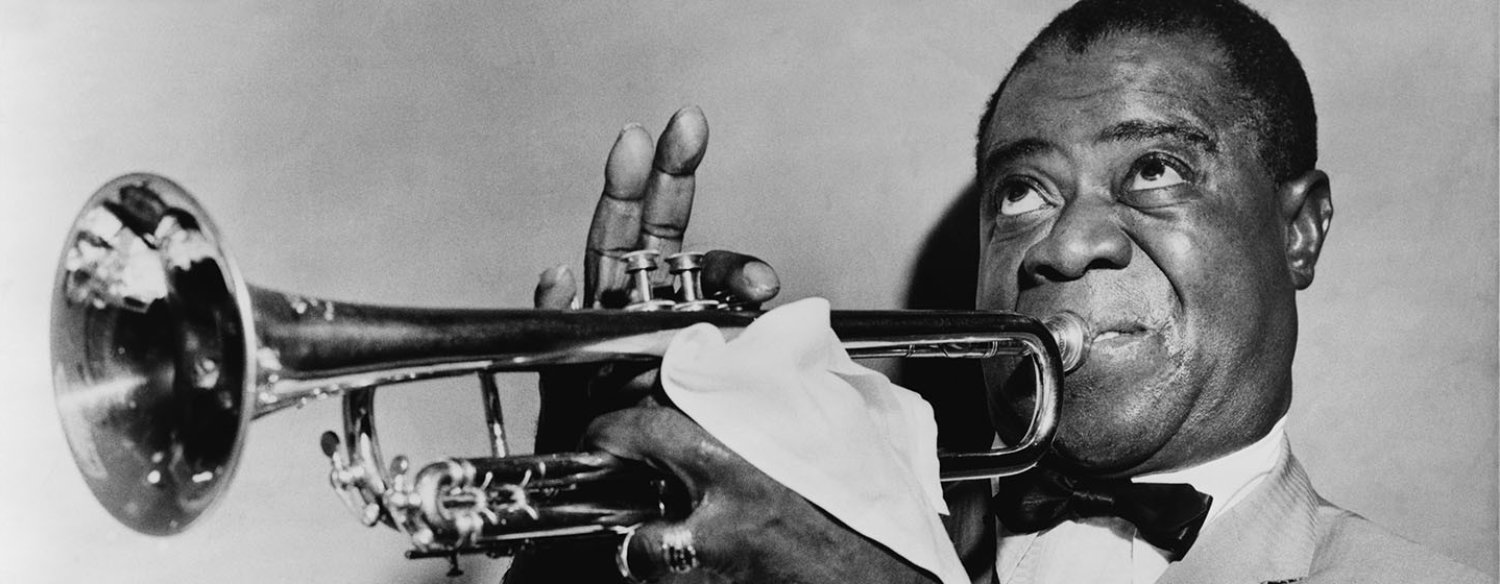
 Image courtesy of Frank Driggs Collection
|
Count Basie was a leading figure of the swing era in jazz and, alongside Duke Ellington, an outstanding representative of big band style.
After studying piano with his mother, as a young man he went to New York, where he met James P. Johnson, Fats Waller (with whom he studied informally), another pianist of the Harlem stride school. Before he was 20 years old, he toured extensively on the Keith and TOBA vaudeville circuits as a solo pianist, accompanist, and music director for blues singers, dancers, and comedians. This provided an early training that was to prove significant in his later career. Stranded in Kansas City in 1927 while accompanying a touring group, he remained there, playing in silent-film theaters. In July 1928, he joined Walter Page's Blue Devils which, in addition to Page, included Jimmy Rushing; both later figured prominently in Basie's own band. Basie left the Blue Devils early in 1929 to play with two lesser-known bands in the area. Later that year, he joined Bennie Moten's Kansas City Orchestra, as did the other key members of the Blue Devils shortly after.
 |
The NPR 100: "One O'Clock Jump"
Tom Vitale has the story behind Count Basie's signature tune, a selection from National Public Radio's list of the 100 most important American musical works of the 20th Century.
(Courtesy NPRJazz.org) |
When Moten died suddenly in 1935, the band continued under Buster Moten, but Basie left soon thereafter. The same year, with Buster Smith and several other former members of Moten's orchestra, Basie organized a new, smaller group of nine musicians, which included Jo Jones and later Lester Young, and as the Barons of Rhythm began a long engagement at the Reno Club in Kansas City. The group's radio broadcasts in 1936 led to contracts with a national booking agency and the Decca Record Company. The contract expanded and within a year the Count Basie Orchestra, as it had become known, was one of the leading big bands of the swing era. By the end of the 1930s, the band had
acquired international fame with such pieces as One o'clock Jump (1937), Jumpin' at the Woodside (1938), and Taxi War Dance (1939).
 | Sent for You Yesterday and Here You Come Today Recorded February 16, 1938 (Courtesy Verve Music Group) |
In 1950, financial considerations forced Basie to disband, and for the next two years he led a six- to nine-piece group; among its sidemen were Clark Terry, Buddy
DeFranco, Serge Chaloff, and Buddy Rich. After reorganizing a big band in 1952, he undertook a long series of tours and recording sessions that eventually established him as an elder statesman of jazz, and his band was established as a permanent jazz institution and training ground for young musicians. He made the first of
many tours of Europe in 1954, visited Japan in 1963, and issued a large number of recordings both under his own name and under the leadership of various singers,
most notably Frank Sinatra. In the mid-1970s, a serious illness hampered his career, and in the 1980s he sometimes had to perform from a wheelchair. Basie devoted
time increasingly to his autobiography. After Basie's death, the band continued under the direction of Thad Jones (1985-6) and Frank Foster (from 1986). As the
Countsmen, a number of his former sidemen have also reconvened occasionally for concerts and tours.
 |
Harry Sweets Edison, musician
Memories of playing in Basie's band
(Audio Excerpt from JAZZ A Film by Ken Burns) |
 |
NPR's Basic Jazz Record Library: Count Basie
NPR's Murray Horwitz and jazz critic and poet AB Spellman recommend The Essential Count Basie Volumes I & II (Columbia).
(Courtesy NPRJazz.org) |
The New Grove Dictionary of Jazz, Oxford University Press. All rights reserved. For personal, non-commercial use only. Copying or other reproduction is prohibited.
|