
|
Harry "Sweets" Edison
Powered by Oxford University Press.
Sweets (1915-1999) Trumpeter
 |
NPR's Jazz Profiles: Harry "Sweets" Edison
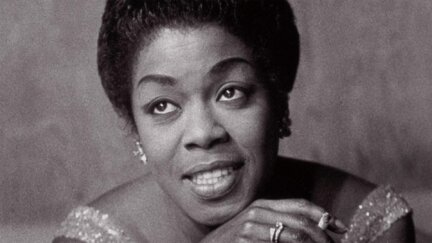
Host Nancy Wilson presents this profile of the former Count Basie Orchestra trumpeter, an accomplished composer and arranger with a signature spare style and subtly muted tone.
(Courtesy NPRJazz.org) |
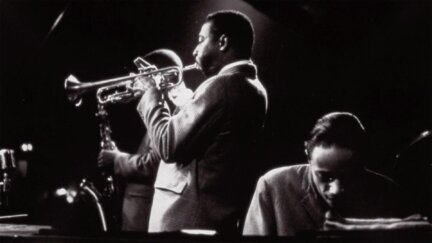
 Image courtesy of Frank Driggs Collection
|
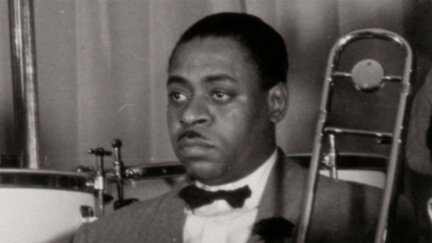
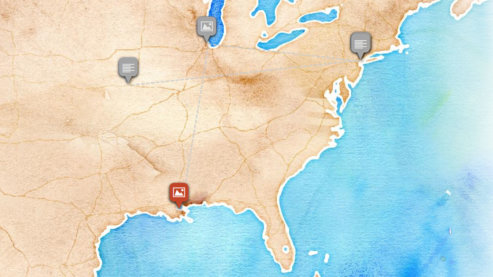
Harry Edison spent his early childhood in Kentucky, where he was introduced to music by an uncle. At the age of 12 he moved back to Columbus and he began to play trumpet in local bands. In 1933 he became a member of the Jeter Pillars Orchestra in Cleveland, and after a year moved with that group to St. Louis, where he spent the next two years. In 1937 he joined Lucky Millinder in New York, and six months later moved to the Count Basie Orchestra. Edison became an important soloist with Basie, and occasionally composed and wrote arrangements for the group.
 |
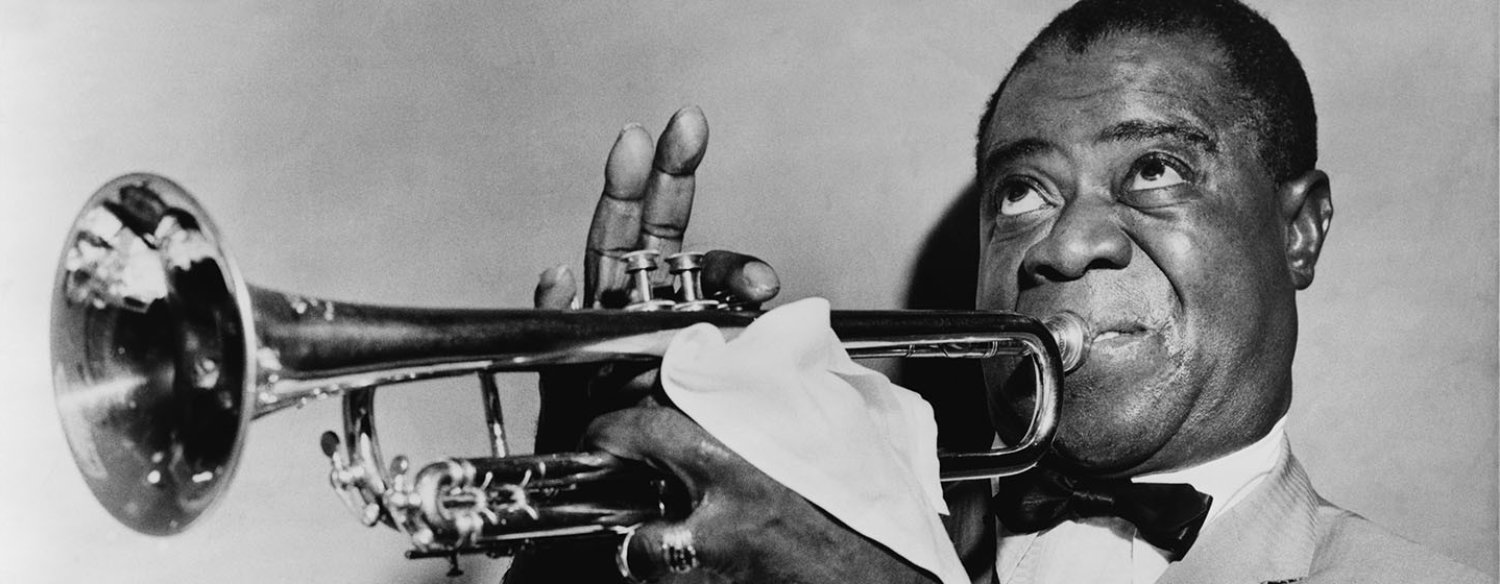
Louis Armstrong Centennial Radio Project: Harry "Sweets" Edison
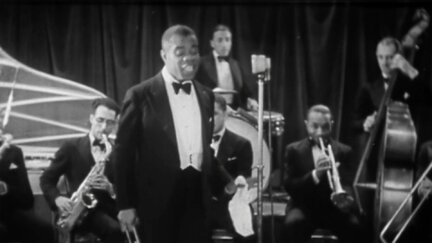
Jazz critic Stanley Crouch profiles this veteran horn player and hears Edison's reverence for Satchmo.
(Courtesy NPRJazz.org) |
In 1944, he played a prominent role in perhaps the finest jazz film ever made, Jammin' the Blues. Basie's orchestra disbanded temporarily in 1950, and thereafter Edison pursued a varied career, leading his own groups, traveling with Jazz at the Philharmonic, and working as a freelance with other orchestras. In the early 1950s he settled on the West Coast, where he became highly sought-after as a studio musician. He regularly led his own group in Los Angeles in the 1960s and rejoined Count Basie on several occasions. In the 1970s and early 1980s he traveled extensively, often with Eddie "Lockjaw" Davis. Edison's playing reflects the directness and full tone of his original inspiration, Louis Armstrong. A highly original soloist, he prefers the middle register, and has evolved a personal, spare, and often humorous style. He is noted for his perfect sense of timing and his manner of repeating a single note or phrase over several measures.
The New Grove Dictionary of Jazz, Oxford University Press. All rights reserved. For personal, non-commercial use only. Copying or other reproduction is prohibited.
|