
|
Dexter Gordon
Powered by Oxford University Press.
Keith (1923- ) Tenor saxophonist
 |
Joe Lovano, musician
On the power of seeing Dexter Gordon play
(Audio Excerpt from JAZZ A Film by Ken Burns) |
 Image courtesy of Bruce Polonsky
|
Dexter Gordon began to play clarinet at the age of 13 and studied music with Lloyd Reese, during which time he played in a rehearsal
band with other pupils of Reese, including Charles Mingus and Buddy Collette. In 1940, he began a long engagement with Lionel Hampton's touring band, with which
he took part in a recording session in 1942. After leaving Hampton in 1943, Gordon made his first lengthy solo recordings as the leader of a quintet session with Nat
"King" Cole as a sideman. He worked in the Los Angeles area with Lee Young, Jesse Price, and, for a few weeks in April and May 1944, the Fletcher Henderson
Orchestra (some of his performances with Henderson survive in recordings made from broadcasts).
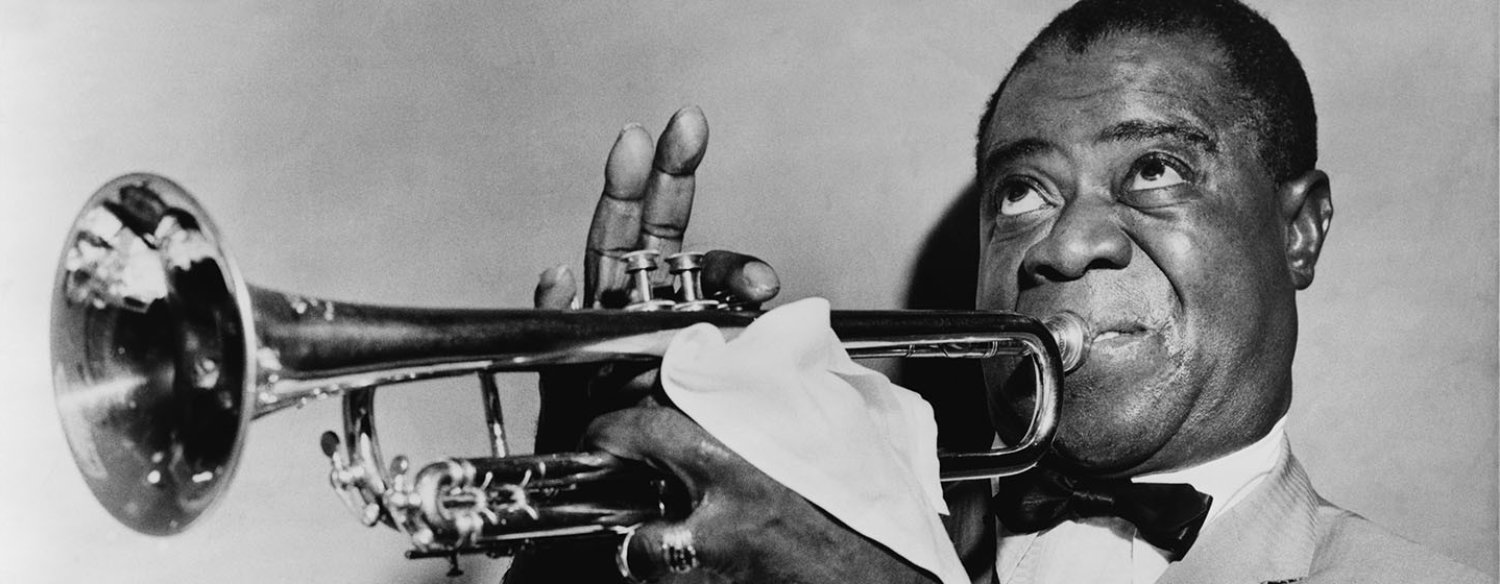
After playing briefly with Louis Armstrong, he moved
to New York in December 1944 to appear in Billy Eckstine's orchestra. His recordings with Eckstine, Dizzy Gillespie, Fats Navarro, and others soon made him a
leading figure in the bop movement. Gordon returned to California in summer 1946 and played with the drummer Cee Pee Johnson in Honolulu for two months, and then
for the remainder of the decade he continued to work alternately on the East and West coasts. He appeared with Tadd Dameron in New York early in 1949, and
joined fellow tenor saxophonist Wardell Gray for a popular and sensational series of "saxophone duels" between 1947 and 1952. Difficulties associated with drug
addiction curtailed his activities during the 1950s, but these problems had been resolved by 1960 when he served as composer, musician, and actor in the West
Coast production of Jack Gelber's play The Connection. Thereafter, he toured and recorded principally as a leader, moving back to New York early in 1962.
In September 1962, Gordon performed in London and then made a tour of Europe that was so successful he remained there for the next 15 years, taking
infrequent trips to the USA. Based in Copenhagen, he appeared at all the major jazz festivals, taught, and recorded prolifically; he also toured Japan in autumn 1975.
Encouraged by a visit to New York in 1976, however, he returned permanently to the USA the following year. He was elected to the Jazz Hall of Fame in 1980 and
named "musician of the year" by readers of Down Beat magazine in 1978 and 1980. As the star of the feature film Round Midnight (1986), Gordon was the
subject of renewed interest in the late 1980s. He received a nomination for an Academy Award for his role.
Gordon was a major force in the emergence of modern tenor saxophone styles. His main influence was Lester Young, but he also displays an extroverted intensity
reminiscent of Herschel Evans and Illinois Jacquet. His rich, vibrant sound, harmonic awareness, behind-the-beat phrasing, and predilection for C humorous
quotations combine to create a unique style. Gordon's music strongly affected the two leading tenor saxophonists of the succeeding generation, Sonny Rollins and
John Coltrane. Gordon was later influenced in turn by Coltrane, and even, following Coltrane's example, adopted the soprano saxophone during the late 1970s. A
volume of transcriptions of his performances has been published by L. Niehaus (Dexter Gordon Jazz Saxophone Solos: Transcriptions from the Original Recordings, Hollywood, CA, 1979).
The New Grove Dictionary of Jazz, Oxford University Press. All rights reserved. For personal, non-commercial use only. Copying or other reproduction is prohibited.
|