
|
|
|
|
|
  |
|
|
|
|
|
 |
|
|
Powered by Grove’s Dictionaries, Inc.
Cotton Club. 644 Lenox Avenue, at West 142nd Street (to 16 February 1936); 200 West 48th Street (September 1936 - 10 June 1940). New York.
 |
The Mooche by Duke Ellington
Recorded October 1, 1928 (Courtesy Columbia/Legacy) |
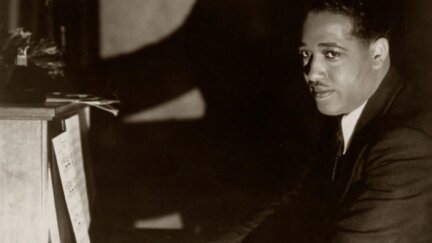
 Duke Ellington Image courtesy of Frank Driggs Collection
|
The venue on Lenox Avenue was first opened in 1920 as the Club Deluxe, under the ownership of the former heavyweight boxing champion Jack Johnson. Owney Madden took it over and in 1922 changed its name to the Cotton Club; the club's manager in the early 1920s was Don Healy and the stage manager was Herman Stark. After race riots in Harlem in 1935, the area was considered unsafe for Whites (who formed the Cotton Club's clientele and the club was forced to close (16 February 1936). It reopened in September 1936 downtown on West 48th Street, in premises that had formerly housed the Palais Royal and Connie's Inn (1933-6); the Cotton Club continued to operate at this location until June 1940.
 |
NPR's Crossroads: The Cotton Club
Andy Lancet reports on the history of Harlem's Cotton Club, speaking with several former dancers at the club and with David Levering-Lewis, author of the book When Harlem was in Vogue.
(Courtesy NPRJazz.org) |
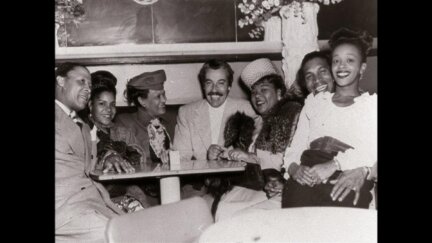
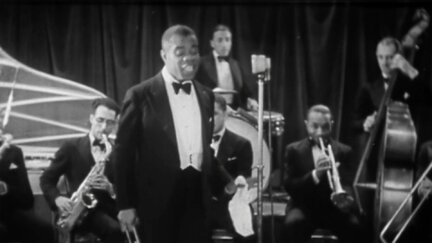
The Cotton Club was the most famous of the city's nightclubs in the 1920s and 1930s, attracting an audience that often included the cream of New York society. Its glittering revues provided a medium for performances by the most prominent jazz musicians of the day, and the club's activities were brought to a wide audience by frequent broadcasts. The house band when the venue first opened was Andy Preer's Cotton Club Syncopators; after Preer's death in 1927, Duke Ellington's orchestra was engaged and its residency became the most celebrated in the club's history, lasting until 1931. Cab Calloway and his Missourians, who had first appeared with great success in 1931, then took over, and Calloway's time as the Cotton Club's bandleader (which extended to 1934, when Jimmie Lunceford succeeded him) was to make his reputation. Both Wellington and Calloway returned after the club moved downtown.
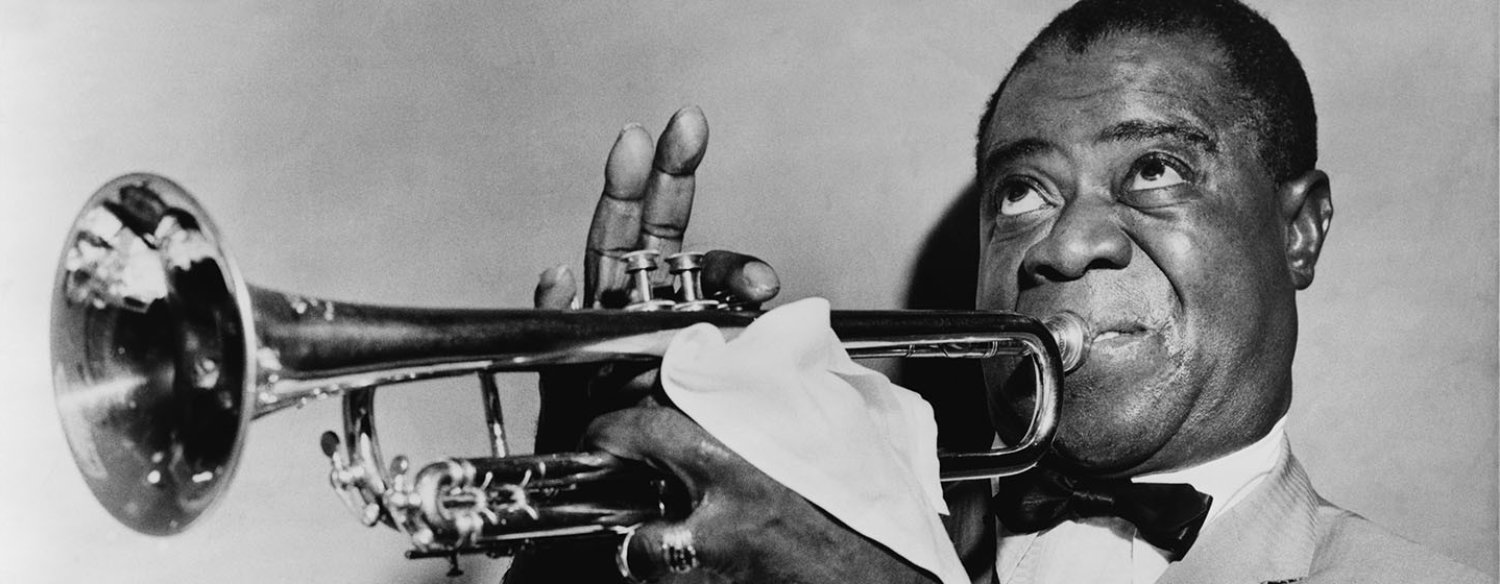
Most of the principal jazz musicians, singers, and dancers of the period appeared at the Cotton Club at some stage, including Louis Armstrong, Ethel Waters, Ivie Anderson, Bill Robinson, and the Nicholas Brothers. The heyday of the club's existence was re-created in Francis Ford Coppola's film The Cotton Club (1984). (J. Haskins: The Cotton Club, New York, 1977)
The New Grove Dictionary of Jazz, Macmillan Publishers Ltd. All rights reserved. For personal, non-commercial use only. Copying or other reproduction is prohibited.

|
|
|
|
|
|
|