
|
|

 Peace Medal with Thomas Jefferson
|
|
|
|
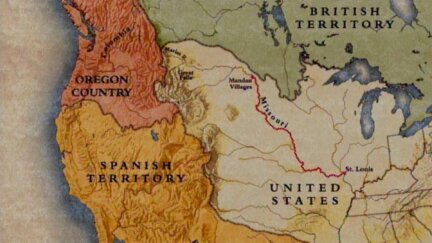
Thomas Jefferson becomes President. Western boundary of the United States is the Mississippi River; two-thirds of citizens live within 50 miles of Atlantic Ocean. Having tried three previous times to mount expeditions across the continent, as President he decides to try once more.
Jefferson asks Meriwether Lewis to become his personal secretary; Lewis lives in East Room of the White House. Besides carrying out other duties for the President, Lewis helps Jefferson plan for western exploration.
|
|
January 18In secret communication to Congress, Jefferson seeks authorization for expedition first official exploration of unknown spaces undertaken by United States government. Appropriation of $2,500 requested. (Final cost will be $38,000.)
|
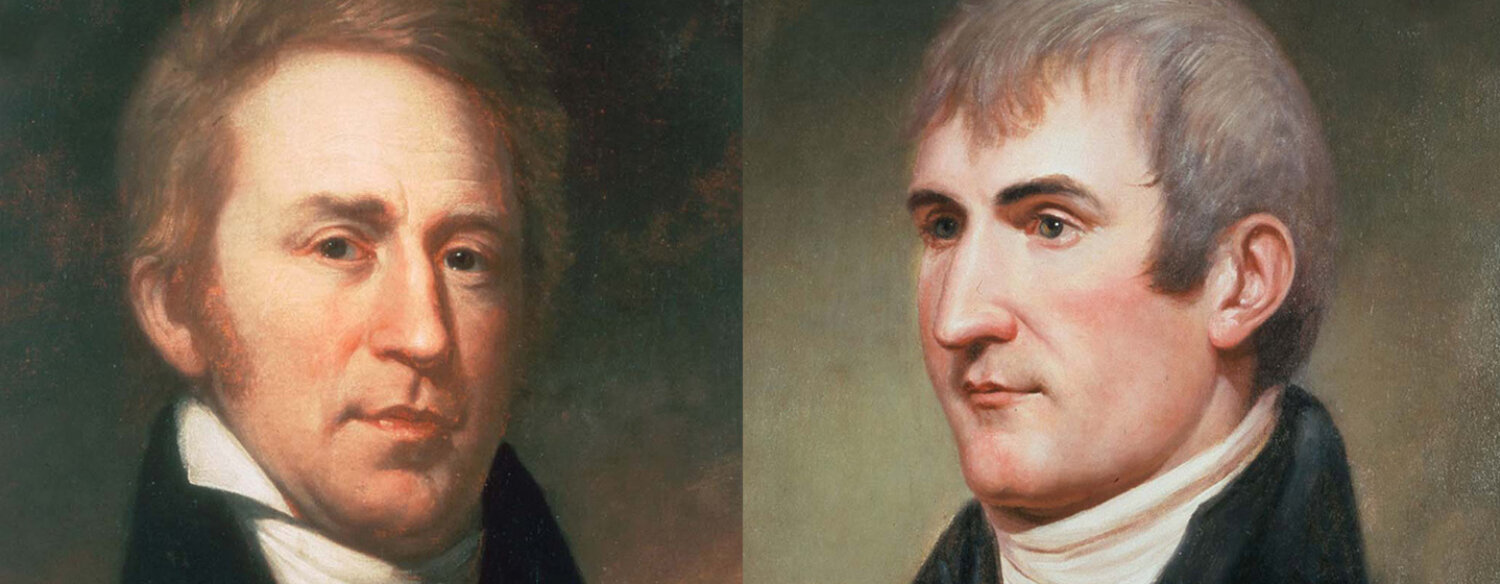
 Meriwether Lewis
|
SpringLewis, now picked as commander, is sent to Philadelphia for instruction in botany, zoology, celestial navigation, medicine from nations leading scientists. Also begins buying supplies to outfit the expedition.
Lewis writes to former army comrade, William Clark, inviting him to share command of expedition. Clark writes to accept.
July 4News of Louisiana Purchase announced. For $15 million, Jefferson more than doubles the size of United States: 820,000 square miles for 3 cents an acre. The next day, Lewis leaves Washington.
|
 Newfoundland Dog
|
SummerLewis oversees construction of big keelboat in Pittsburgh, then takes it down Ohio River, picking up Clark and some recruits along the way. With Lewis is a Newfoundland dog, Seaman, he has purchased for 20 dollars. Clark brings along York, a slave he has owned since childhood.
Fall/WinterExpedition establishes Camp Wood (also called Camp Dubois) on east bank of Mississippi, upstream from St. Louis. More men recruited and trained.
|
|
March 10Lewis and Clark attend ceremonies in St. Louis formally transferring Louisiana Territory from France to United States.
May 14Expedition sets off from Camp Dubois under a jentle brease, Clark writes. (Lewis is in St. Louis and joins group a few days later.)
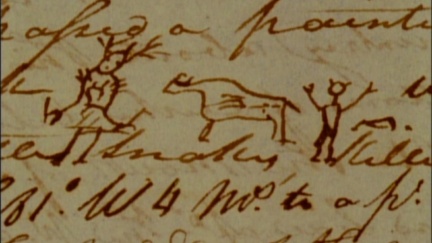
Nearly four dozen men involved (the precise number is unknown). Members hail from every corner of the young nation. Reuben and Joseph Field are brothers. George Drouillard, Pierre Cruzatte, François Labiche are sons of French-Canadian fathers and Indian mothers. Besides captains, other diarists are John Ordway, a young soldier from New Hampshire; Patrick Gass, a carpenter of Irish stock from Pennsylvania; Joseph Whitehouse, a tailor from Virginia; and Charles Floyd of Kentucky, a young man of much merit, Lewis writes.
|
 The Corps Keelboat
|
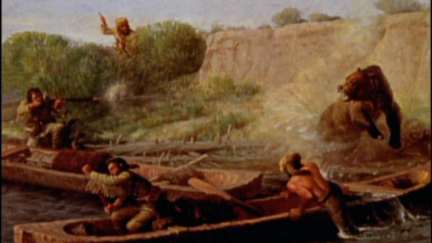
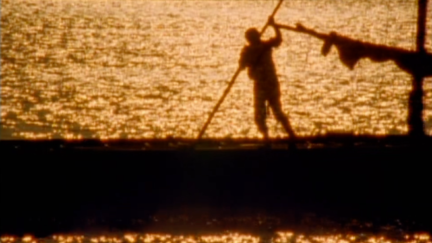
They travel in big keelboat (55 long, 8 feet wide, capable of carrying 10 tons of supplies) and two smaller boats called pirogues. Proceeding up Missouri River involves sailing, rowing, using setting poles, and sometimes wading along the bank to pull the boats with cordelling ropes. 14 miles is a good days progress.
May 25Expedition passes La Charette, a cluster of seven dwellings less than 60 miles up the Missouri, but, as Floyd notes in his journal, the last settlement of whites on this river.
July 4Expedition marks first Fourth of July ever celebrated west of the Mississippi by firing keelboats cannon, drinking extra ration of whiskey, and naming a creek (near what is now Atchinson, Kansas) Independence Creek.
|
 Reverse side of Peace Medal
|
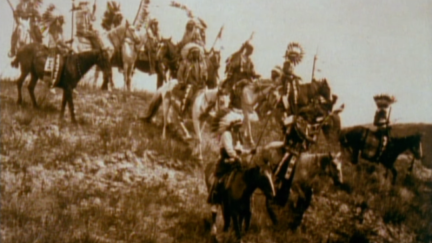
August 3First official council between representatives of United States and western Indians occurs north of present-day Omaha, when Corps of Discovery meets with small delegation of Oto and Missouri Indians. Captains establish routine for subsequent Indian councils: hand out peace medals, 15-star flags, and gifts; parade men and show off technology (magnets, compasses, telescopes, Lewiss air gun); give speech saying Indians have new great father far to the east and promising future of peace and prosperity if tribes dont make war on whites or other tribes.
August 20Near what is now Sioux City, Iowa, Sergeant Charles Floyd becomes the expeditions first casualty from what was probably a burst appendix. (Also becomes first United States soldier to die west of Mississippi.) Captains name hilltop where he is buried Floyds Bluff and nearby stream Floyds River. |
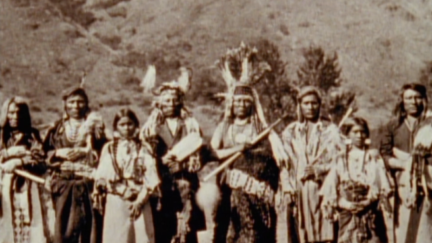
 Sioux Chief
|
August 30Expedition holds friendly council with Yankton Sioux (near what is now Yankton, South Dakota). According to Yankton oral tradition, when a baby is born, Lewis wraps him in a United States flag and declares him an American.
September 7Moving into the Great Plains, the expedition begins seeing animals unknown in the East: coyotes, antelope, mule deer, and others. On this particular day, all the men are employed drowning a prairie dog out of its hole for shipment back to Jefferson. In all, the captains would describe in their journals 178 plants and 122 animals that previously had not been recorded for science.
September 25Near what is now Pierre, South Dakota, the Teton Sioux (the Lakota) demand one of the boats as a toll for moving farther upriver. A fight nearly ensues, but is defused by the diplomacy of a chief named Black Buffalo. For three more anxious days, the expedition stays with the tribe.
|
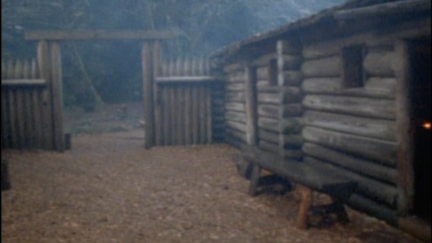
 Fort Mandan
|
October 24North of what is now Bismarck, North Dakota, the Corps of
Discovery reaches the earth-lodge villages of the Mandans and Hidatsas. Some 4,500 people live there more than live in St. Louis or even Washington, D.C. at the time. The captains decide to build Fort Mandan across the river from the main village.
November 4The captains hire Toussaint Charbonneau, a French Canadian
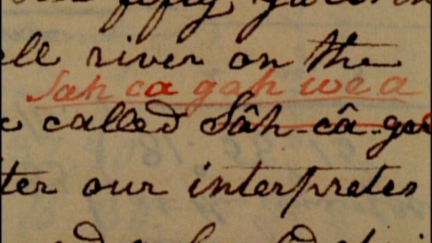
fur trader living among the Hidatsas, as an interpreter. His young Shoshone wife, Sacagawea, had been captured by the Hidatsas several years earlier and then sold to Charbonneau (along with another Shoshone girl). Having been told that the Shoshones live at the headwaters of the Missouri and have many horses, the captains believe the two will be helpful when the expedition reaches the mountains.
December 17Clark notes a temperature of 45 degrees below zero colder,
John Ordway adds, than I ever knew it be in the States. A week later, on Christmas Eve, Fort Mandan was considered complete and the expedition had moved in for the winter.
Continue on to 1805
|
|