
|
Lesson 6 Lewis and Clark and Native Americans, Part II
Learning Objectives
Students will:
- Study the existence of Native Americans living in the regions that the Lewis and Clark explored;
- Locate on maps physical regional locations Native Americans had claimed and named prior to the expedition’s arrival;
- Identify landmarks renamed by the expedition and determine whether these names/sites exist today.
Standards
This lesson correlates to the national McREL standards located online at http://www.mcrel.org/
United States History
Standard 9: Understands the United States territorial expansion between 1801 and 1861, and how it affected relations with external powers and Native Americans
Geography
Standard 1: Understands the characteristics and uses of maps, globes, and other geographic tools and technologies
Standard 2: Knows the location of places, geographic features, and patterns of the environment
Standard 4: Understands the physical and human characteristics of place
Standard 17: Understands how geography is used to interpret the past
Materials
- Lesson 6 Student Activity Sheet
- Map of Lakota territory explored by Lewis and Clark; downloadable with Adobe Acrobat)
- Several copies of a U.S. road atlas that includes topographical features, and/or a U.S. topographical map that includes political boundaries
- Computers with Internet access
Time Needed
3-4 hours of class time
Teaching Strategy
NOTE: Be sure to be familiar with this lesson’s maps, rivers, and place names relevant to this lesson and the Web site and related resources.
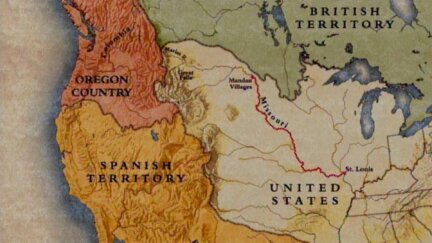
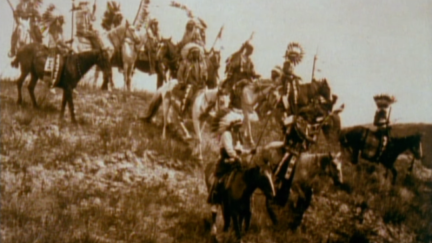
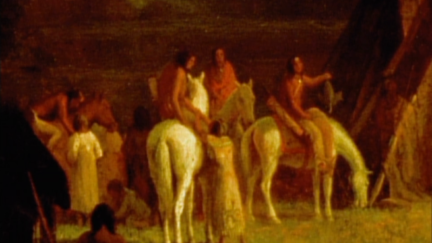
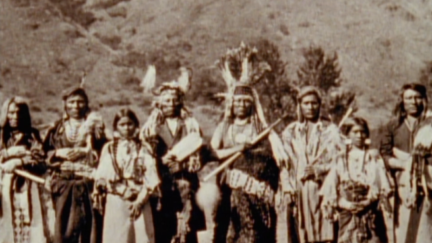
- Explain to students that as they study details of the Corps of Discovery, they should be aware that areas the travelers explored were already inhabited by many different Native Americans tribes, who had established governments, lifestyles, economic bases, and trading and territorial boundaries. The primary group of Native Americans with whom the expedition interacted was the Lakota, one of the Seven Council Fires of the Dakota Nation. (This tribe is known to many as the Sioux Nation. For more information on the Lakota, see lesson 5.) While Lewis and Clark gave names to—and recorded on maps--locations and landmarks, they were actually renaming sites the Lakota had already claimed. Explain to students to begin to learn about the various sites Native Americans named, they will first study Lakota names for several tributaries of the Missouri River.
- Divide the class into groups of three or four students. Distribute copies of the Lesson 6 Student Activity Sheet and the U.S. road atlas and/or topographical map to each team. Tells students that the map on the Student Activity Sheet shows the Lakota names for several tributaries of the Missouri River. Point out that Lakota territory begins where the expedition passed the North Platte River, and continues on up into South Dakota, North Dakota and Montana. Instruct students to find these same tributaries in the road atlas and/or on the topographical map to identify their modern-day names, listing them next to the Lakota labels on the activity sheet.
The following is a list of tributaries and rivers found on the map, with translations for the Lakota names.
Mnisose - Missouri River
Pankeska Wakpa - North Platte River (connects to the Missouri River at Omaha Nebraska)
Translation:
Panke - shell
ska - white
Wakpa - river or waterway
Casmu Makoce - Sand Country (Nebraska Sandhills west of Missouri)
Translation:
casmu - Sand
makoce - country
Minitanka mniluza - Niobrara River
Translation:
mni - water
tanka - large
mniluza - rapid river
Makizita Wakpa - White River
Translation:
Makizita - smoky
Wakpa - river
Landmark seen from Missouri: Inyan zito Paha - Green Rock Mountain or Hill
Translation:
Inyan - rock
zito - green
paha - mountain or hill
Wakpa Sica - Bad River
Translation:
Wakpa - river
Sica - bad
Wakpa Waste - Good River
Translation:
Wakpa - River
Waste - Good
Hinhan Wakpa - Owl River
Translation:
Hinhan - Owl
Wakpa - River
Cansuska Wakpa - Box Elder River
Translation:
Cansuska - Box Elder (tree)
Wakpa - River
Hantesa Wakpa - Red Cedar River
Translation:
Hante - Cedar
sa - red
Wakpa - River
Cante Wakpa - Heart River
Cante - Heart
Wakpa - River
Mila Wakpa - Knife River
Translation:
Mila - Knife
Wakpa - River
Landmark seen from Missouri: Pehincicila Paha - Ghost Hair Mountain or Hill
Translation:
Pehin - Hair
cicila - Ghost
Paha - Mountain or Hill
Hehaka Ta Wakpa - River of the Elk
Translation:
Hehaka - Elk
Ta - their
Wakpa - River
Hehaka Wakpa - Elk River
Translation:
Hehaka - Elk
Wakpa - River
- When the students have identified the tributaries, have them find other locations that probably had Native American names and were given new names, either by the expedition or others (explorers, residents, government officials, etc.) Ask them to determine which, if any, Native American names continue to exist, and which do not. Why have these names changed and/or remained the same? Should the original Native American names be reinstated? How might the sites’ original titles be remembered?
- Invite each group to create a visual representation of the original Native American names, for example, a map that highlights original and changed names, a poster, etc. Have each group share its piece, explaining its interpretive approach to the work.
Online Resources
Circle of Stories
http://www.pbs.org/circleofstories/
Homeland
http://www.pbs.org/itvs/homeland/
Seth Eastman: Painting the Dakota
http://www.pbs.org/ktca/setheastman
Matters of Race
http://www.pbs.org/mattersofrace/essays/essay3_survival.html
The West
http://www.pbs.org/weta/thewest
See Online Resources in this site’s Archive section for additional information about Native Americans
Assessment Recommendations
You may wish to evaluate students on group and class participation, the accuracy of their maps, and the ideas generated by their group in the class discussions.
Extensions/Adaptations
Students can:
- Assume the roles of Lakota who have witnessed the renaming of lands they have claimed and, in a monologue, express their thoughts about the explorers’ actions.
- Explore areas in their community originally inhabited by Native Americans, compiling historic data, etc.
- Write journal entries in the voice of Corps of Discovery members who log reflections of their interaction with and observations of Native Americans with whom they have spent a week or more.
- Conduct comparative research on Native American tribes, determining similarities and differences.
|