
|
|
Answers to Your Questionsby Dayton Duncan
Ken Burns and I have been deeply gratified by the
overwhelming public response to our PBS documentary, "Lewis & Clark: The Journey
of the Corps of Discovery," and its companion book. We've also been bowled over
by the flood of interest in this web site. We're both glad to see all the
enthusiasm that has been sparked about the Lewis and Clark expedition.
We can't answer each one of the factual questions that have flooded in, but I'll
try here to address some of the mostly commonly asked ones. (Many of them are
answered in our companion book, Lewis & Clark: The Journey of the Corps of
Discovery, published by Knopf and available in most bookstores, online at
shopPBS or by ordering
through PBS at 1-800-424-7963. And others can be found in some of the many
scholarly books about the expedition, listed in our book's bibliography and
reprinted at the end of this message.)
Question: What happened to Sacagawea's children? Jean Baptiste Charbonneau -- "Little Pomp" to William Clark -- was educated in
St. Louis under Clark's supervision and later became a traveling companion to a
German prince, who took him to Europe for five years, where he learned several
languages. Baptiste returned to America and for awhile became a mountain (the
explorer John C. Fremont mentions in his journals encountering him.) During the
war with Mexico in 1846, Baptiste was hired by the Army to guide the Mormon
Battalion from Fort Leavenworth, Kansas, all the way to California, where he
became a magistrate of San Luis Rey Mission in California after the conflict. In
1866, at age 61, he learned of gold discoveries in Montana and set off with a
wagon train for the gold fields, but caught pneumonia along the way and died on
May 16 in southeastern Oregon. A historical marker near the town of Danner marks
the spot. I'm unaware of any information about the fate of Sacagawea's daughter,
Lisette. More information about Baptiste (and Sacagawea and Toussaint
Charbonneau) is available from a pamphlet published by the Fort Clatsop
Historical Association, "A Charbonneau Family Portrait," by Irving W. Anderson.
(Fort Clatsop National Memorial -- 503-861-2471 -- sells it in their bookstore.)
Anderson's pamphlet also examines the two competing theories about the time and
place of Sacagawea's death. He concludes (as do most historians) that it was
December 20, 1812, at Fort Manuel near today's Kenel, South Dakota; not many
years later, at the age of 100, on the Wind River Indian Reservation in Wyoming.
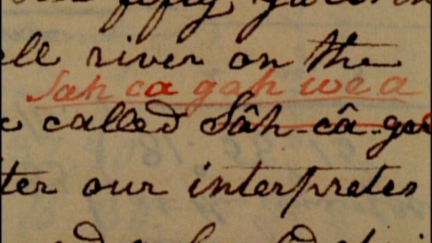
Question: What happened to Lewis's dog -- and what was his name? For many years, scholars believed the Newfoundlan's name was Scannon, until 1984,
when Donald Jackson (one of the pre-eminent Lewis and Clark historians) noticed a
stream in one of Clark's maps clearly designated as "Seaman's Creek." He went
back to the original journals, studied the handwriting, and determined that what
previous editors had believed was "Scannon" was instead "Seaman." (As a name for
a Newfoundland, Seaman also makes more sense than the inexplicable Scannon.)
Seaman is not mentioned in the journals after July 15, 1806, on the return trip,
when Lewis was at the Great Falls and notes that his dog was being plagued by
mosquitoes. So, from the written record, we can't say for sure what happened to
him. But I firmly believe -- as do most expedition scholars I know -- that
Seaman made it back to St. Louis with the rest of the Corps of Discovery. Why?
Because it is inconceivable that the dog's death, disappearance, or abandonment
would have gone unremarked in the journals of Lewis, Clark, or any of the other
men. There's a fuller discussion about Seaman -- his role in the expedition and
adventures on the trail -- on pages 26 and 27 of our companion book. And even
more in a supplemental publication of We Proceeded On , the official publication
of the Lewis and Clark Trail Heritage Foundation, Inc. The supplemental
publication is "The Lewis and Clark Expedition's Newfoundland Dog," and includes
two monographs by Ernest S. Osgood and Donald Jackson.
Question: Where can I get more information about the modern Lewis & Clark Trail? First, Ken and I would urge anyone who wants to become more involved with Lewis
and Clark to join the Lewis and Clark Trail Heritage Foundation, Inc. It is a
national group dedicated to keeping the story of Lewis and Clark alive and to
stimulating public interest in expedition's journey and the trail they followed.
They have local chapters along the route; meet as a national group every summer
at a different spot on the trail (1998 in Great Falls, Montana); and publish a
magazine several times a year called We Proceeded On . Information about the
group is available by writing them at P.O. Box 3434, Great Falls, MT 59403 or
online, discovery@lewisandclark.org. I think the best guidebook for anyone
planning a trip along the trail is The Traveler's Guide to the Lewis & Clark Trail, by Julie Fanselow (Falcon Press, 1994). Another one is Lewis & Clark: Historic
Places Associated with Their Transcontinental Exploration, by Roy Appleman.
Fanselow's is a straightforward guide book, with highway routes, other
attractions, etc. Appleman's, first published by the National Park Service,
devotes half its space to a good summary of the expedition's story and its second
half to an annotated listing of the principal historic sites along the route.
Question: What part of the modern trail is the most unchanged? Without a doubt, the most unchanged section of the entire Lewis and Clark route
is White Cliffs section of the Missouri River in north-central Montana -- a
stretch of the river, now protected by Congress, that is only accessible by boat
(usually canoe). This is the place, with its eerie sandstone formations, that
Lewis wrote his famous line about "scenes of visionary enchantment." More
information about that part of the Lewis & Clark trail is available from Travel
Montana, 1-800-847-4868 (1-800-VISIT-MT) or online, at http://travel.mt.gov.
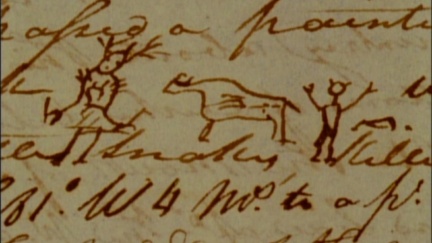
Question: Where are the original journals housed? Most of the journals of Lewis and Clark (and Sgt. John Ordway) are at the
American Philosophical Society in Philadelphia. Some additional Clark journals
are at the Missouri Historical Society in St. Louis and at Yale's Beinecke
Library. Sgt. Charles Floyd's brief journal is at the State Historical Society
of Wisconsin; and Private Joseph Whitehouse's is at the Newberry Library at the
University of Chicago. Sgt. Patrick Gass published an edited version of his
journals shortly after the expedition's return, which can be found in many
libraries, but his original, handwritten journals have not been located. Dr. Gary
E. Moulton is completing a multi-volume edition of the complete journals for the
University of Nebraska Press -- 11 volumes published so far, with one or two more
left and about to come out. The publisher's number is 1-800-755-1105.
Question: How did Lewis & Clark communicate with Indian tribes? It depended on the situation. During the first year, they often had interpreters
(usually French-Canadians) who also spoke the Indians' language -- for instance
with the Otos, the Yankton Sioux, the Arikara, the Mandan and Hidatsa. Sacagawea
was obviously crucial in the translating chain with her own people, the
Shoshones. But in many instances, the explorers relied on the skills of George
Drouillard, who knew sign language -- a rudimentary way of communicating through
gestures, practiced between the many different western tribes who rarely spoke
the same language.
Question: Are there still any of the peace medallions? Both the Oregon Historical Society and the Holland Library at Washington State
University have medals that Lewis and Clark gave to Indian chiefs they met.
Replicas are available from the United States Mint. Yale's Beinecke Library has a
copy of the paper certificate that the captains distributed to so-called "lesser
chiefs."
Question: How can I find out more about the Spanish government's attempt to
destroy the Lewis and Clark expedition? The best source is "A Moment in Time: The West -- September 1806," by Dr. James
P. Ronda, in "Montana: The Magazine of Western History," Vol. 44, No. 4 (Autumn
1994).
Question: How could they have seen pheasants, since the birds weren't introduced
to North America until many years after the expedition? They didn't see any pheasants, but they used the word several times in describing
other birds, usually grouse.
Question: How did Lewis and Clark get mail -- and the prairie dog -- back to
Jefferson? Very, very slowly! News and mail worked its way east from St. Louis overland and
by water. During the journey itself, the last batch of information from the Corps
of Discovery was sent downriver with the big keelboat from the Mandan villages in
April of 1805, while the captains and most of the others headed farther west.
Included in the shipment was the live prairie dog the explorers had captured in
South Dakota during the summer of 1804 and had kept alive in a cage in Fort
Mandan. The prairie dog -- and everything else: reports, animal skins, Indian
corn, etc. -- was taken by the keelboat to St. Louis, put onto another boat going
down the Mississippi to New Orleans, then put onto a sea-going vessel from New
Orleans to Washington. It all arrived in August of 1805 -- on the same day Lewis
was ascending Lemhi Pass nearly three-quarters of a continent away. (Jefferson
later sent the prairie dog to a natural science museum set up in Independence
Hall in Philadelphia, where it apparently died not too long after being put on
display.) Between April 1805 and September 1806 -- when Lewis and Clark traveled
from the Mandan villages to the Pacific, then back all the way to St. Louis --
there was no means to send any interim updates on their progress. Lewis wrote
to Jefferson on the same day of the expedition's triumphant return to St. Louis,
Sept. 23, 1806; it took nearly a month to reach the President.
Question: Are there any replicas of the expedition's keelboat? There used to be two (and we filmed them both for the documentary); now there's
one, but soon there will be two again. One is at Lewis and Clark State Park near
Onawa, Iowa, and it's on display on an old oxbow of the Missouri roughly between
Memorial Day and Labor Day. More information about events, etc., are available
from the park at 712-423-2829. Another fine replica was constructed by volunteers
in St. Charles, Missouri, but it was destroyed in a warehouse fire last winter.
They have already built a replica of one of the expedition's pirogues and are
raising money to rebuild a keelboat capable of going long distances up the
Missouri. More information about the St. Charles Lewis and Clark Rendezvous
events and the keelboat and pirogue at 314-946-7776.
Question: Where I can find genealogical information about the expedition? The Lewis and Clark Trail Heritage Foundation has a genealogy committee. Contact
them through the Foundation at P.O. Box 3434, Great Falls, MT 59403, or online at
http://www.lewisandclark.org.
Question: What good books are there about Lewis & Clark? Here's the bibliography from our companion book, with short comments about each
book. (A list of these same books can be found in the Sources section of this Web
site.)
- Allen, John Logan. Passage Through the Garden: Lewis and Clark and the Image of
the American Northwest. Urbana: University of Illinois Press, 1975.
-- Deals with Lewis and Clark and the concept of North American geography at the
time of the expedition; how the captains kept adjusting in face of new realities.
Good maps. Fine book. Now available as a Dover paperback: Lewis and Clark and
the Image of the American Northwest.
- Ambrose, Stephen E. Undaunted Courage: Meriwether Lewis, Thomas Jefferson,
and the Opening of the American West. New York: Simon & Schuster, 1996.
-- The best-seller. Good story, packed with details.
- Anderson, Irving W. "A Charbonneau Family Portrait." Fort Clatsop
Historical Association, 1988.
-- Short monograph, considered the most
authoritative discussion of the real vs. mythic Sacagawea; also details on life
of Charbonneau and the baby, Jean Baptiste.
- Appelman, Roy. Lewis and Clark: Historic Places Associated with Their
Transcontinental Exploration. Washington, D.C.: National Park Service,
1975.
-- Great one-volume treatment. First half is historic overview of the
expedition; second half deals with sites along the trail as they exist today.
- Betts, Robert B. In Search of York: The Slave Who Went to the Pacific with
Lewis and Clark. Boulder: Colorado Associated University Press, 1985.
-- Tries
to explain the life of York. (Done before recent discovery of letters from
William Clark to his brother about York.)
- Chuinard, Eldon G. Only One Man Died: Medical Aspects of the Lewis and Clark
Expedition. Glendale, Calif.: Arthur Clark Company, 1980.
-- Everything you ever
wanted to know about the ailments and treatments of the expedition.
- Coues, Elliot, ed. The History of the Lewis and Clark Expedition. New York:
Dover ed., 1987; reprint of 1893 Francis P. Harper 4-vol. ed., 1893.
- Cutright, Paul Russell. Lewis and Clark: Pioneering Naturalists. Urbana:
University of Illinois Press, 1969.
-- A great book, dealing with the
expedition's discoveries of plants and animals.
- DeVoto, Bernard. Journals of Lewis and Clark. Boston: Houghton Mifflin Co.,
1953. Recently re-released with foreword by Steve Ambrose.
-- A one-volume
treatment of the journals, plus a lengthy introduction by DeVoto. ----- The Course of Empire. Boston: Houghton Mifflin Co., 1952. -- A book about the first
three centuries of exploration in North America, including the L&C expedition.
- Dillon, Richard. Meriwether Lewis: A Biography. New York: Coward- McCann,
1965.
-- Biography of Lewis, 30 years before Ambrose's.
- Duncan, Dayton. Out West: An American Journey. New York: Viking Penguin,
1987.
-- Retraces the Lewis and Clark route, recounting both their journey and mine
180 years later, plus synopsis of history of the West between those two journeys.
- Duncan, Dayton and Ken Burns. Lewis & Clark: The Journey of the Corps of
Discovery. New York: Knopf, 1997.
-- An illustrated history; companion book to
the film.
- Funkhouser, Erica. Sureshot and Other Poems. Boston: Houghton Mifflin
Company, 1992.
-- Includes her long poem, "Bird Woman," in which she tries to
enter the experience of Sacagawea.
- Furtwangler, Albert. Acts of Discovery: Visions of America in the Lewis and
Clark Journals. Urbana: University of Illinois Press, 1993.
-- Essays about
aspects of the expedition.
- Gass, Patrick. A Journal of the Voyages and Travels of a Corps of Discovery
Under the Command of Capt. Lewis and Capt. Clark. Minneapolis: Ross and
Haines, 1958.
-- Now included in the Moulton edition of the journals.
- Holmberg, James J. "'I Wish You to See & Know All': The Recently Discovered
Letters of William Clark to Jonathan Clark." "We Proceeded On," Vol. 18, No. 4
(November 1992).
-- Monograph on recently uncovered Clark letters, especially
interesting as they relate to York's fate.
- Jackson, Donald. Among the Sleeping Giants: Occasional Pieces on Lewis and
Clark. Urbana: University of Illinois Press, 1987.
-- Interesting essays about the
expedition by the now-deceased pre-eminent Lewis and Clark scholar. ----- ed., Letters of the Lewis and Clark Expedition, with Related Documents: 1783 -
1854, 2nd ed. Urbana: University of Illinois Press, 1978. -- A trove of
material not found in the journals, including Lewis's letters to his mother,
correspondence between Lewis, Clark, Jefferson and others; invoices of supplies;
etc. Two volumes. ----- Thomas Jefferson and the Stony Mountains; Exploring
the West from Monticello. Urbana: University of Illinois Press, 1981. -- The
expedition from Jefferson's perspective. ----- "Call Him a Good Old Dog, But
Don't Call Him Scannon." "We Proceeded On," July 1985. -- Monograph arguing the
Newfoundland's name was Seaman.
- Large, Arlen. "Lewis and Clark Under Cover," We Proceeded On, Vol. 15, No. 3
(August 1989).
-- All about the secret code Jefferson devised for Lewis. (Large
contributed a number of fine monographs to WPO.)
- Lavender, David. The Way to the Western Sea: Lewis and Clark Across the
Continent. New York: Harper & Row, 1988.
-- A good one-volume treatment of the
expedition.
- Moulton, Gary E., ed. The Journals of the Lewis & Clark Expedition. Lincoln:
University of Nebraska Press, 1988.
-- The most recent and definitive edition of
the expedition journals: Lewis's, Clark's, Whitehouse, Gass, Ordway, Floyd. Well
footnoted. Plus appendixes on the men of the expedition and many other topics.
- Osgood, Ernest S., ed. The Field Notes of Captain William Clark, 1803 - 1805.
New Haven: Yale University Press, 1964.
-- This material can now be found in the
Moulton edition. ----- "Our Dog Scannon." "Montana: The Magazine of Western
History," Vol. XXVI, No. 3 (Summer 1976). -- A good monograph about Lewis's dog.
- Quaife, Milo M., ed. The Journals of Captain Meriwether Lewis and Sergeant John
Ordway. Madison: Historical Society of Wisconsin, 1916.
-- Now included in
Moulton's edition.
- Ronda, James P. Lewis and Clark Among the Indians. Lincoln: University of
Nebraska Press, 1984.
-- Considered the definitive work about the expedition's
relations with native peoples. ----- "A Moment in Time: The West -- September
1806." "Montana: The Magagzine of Western History," Vol. 44, No. 4 (Autumn
1994).
- Steffen, Jerome O. William Clark: Jeffersonian Man on the Frontier. Norman.
University of Oklahoma Press; 1977.
-- Biography of Clark.
- Thwaites, Reuben Gold, ed. Original Journals of the Lewis and Clark
Expedition. New York: Arno Press reprint, 1969.
-- Formerly the definitive
edition, until Moulton's more recent one.
- Wheeler, Olin D. The Trail of Lewis and Clark, 1804 - 1806. New York, 1904.
-- Two volumes. Retraces the route on the Centennial of the expedition.
- "We Proceeded On," the publication of the Lewis and Clark Trail Heritage
Foundation, has been publishing monographs about the expedition for more a
quarter century and has a great number of articles about individual aspects of
the journey -- from mosquitoes to clothing to firearms to the different types of
canoes, etc. I believe sets of back copies can be purchased. Contact: Martin
L. Erickson, editor, 1203 28th Street South #82, Great Falls, MT 59405,
406-761-4706.
|