
|
|
Tell us about Lewis.
 William Least Heat-Moon
Listen to the RealAudio
|
|
|
|
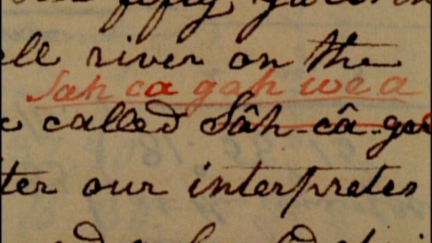
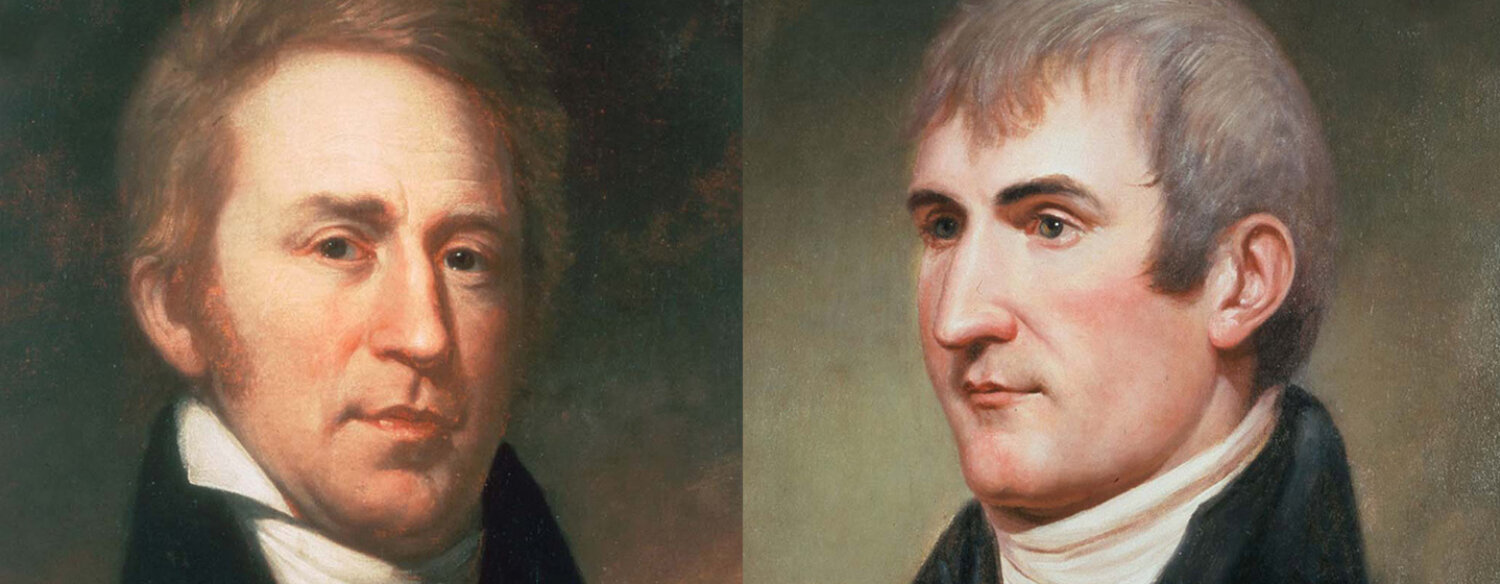
Lewis, clearly, is the most fascinating member of the expedition, the leader, but also probably the most complex. A man fraught with with serious emotional problems but also a man of of great character, great integrity, truly marvelous insightful leadership. But a man who continually was on the edge of falling off of the abyss of of good sane control, I feel, as we watch him. And we know in later life, in fact, thats thats what happened to him with his apparent suicide. Lewis, Lewis was the man, who was, it seems to read the journals, never entirely easy with with his own men and definitely not with the with the Indians that he was meeting. He got along with them, he he behaved in a courtly manner and a proper manner, a military manner but there was not that ease that that you see in Clark. We we know that there were various kinds of assignations between the men and and Indian women. You never have that sense in reading the journals that that Lewis was a participant in this. The love stories that people have concocted and I emphasize the word concocted, with Sacagawea and the other men. Its always Clark who is the lover, its never Lewis. Lewis is the cool one.
|
What was Lewis relationship with Thomas Jefferson?
 Dayton Duncan
Listen to the RealAudio
|
|
|
|
Lewis was, Lewis was Thomas Jeffersons right hand man in the White House. He
lived in the White House, with Jefferson, just the two of them. He lived in the
East Wing, and Jefferson lived in the presidential quarters. Ate every night
with Jefferson. He knew Jeffersons mind. He was Jeffersons hand-picked man
for many tasks, and for this pet project of Jefferson, there was only one man he
wanted. It was Meriwether Lewis. He was brash, sometimes impulsive. One of the
cabinet members warned Jefferson, Well, watch out. Lewis might try to do some
things too brashly, too rashly, and endanger the whole expedition. But he was
gonna be Thomas Jeffersons eyes and ears in the West, and Jefferson trusted him.
Lewis had what Jefferson described as occasional depressions of the mind.
Its, I dont like to get into psycho babble, but its pretty easy to read into
Meriwether Lewis a manic depressive. He could be full of vigor and effusiveness,
and other times almost completely close down.
|
What happened to Lewis after the expedition?
 Stephen Ambrose
Listen to the RealAudio
|
|
|
|
Lewis had a...at the end of the expedition, Lewis went to Washington to report to Jefferson. Jefferson then appointed him Governor of Louisiana, with the capital in St. Louis. This was a terrible mistake. Lewis was not a politician. He got into fights in St. Louis about land bounties and about the iron mines and many other things. He took to drinking very heavily. He also had malaria and was doping himself up, taking a mixture of opium and morphine on a regular basis. He sank into a depression. He had over-extended himself in speculating in western lands. He had signed way too many government (chits?), which he had become accustomed to doing, just signing his name and then the government will pay you off later. And now the War Department, Jefferson was gone, Madison was president, began to fail to honor these chits that he had signed. So his creditors started calling in his debts, and he was ruined financially. He was a physical wreck because of the drugs and because of the alcohol. He became suicidal. He left St. Louis in July of 1809 to make a trip to Washington to explain to the government that all these chits were legitimate. During the course of that journey he tried to kill himself, was restrained by the crew. Finally got down to todays Memphis, Tennessee, and set off overland, over the Natchez Trace, to go to Washington with his journals, to make his explanations to the government. And on that trip, at a place called Grinders Inn, just across the Mississippi-Tennessee border on the Natchez Trace, he killed himself. You want details of the killing itself?
|
|