
|
|
What were Lewis and Clarks objectives with the Indians?
 Dayton Duncan
Listen to the RealAudio
|
|
|
|
Every time that they met an Indian tribe, they had three things they wanted to
do. They wanted to find out about them for Jefferson. They wanted to establish
trade relations because thats gonna be part of an empire for the United States.
And they wanted to say, You are now part of the United States. You have a new
Great Father. And part of all of that was, You gotta stop fighting one
another. You know, it doesnt help us for trade, it doesnt help us, you know,
as a nation if youre fighting one another. And they just couldnt understand
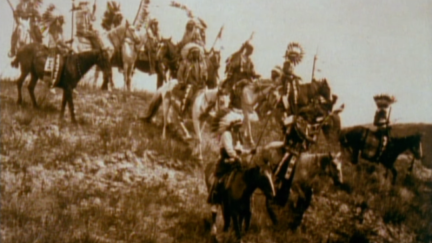
how traditional it was on the Plains, and how for tribes to fight one another. I
mean, it makes sense, you know, they all had different objectives that they
wanted to, things that they want to do. Hunting grounds, raiding, all those
things were imbedded in the Plains warrior culture, and theyd thought that if
they just said, Now were here, just stop fighting, well give you some goods
and its OK. Clark was trying to explaining this one time to an Hidatsa
warrior, about well weve got these plans for peace and everything. And the
warrior listened for a while and then he just said, But if we have peace, how
will we have chiefs? Because the way that their culture ennobled somebody, to
make them rise in the ranks of the tribe, was through warfare. So he said, If
we dont fight one another, how do we exist, how do we have chiefs? And I think
that moment is, shows the, still this misunderstanding between two cultures.
|
When Lewis and Clark talked about a new Great Father in Washington, how did
the Indians react?
 Gerard Baker
Listen to the RealAudio
|
|
|
|
I dont think they would [think about it] a whole lot. They might of for a little bit.
Mainly because those are the folks there that did the same thing, before them.
The Frenchmen came in for example, the British came in for example from Hudson
Bay territory, what is now Canada, and did the same thing. They gave them, they
gave them flags. Even during that time of course, the British and the French
knew something was happening so they gave them flags and medals and everything
else. And I think by then they had been visited by quite a few people, and, and
so it wasnt a, a big thing, but I think by then they realized it was a routine
that they had to go through. They would listen to the speeches and, and
accepting the medals, accepting different, different gifts, and, and in fact, the
tribe at that time expected gifts, and they expected everybody to get one, get
something. And, and I know in one instance, I think the ???? talked about not
having everybody get everything and so they were upset about that. And so by
then they had already started to.
|
Listen to the RealAudio
|
What was Lewis and Clarks routine for interacting with the Indians? You could call their Indian diplomacy the great traveling medicine show
because they really did have a pattern, a pattern that they had inherited from
generations of Indian policy that began in the Northeast woodlands and then went
out into the West. The traveling medicine show worked like this, first there was
a parade in which European style technology was shown off. You wanted to show
Indians uniforms and guns and the objects of the industrial revolution to impress
them and then you wanted to show Indians trade goods and so the great country
store was wheeled out. You wanted to show Indians all of those objects that they
might gain if they became part of an industrial world that grew out of St Louis.
And so, first the parade and then the country store and then came the serious
negotiation because Lewis and Clark represented in the traveling medicine show
not only military power, commercial power, but also diplomatic power. So the
third part of the traveling medicine show was some serious negotiation. Some
treaty talk, some council making. And then there was always a showing of the
flag, the great American symbol of sovereignty and power.
|
Listen to the RealAudio
|
What did the peace medal symbolize? Peace medals symbolized two very different things. And they represent two
different things on two different sides of the cultural divide. For
Euro-Americans, for Thomas Jeffersons captains, the peace medal represented a
recognition of American sovereignty. If I give you a peace medal, it means that
you are now one of mine. That youve accepted the sovereignty of the American
president. On the other hand, for native people, accepting a peace medal might
simply mean a recognition that we are equals. We are not fathers and sons, not
fathers and children, but were all one. And the peace medal also represented a
source of power. Native people often believed that the power that the Europeans
had were not in their own bodies, but in their objects. And so the peace medal
is a wonderful symbol of difference. Europeans saw it as a sign of subjection.
Of accepting European power. But native people who took those peace medals saw
it in a very different way. Saw it as a gift. Saw it as recognizing that we are
equals.
|
|