
| |
 |
 |
 |


|
 |
 |
 |
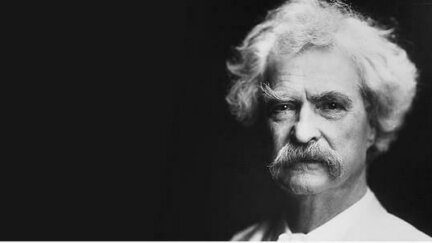
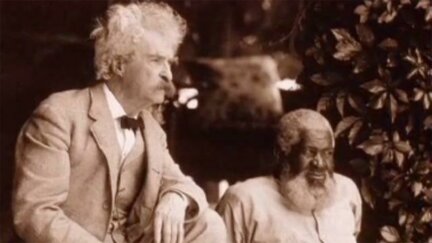
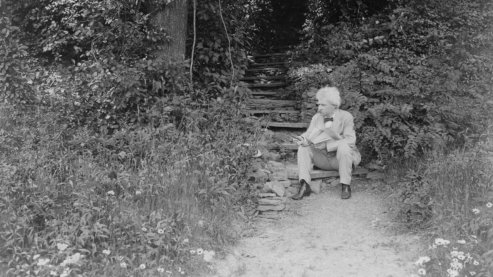
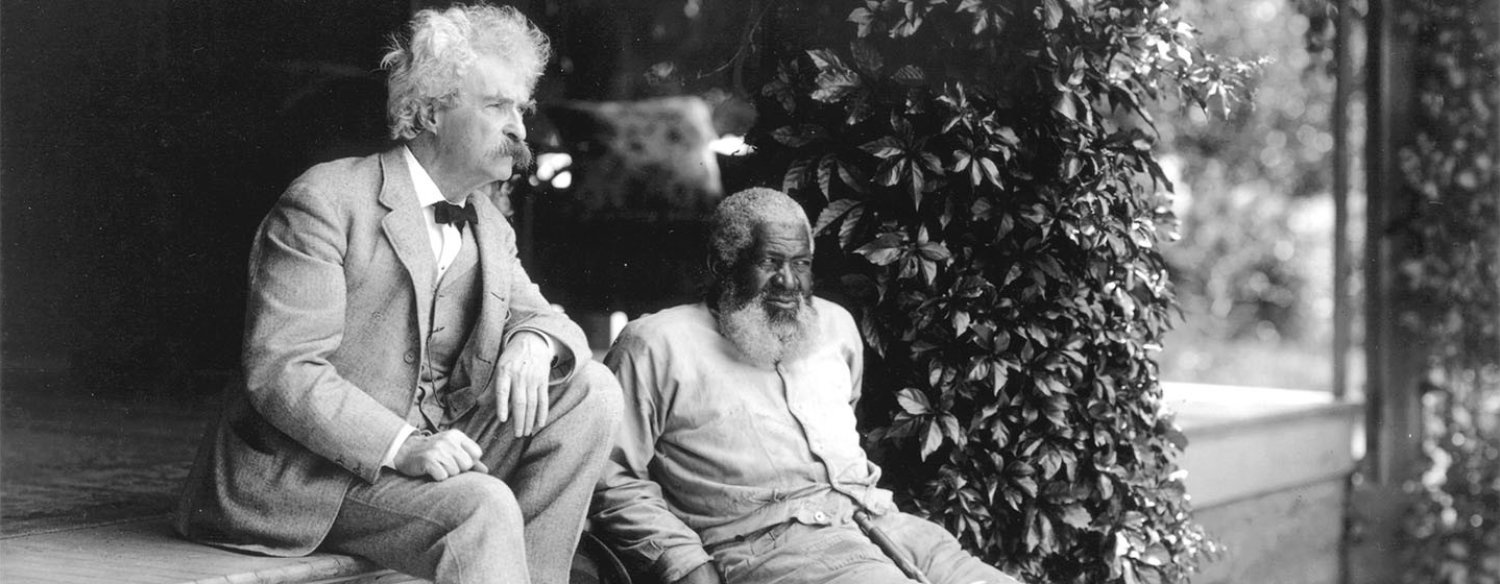
Mark Twain in 1895 Courtesy The Mark Twain House, Hartford |
Objective: Modeling Mark Twains humoristic approach to writing, students describe the role of and apply comedy in the analysis and presentation of contemporary issues and experiences.
In this activity, students will be asked to look at Twain, the humorist considered Americas favorite storyteller and the funniest man in the world along with Twain, the newspaper reporter or, as we hear in the film, one of a bunch of talented, wild men improvising a whole new newspaper art form with tall tales and lies and hoaxes and great writing. In Part A, students will imitate Twains ability to embellish his newspaper reports by stretching the truth of one of their own experiences. In preparation for this activity, you may want to share examples of Twains writings with your students. In Part B, students will consider how delivery affects impact, comparing Twains deadpan style of lecturing to todays stand-up comedians and then crafting their own humorous sketches using current events or personalities.
Use the Internet writing exercise in Part A as a springboard to a debate about the reliability of information found on the Internet and elsewhere in mass communication today. Are there any places at all on the Internet where one can be assured of finding the truth? Discuss reality TV, which may or may not have staged scenes designed to heighten drama. In Twains day, newspapers provided the only mass means of sharing information. In todays era of electronic communications, how much more discerning must a person be when there are multiple sources of information and few, if any, ways to verify their accuracy in evaluating what he or she reads, hears or sees?
This activity fulfills the following standards established by the National Council of Teachers of English (NCTE)
5. Students employ a wide range of strategies as they write and use different writing process elements appropriately to communicate with different audiences for a variety of purposes.
7. Students conduct research on issues and interests by generating ideas and questions, and by posing problems. They gather, evaluate, and synthesize data from a variety of sources (e.g., print and non-print texts, artifacts, people) to communicate their discoveries in ways that suit their purpose and audience.
This activity fulfills the following standards established by National Council for Social Studies (NCSS)
IV. Individual Development and Identity
Middle and High School: Students relate and articulate personal changes to social, cultural, and historical contexts, describe personal connections to a place as associated with community, nation, and world, and identify, describe, and/or analyze the influence of perception, attitudes, values, and beliefs on personal identity.
High School: Students identify, describe, and express appreciation for the influences of various historical and contemporary cultures on an individuals daily life.
Writing Sketch Comedy That Sells
Humor Columnists
Comedians, Humorists and Columnists Guide
Mark Twains San Francisco
The Comedy of Mark Twain
About Mark Twain
Student Activity
 |
|
 |
 |


|
 |
 |
 |
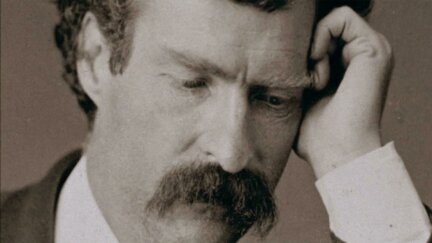
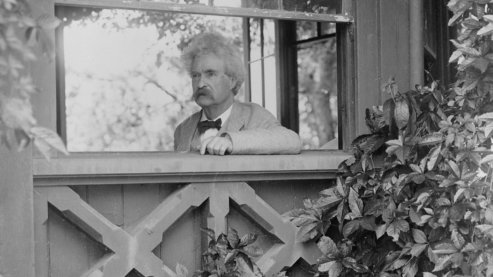
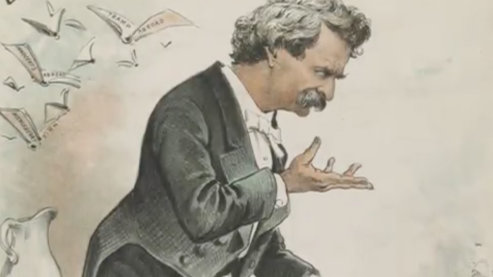
Mark Twain, c. 1884 Courtesy The Mark Twain House, Hartford |
The old saw says, Let a sleeping dog lie. Right. Still, when there is much at stake it is better to get a newspaper to do it.
Mark Twain
At fourteen, Samuel Clemens got a job at the Hannibal Journal newspaper working for his older brother Orion. The experience lured young Sam into the world of words and ideas. He even began to write humorous sketches to make the paper more lively:
Hannibal Journal, May 6, 1853
TERRIBLE ACCIDENT!
500 MEN KILLED AND MISSING!!
We had set the above head up, expecting (of course) to use it, but as the accident hasnt happened, yet, well say To be Continued.
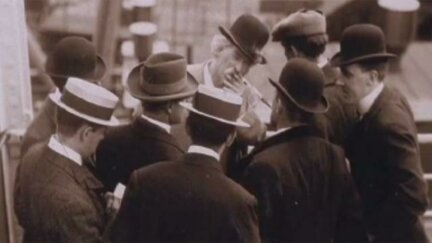
Clemens loved living the life of a newspaper reporter, a life populated by a bunch of talented, wild men improvising a whole new newspaper art form with tall tales and lies and hoaxes and great writing, according to Twain biographer Ron Powers. Clemens himself wrote: To find a petrified man... or cave an imaginary mine, or discover some dead Indians in a Gold Hill tunnel... were feats and calamities that we never hesitated about devising when the public needed matters of thrilling interest for breakfast.
Part A. Mark Twains fame as a humorist and a master of vernacular dialogue or common, everyday language began one day during the winter of 1864-65 when he listened to a story about a gambler who would bet on anything, even his jumping frog. Twain embellished it into a much more elaborate and funny story. Published in November 1865, it was quickly reprinted in papers around the country and later republished in Twains first book as The Celebrated Jumping Frog of Calaveras County.
Later, Twain became an overseas correspondent, writing from Hawaii, the Middle East, and Europe. Twain poked fun at everything. In Paris he reported that he went to see young women dance the can-can: I placed my hands before my face for very shame, he told his readers, but I looked through my fingers. The book about his travels, The Innocents Abroad, sold 100,000 copies by 1871; only Uncle Toms Cabin had sold more in the same two years time. Twains publisher began promoting him as The Peoples Author.
Choose an experience you have had and write your own report from 21st-century America on the back of this sheet. Exaggerate and embellish your story using the kind of attention to detail and comic twists Twain was noted for, but be sure you make it believable enough that your reader might think it is true.
Now write a second version as if you had posted it on an Internet message board. Share both versions of your story with your classmates and discuss the differences between them. Some people think the Internet offers the same opportunities for exaggeration and falsehood that Twain took advantage of at the Hannibal Journal. Decide on your views and debate them with your classmates. Can truth be found reliably on the Internet? What about reality TV?
Part B. Twain often included a shortened version of the jumping frog story in his lectures and readings, his deadpan delivery making it even funnier. He understood that an audience was much more likely to laugh at his stories if he gave no indication that he understood the underlying meaning or humor. Twain was also the master of the pause. One night he walked out on stage, stared at the audience and said nothing. As the silence continued, tension built until someone in the crowd snickered. Soon the whole audience was convulsed in laughter and Americas favorite storyteller knew the audience was his.
(Honolulu Correspondent of the Sacramento Union)
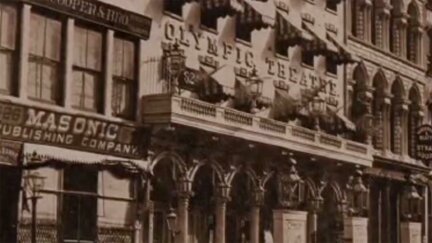
Will Deliver A Lecture on the Sandwich Islands...
A SPLENDID ORCHESTRA
is in town, but has not been engaged;
also
A DEN OF FEROCIOUS WILD BEASTS
will be on exhibition in the next block.
MAGNIFICENT FIREWORKS
were in contemplation for this occasion,
but the idea has been abandoned.
A GRAND TORCHLIGHT PROCESSION
may be expected; in fact, the public are
privileged to expect whatever they please.
Doors open at 7 oclock The Trouble to begin at 8
What similar techniques do todays stand-up comics such as Jon Stewart, Chris Rock or Margaret Cho use? Choose a favorite comedian and look at his or her technique. Would their material be as funny if they changed their style?
Now, imagine that you are a writer for Saturday Night Live, where sketches are often based on real events or personalities in the news. On the back of this sheet, describe your idea for a comedy sketch for next weeks show. Be prepared to pitch your idea explain how the sketch will unfold and convince the other writers (your classmates) that your idea is funny.
Download a .pdf of Student Handout for Activity 2: A Report from the 21st Century
Adobe Acrobat Required
This activity was created by YMI (Youth Media International) with generous support from General Motors.
General Motors is proud to provide this educational outreach program devoted to the film presentation of Mark Twain. With this program, General Motors continues its long-standing commitment to make classroom learning an integral part of all General Motors PBS presentations.
|