
Towards the end of the 19th century, there was a growing awareness that the nation's unrelenting rush to conquer and tame the land had come at a terrible cost. Forests had been devastated and entire species of animals had been ravaged, all in the name of progress.
Add to Scrapbook
Hunters at Yellowstone National Park, 1896 |
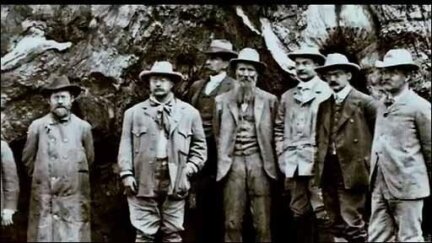
The naturalist John Muir eloquently expressed his concern when he spoke of how the "great wilds of our country, once held to be boundless and inexhaustible, are being rapidly invaded and overrun…and everything destructible in them is being destroyed."
For the handful of Americans concerned for the future of the nation's natural places, the national parks represented a glimmer of hope that at least some pristine places could be saved before it was too late. Among those concerned few was a young politician, Theodore Roosevelt, who would later become president and whose lasting legacy would be rescuing large portions of America's natural landscape from destruction.
Before his presidency was over, Roosevelt would create five new national parks, 51 federal bird sanctuaries, four national game refuges, 18 national monuments, and more than 100 million acres' worth of national forests.
The Need to Protect the Parks from Ourselves
Add to Scrapbook
Rudyard Kipling, 1888 |
Although the four national parks that had been established by 1890 were under the protection of the Army, they were by no means out of danger. Park wildlife was routinely killed; livestock over-grazed park meadows; ancient forests were still under threat; tourists carved their names on rocks and trees.
In 1889, the well-known English author Rudyard Kipling described his visit to Yellowstone in dispatches that he wrote for overseas newspapers. In those early years, tourists would pour laundry soap into the mouths of geysers in a bid to hasten eruptions. At the most famous geyser, Old Faithful, women used their hairpins to scratch their names in the bottoms of pools.
No clear rules had been set out as to what constituted acceptable behavior in the parks. (See sidebar)
A Refuge Without Laws
Add to Scrapbook
Ski cavalry with poacher Edgar Howell, Yellowstone National Park, circa 1890 |
While Congress had created the national parks, it had not made any provision for an authority to oversee them. The cavalry had been sent into Yellowstone as a temporary measure, but by the 1890s, the arrangement had become permanent.
It was a mammoth task for the army to patrol the park's 2 million acres on horseback. While they did their best to stop poachers and vandals, the soldiers had no recourse to punish offenders. No laws had been defined and so the wrongdoers were only issued warnings or, in severe cases, expelled from the park.
Protecting the park was dangerous work. In the frigid winter season, cavalrymen on skis patrolled for poachers. Conditions were often treacherous; soldiers died in avalanches and snowstorms, or were killed by poachers.
Add to Scrapbook
Soldiers guarding Yosemite National Park, 1899 |
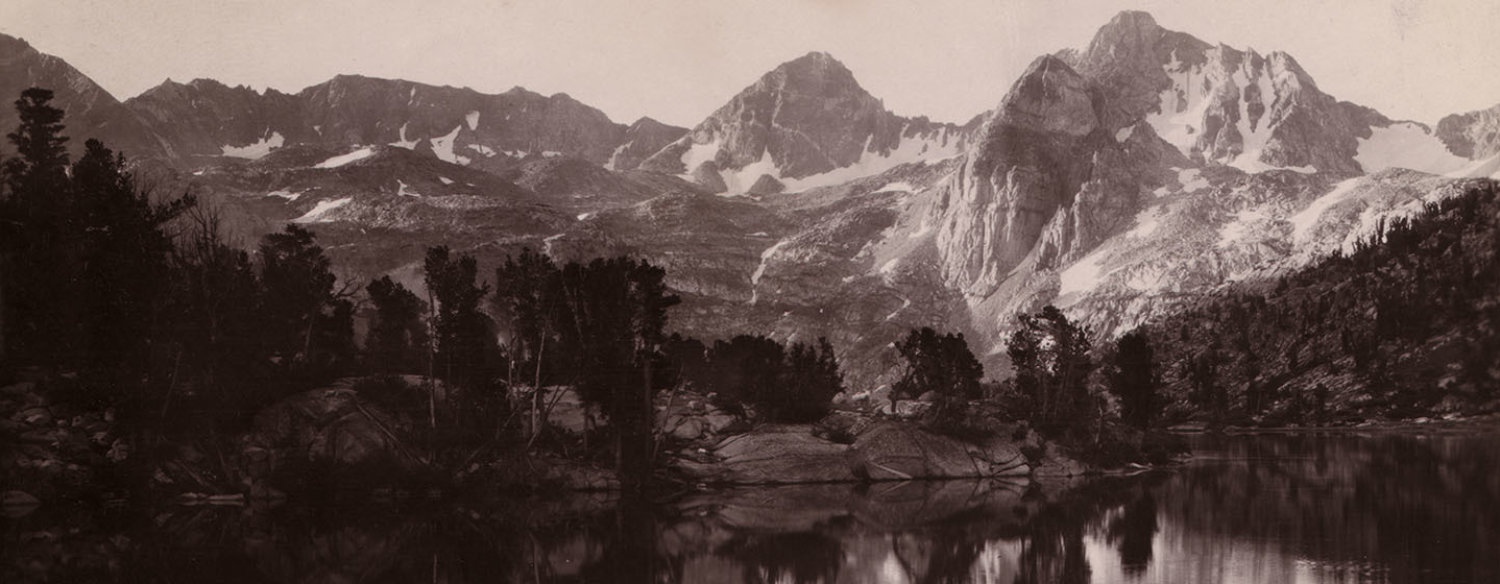
The cavalry was also in charge of patrolling the nation's three other national parks: General Grant, Sequoia, and Yosemite. Under Captain Charles Young, the first black man to be put in charge of a national park, soldiers built the first trail to Mount Whitney and erected protective fences around the big trees in Sequoia National Park.
Like their counterparts in Yellowstone, the troops in California operated without clear legal authority and had no power to arrest and prosecute criminals.
John Muir was extremely grateful for the Army's protective presence. However, to further ensure the Yosemite Valley's protection, Muir wanted it to be transferred from state control to the federal government and made part of a larger Yosemite National Park. In 1892, Muir and a handful of prominent Californians formed the Sierra Club to help promote Yosemite's protection.