
George Bird Grinnell and the Audubon Society
Add to Scrapbook
Cover of Forest & Stream magazine |
The aptly named ornithologist George Bird Grinnell, editor and owner of Forest and Stream magazine, was keenly aware that the nation's bountiful natural resources were not inexhaustible. He could remember seeing immense flocks of passenger pigeons, so numerous that they darkened the sky. While traveling, he had encountered a buffalo herd so vast that his train was forced to stop for three hours while the beasts crossed the tracks.
Now, so much wildlife was rapidly disappearing. Passenger pigeons were on the verge of extinction. The country's last remaining herd of wild buffalo, estimated at only a few hundred animals, was in Yellowstone.
Grinnell used the pages of Forest and Stream to try to point Americans in a new direction. He wasn't against hunting; in fact he loved to hunt. But he feared that without wise management, there would be nothing left for hunters to shoot. He created the Audubon Society, aimed at stopping the heedless killing of wild birds. Together with rising political star Theodore Roosevelt, he battled to protect Yellowstone. But something was missing: there were still no laws in place to give Yellowstone's caretakers clear authority to protect its wildlife.
A Poacher to the Rescue
Add to Scrapbook
Sixth Cavalry with buffalo heads taken from poacher Edgar Howell, Yellowstone National Park, 1894 |
A poacher named Edgar Howell would soon unwittingly come to their aid when, on March 13, 1894, he was caught skinning the carcasses of buffaloes he had shot in Yellowstone. Howell bragged to a reporter that the worst punishment he could receive for his crime was expulsion from the park and the loss of equipment worth $26.75. Grinnell ran the story in Forest and Stream and succeeded in creating a public outcry. (See sidebar video.)
On May 7, 1894, President Grover Cleveland signed a bill into law authorizing regulations that would finally protect the park, its geysers, and its wildlife. It was known as the "Act to Protect the Birds and Animals in Yellowstone National Park."
Muir's Preservation vs. Pinchot's Conservation
In 1891, Congress had enacted the Forest Reserve Act, empowering presidents of the United States to set aside parcels of public land as national forest reserves.
Add to Scrapbook
John Muir, circa 1900 |
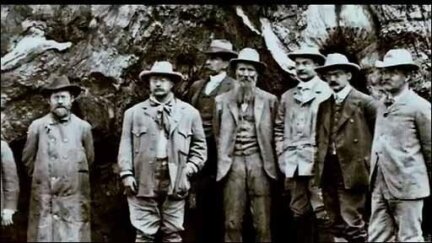
John Muir and Gifford Pinchot, both key figures associated with the origins of the American conservation movement, would differ strongly on what should be permitted in these forest preserves. Pinchot was a Yale graduate who had studied forestry overseas and was the first American to declare himself a professional forester. The two men met in 1896 and initially enjoyed each other's company, agreeing that something had to be done to save America's forests from destruction.
Muir was a preservationist. He considered forests sacred and wanted them treated as parks, with logging, grazing, and hunting prohibited. Pinchot was a conservationist. He believed the best way to protect the forests was to manage their use, not leave them alone. His favorite saying was "the greatest good for the greatest number."
Add to Scrapbook
Gifford Pinchot, circa 1905 |
Pinchot's "utilitarian" conservation found favor with both Congress and the administration of President Grover Cleveland. Pinchot was appointed the nation's chief forester and the national forests became part of the Department of Agriculture, to be used and managed like a crop, not preserved like a temple.
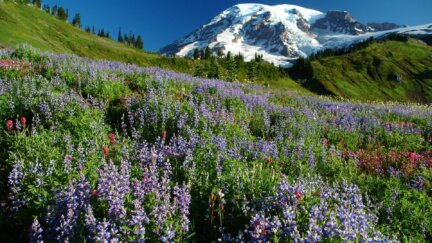
Muir, who had already witnessed so much devastation by lumber syndicates, doubted that the new National Forest Service could adequately protect the forests. He and his supporters won a small victory in 1899, when they succeeded in turning Mount Rainier in Washington State from a national forest into a national park.