
A National Park Service with a Paradoxical Mission
Add to Scrapbook
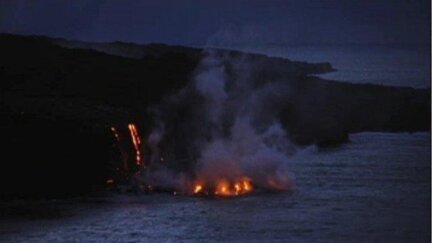
Peering into Kilauea's crater, Hawai'i National Park, 1920s |
Add to Scrapbook
George Dorr, Acadia National Park |
On August 1, 1916, efforts by a coalition of naturalists, scientists, businessmen, and boosters to protect Pacific volcanoes – with the enthusiastic support of Stephen Mather – were rewarded by the creation of Hawai'i National Park. But Congress declined to appropriate any money for it because, as one senator explained, "It should not cost anything to run a volcano." (See sidebar)
In the same year, a large island off the coast of Maine was given protection when, on July 8, 5,000 acres of Mount Desert Island were set aside as a national monument by President Woodrow Wilson. Textile-industry heir George Dorr had worked relentlessly for the designation. He continued to advocate for increased federal protection for the preserve, which would later become Acadia National Park, named for the French word for "heaven on earth."
1916 was also the year that Stephen Mather shifted his promotional crusade for a national park service into high gear. For years, park supporters had been arguing that the national parks needed to be brought together under a single federal agency. Yet every bill to create one had died in Congress, the victim of quiet lobbying by powerful commercial interests and by John Muir's old nemesis, Gifford Pinchot, who believed that the Forest Service should take over the national park areas.
When Mather entered the debate, he added an economic element to the argument. Only under a single government agency, he said, could the parks be properly packaged together and promoted. Using his exceptional promotional skills and the connections he had cultivated, he organized a publicity blitz for the cause, the likes of which Washington had never seen. Newspapers ran glowing stories about the parks; letter-writing campaigns were launched; and school children were encouraged to enter essay competitions about the parks. The National Geographic Magazine devoted an entire issue to America's scenic wonders, and Mather made sure every congressman received a copy.
Add to Scrapbook
Frederick Law Olmsted, Jr. |
While the campaign was underway, Horace Albright and others drafted a bill creating a separate parks bureau within the Interior Department. Frederick Law Olmsted Jr., who was asked to add a statement of purpose that would guide park policy into the unseen future, wrote that the new agency should manage the parks for the enjoyment of the American people, and at the same time keep them "unimpaired for the enjoyment of future generations."
His statement embodied a fundamental contradiction: the enjoyment of the parks versus the "unimpaired" preservation of the parks. Albright wrote that despite being aware of this inherent paradox, he and his colleagues believed that, "with rational, careful, and loving thought, it could be done."
Add to Scrapbook
Letter from the White House to Stephen Mather, with Horace Albright’s telegram announcing the creation of the National Park Service, August 26, 1916 |
Finally, on August 25th, 1916, President Woodrow Wilson signed into law an act creating the National Park Service. Stephen Mather was named the new agency's first director, and Horace Albright agreed to stay on as his second in command.
The Missing Mather
Five months after the creation of the National Park Service, Mather convened a conference in Washington, D.C. to celebrate the park movement. There were speakers on every conceivable park-related topic, as well as an exhibit of paintings by renowned artists depicting scenes from America's national parks.
As the conference continued, Mather was mysteriously absent from the proceedings. On the night after the conference ended, Albright was summoned to a private room in the Cosmos Club where he found Mather in a terrible state – crying, moaning and incoherent. Eventually, an anguished Mather managed to convey that he felt that he was a failure and that there was nothing left to live for.
Mather was brought to a family doctor in Pennsylvania. His wife revealed that Mather had suffered a similar breakdown in 1903, and that further episodes of depression had been relieved only by his spending time in the wilderness of the West – the same trips which had originally inspired his passion for the parks.