
Add to Scrapbook
Cosmos Club, where Stephen Mather collapsed, Washington D.C., 1915 |
The Missing Mather (continued)
After accompanying Mather to the doctor, Albright returned to Washington. He and Interior Secretary Lane agreed to keep Mather's condition secret while Mather received treatment at a sanitarium. In his absence, Albright would serve as acting director.
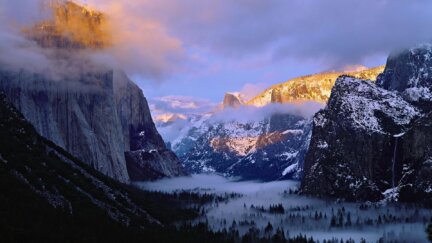
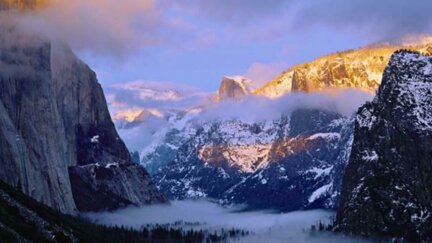
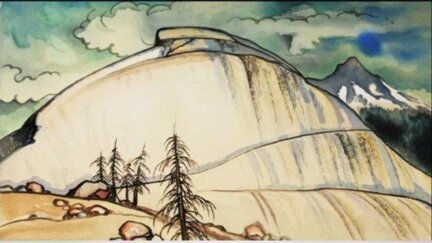
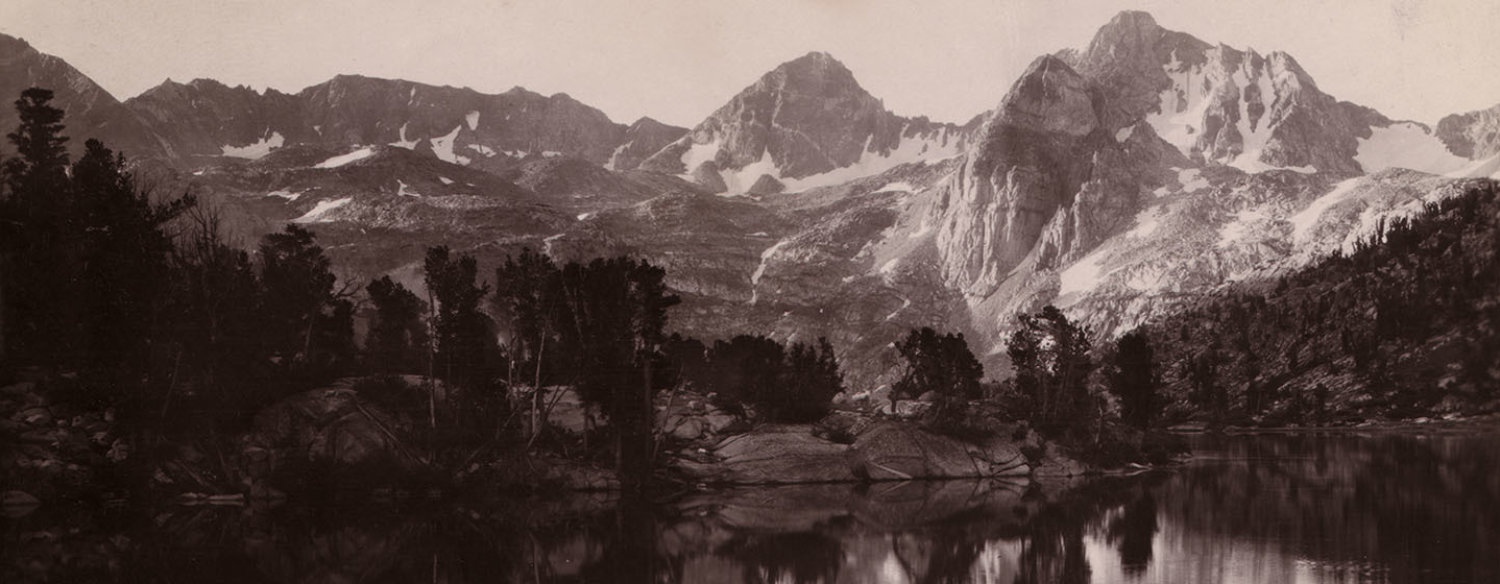
Although Mather twice attempted to kill himself, his wife believed he would pull through as long as he could be convinced he had something to look forward to. On the wall of his hospital room, she permitted only two decorations. Both of them were framed pictures of Yosemite National Park.
Albright's Challenges
Add to Scrapbook
U.S. Railroad Administration promotes tourism to the national parks after WWI |
The task of organizing the brand-new National Park Service fell to Horace Albright who, at 27, was the youngest person in the department. He quickly realized that he would have to navigate this uncharted territory alone, with only the ideal and principles for which the Park Service was created as a guide.
Besides testifying before Congress and embarking on a 10,000-mile inspection of the western parks, Albright also had to fend off questions about his boss's whereabouts. His task became even more challenging in April 1917, when the United States entered World War I. Albright battled to protect the parks from Western lumber and livestock interests, who saw the war mobilization as an opportunity to exploit the protected resources of the parks.
President Wilson was persuaded to halve the size of Washington's Mount Olympus National Monument, in order to increase timber cutting. Ranchers eager to graze their livestock in the parks encouraged friendly newspapers to editorialize that "soldiers need meat to eat, not wildflowers." There were even proposals that Yellowstone's wild elk and buffalo be slaughtered for canned meat to send to the troops. When Interior Secretary Lane ordered Albright to let 50,000 sheep graze in Yosemite Valley, Albright threatened to resign – and Lane backed down.
Albright and the Creation of Zion National Park
Add to Scrapbook
Horace Albright and group, Zion National Park |
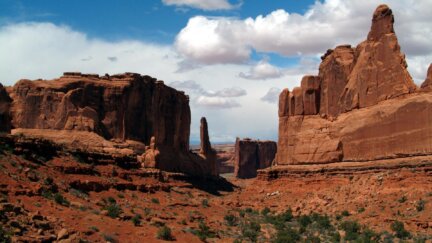
During the war, Albright traveled to southern Utah to view a beautiful canyon of sandstone cliffs that had been set aside as Mukuntuweap National Monument in 1909, and ignored by the federal government ever since.
For Albright, it was love at first sight. He was so impressed with the "towering rock walls, splashed with brilliant hues of tans and reds interspersed with whites," that he wanted it to be expanded into a national park. He felt that the name Mukuntuweap, from a Paiute word for "canyon" was too hard to remember; he suggested that it be changed to Zion, the name the local Mormons used for it. Albright's enthusiasm persuaded President Wilson and at the end of 1919, Congress created Zion National Park.
Mather's Return
Add to Scrapbook
Charles Sheldon, promoter of Mt. McKinley (later Denali) National Park |
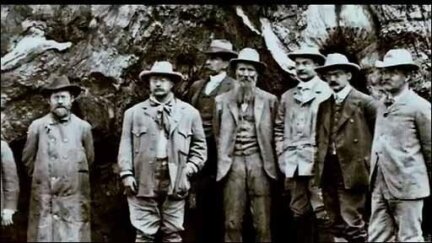
For a while, Stephen Mather was permitted only two visitors: his wife and Horace Albright. His doctor strongly believed that Mather's life depended on the national parks; that it was through the parks that he'd be able to "bring him back." In his regular visits, Albright brought pictures from the Mather Mountain Party, which Mather reviewed while recounting anecdotes from the trip.
Albright also brought a copy of the bill creating Mount McKinley National Park. Wealthy naturalist Charles Sheldon, Mather's friend, had become convinced that the area surrounding the continent's highest peak, Alaska's Mount McKinley, needed to become a national park – not just because of the majestic mountain, but also because of the wildlife teeming around it, especially the endangered Dall sheep. Sheldon had joined forces with the Boone and Crockett Club to push Congress to establish Mount McKinley National Park. This was uplifting news for Mather.