
Add to Scrapbook
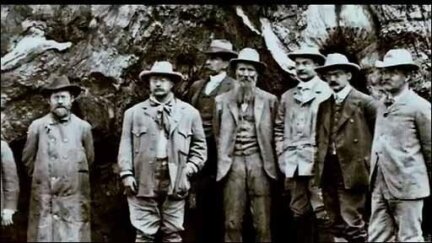
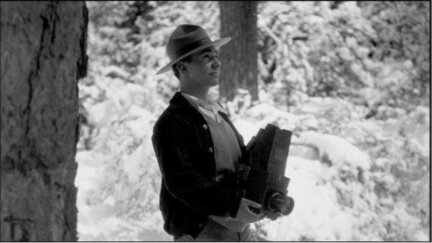
Stephen Mather, Zion National Park, 1918 |
Mather's Return (continued)
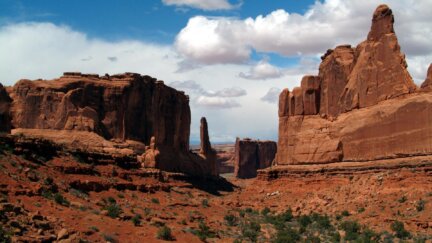
Eighteen months after his collapse, in the fall of 1918, Stephen Mather returned to his job. He threw himself into his work as if he had never been away. He soon took a trip with Albright to Zion, and agreed that its unique beauty made it worthy of national park status. A side trip to Bryce Canyon, with its unusual hoodoo rock formations, filled him with delight.
Reinvigorated from his time in the parks, Mather became enthusiastic about the scenic attractions of Utah and the southwestern deserts. He pushed for the creation of Arches National Monument; lobbied for protection for the area around Lehman Caves in Nevada, home of the bristlecone pines – the oldest living things on earth; and promoted the creation of Bryce Canyon National Park.
The Grandest Canyon of Them All
Despite all his successes, there was one canyon absent from his list of national parks that bothered Mather more than anything: the grandest canyon on earth – 277 miles long, 10 miles wide, and a mile deep. Proposals to make the Grand Canyon a national park dated back to the 1880s, but they all had failed in Congress because of fierce opposition from local ranchers, miners, and settlers. When Theodore Roosevelt had urged the people of Arizona to leave the Grand Canyon as it was, no one had listened.
Add to Scrapbook
Panoramic view of the Grand Canyon, Kolb Bros. photo |
Already several hotels perched on the canyon's precipice, and when the railways extended their tracks to the South Rim they began constructing even more buildings. Yearly visitation rose into the tens of thousands. (See sidebar)
President Theodore Roosevelt had stretched the limits of the Antiquities Act in 1908, when he established Grand Canyon National Monument. Mather desperately wanted it made into a national park. Horace Albright felt it would be a tremendous boost to his boss's health, so he poured an enormous amount of energy into the project.
However, at every turn, Mather and Albright found themselves blocked by Ralph Henry Cameron, a prospector and hotel owner who considered the canyon his own private domain and was unafraid to take on anyone who got in his way. Cameron had claims on the most scenic and strategically located spots, and he viewed Mather's efforts at creating a national park as a direct economic and political threat. In a lawsuit working its way toward the Supreme Court, Cameron's lawyers were even arguing that Roosevelt's executive order creating the national monument had been illegal.
Add to Scrapbook
Ralph Henry Cameron, Grand Canyon National Park |
In 1919, Congress finally passed a bill creating Grand Canyon National Park. A year later, when the Supreme Court ruled against Cameron, Mather and Albright figured that their troubles with him were over at last. But Cameron, newly elected to the U.S. Senate, swore that he would get revenge.
Mather's one-year commitment to the national parks had stretched to five. He could easily have claimed victory for setting the park system in motion and stepped down. But he had renewed energy, and many new ideas for bringing even more people to see the parks.