
Add to Scrapbook
John D. Rockefeller Jr. |
Albright's Dream for the Tetons (continued)
One day in 1924, Albright learned that the great philanthropist John D. Rockefeller Jr., traveling incognito, was about to visit Yellowstone. Rockefeller's generosity had been instrumental in creating Acadia National Park, and Albright was delighted to learn of his imminent visit – until he received a letter from Stephen Mather asking him not to disturb Rockefeller's privacy by lobbying him about the Tetons.
Two years later, in 1926, Rockefeller returned to the park and this time Mather did not issue the same warning. Albright took the first opportunity to drive Rockefeller and his wife to Jackson Hole. When they stopped to watch the sunset, Albright revealed his dream for preserving the area. Rockefeller listened in silence. "I felt a little let down," Albright wrote. "Here I had laid out my fondest dream, and there was no word of comment."
Add to Scrapbook
Horace Albright speaks at dedication of Grand Teton National Park, 1929 |
But Albright's disappointment turned into elation when, four months later, he was invited to Rockefeller's New York office to discuss the Tetons again. This time he showed Rockefeller detailed maps and cost estimates for a modest plan to purchase some of the land near Jackson Lake. The philanthropist interrupted, saying his family was only interested in "an ideal project." He wanted to pursue the more ambitious dream that Albright had described earlier.
Albright went back to work and soon presented a grander proposal to buy up more than 30,000 acres for over a million dollars. Rockefeller immediately agreed to it all, and two years later Congress created a small Grand Teton National Park.
Albright and Rockefeller were disappointed that the boundaries included only the eastern front of the mountains themselves and none of the surrounding valley. Rockefeller continued quietly buying up land, giving Albright hope that his dream might one day be realized.
Highways with a View
In 1928, yearly visitation at the national parks topped 3 million for the first time. "The parks...have become democratized," Stephen Mather declared, and in many ways he was right. Park visitors no longer came exclusively from the upper classes. They now represented the new, expanding but predominantly white middle class – Americans with their own cars and more money in their pockets.
Add to Scrapbook
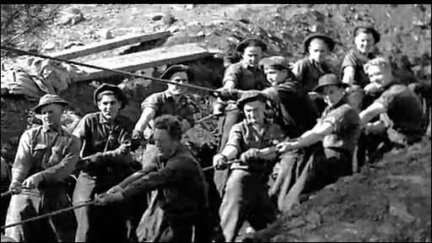
Constructing Going-to-the-Sun Road, Glacier National Park, circa 1932 |
Add to Scrapbook
Going-to-the-Sun Road, Glacier National Park, 1932 |
Congress, too, seemed more willing to support the park system. It more than doubled annual appropriations, although most of the money was for improving roads to accommodate the influx of car-driving tourists.
Mather embraced an ambitious plan to have one major road in each park that would open up its scenic wonders to the motoring public. At Glacier National Park, a road was proposed to climb through the mountains over Logan Pass. Mather took a personal interest in its design, championing a longer, more expensive road that would not detract from the view. The result was the awe-inspiring Going-to-the-Sun Road.
From then on, Mather insisted that landscape architects oversee every detail of national park roads. Throughout the system, the entire park experience was being redesigned. Scenic turnouts, rest stops, new maps and guidebooks were all geared towards the motoring tourist.