
Yard vs. Mather and the Creation of the Wilderness Society
Add to Scrapbook
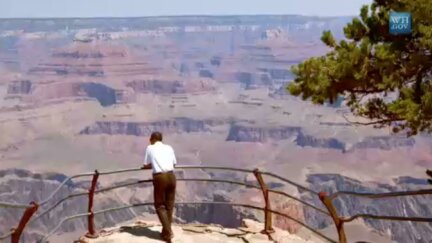
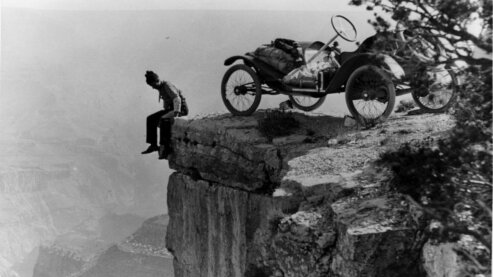
Stephen Mather and Robert Sterling Yard, Grand Canyon National Park |
Add to Scrapbook
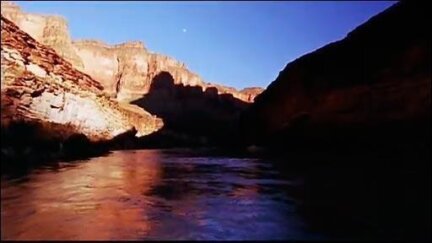
On the Echo River, exploring Mammoth Cave National Park, 1915 |
Not everyone agreed with Mather's aggressive road policy. Among the dissenters was Robert Sterling Yard, head of the National Parks Association, a group that Mather had helped create to bolster the parks movement. Yard had worked for Mather to promote the parks, but he now worried that all the provisions for "motor tourists" were overwhelming the park ideal of providing inspiration and "elevation of the spirit." Like John Muir, Yard wanted to keep the parks as pristine as possible.
Yard also opposed Mather when Mammoth Cave and Shenandoah National Park were set aside. He felt that they did not meet "national park standards;" the Virginia site was too small and lacked "primitive" forests, and no one from the Park Service had even visited Mammoth Cave.
Hoping to start a movement to "preserve the primitive," Yard joined forces with conservationist Aldo Leopold, forester Bob Marshall, and other like-minded people. They formed the Wilderness Society and their mission was to protect pristine lands not just from developers, but from the Park Service itself.
Mather was not happy to have his old friend questioning his judgment. It was a bitter surprise for him when Yard and the National Parks Association came out against his proposal to enlarge Sequoia and General Grant (now Kings Canyon) national parks.
The Death of Mather
Meanwhile, Mather could always count on Horace Albright. No one in the Park Service admired Mather more, or was more privy to the director's periodic wild mood swings. At least two more times in the 1920s, Mather was incapacitated by depression, while Albright quietly filled in.
In 1927, on his way back from inspecting Hawai'i National Park, Mather suffered a heart attack. But a month later he was in Yosemite, hiking to Glacier Point to prove to his doctor that he was back at full strength. Resuming his busy schedule, he went to Mount Rainier to go over plans for a new road, attended the opening of a lodge on the North Rim of the Grand Canyon, and checked on the progress of a tunnel being blasted through the sandstone at Zion.
Add to Scrapbook
Stephen Mather with his daughter, Bertha at Yosemite Museum, 1928 |
Add to Scrapbook
Stephen Mather memorial plaque, Glacier National Park, 1933 |
On July 4, 1928, he celebrated his 61st birthday in his favorite park, Yosemite. He was delighted to learn that his efforts to bring attention to the plight of an endangered grove of privately owned giant sugar pines had prompted John D. Rockefeller Jr. to buy the land and donate it to Yosemite.
Then, on November 5, 1928, Mather suffered a stroke that left him seriously incapacitated. Albright was sworn in as the second director of the National Park Service on January 12, 1929. A year later, on January 22, 1930, Stephen Mather died.
In his memory, a mountain just east of Mount McKinley would be named Mount Mather; an overlook at the Grand Canyon would be called Mather Point; a scenic stretch of the Potomac River would be named Mather Gorge; a nationwide tree-planting campaign in his honor would result in Mather Forest near Lake George.
And in every national park, the National Park Service erected a bronze plaque with his likeness and these words: "There will never come an end to the good that he has done." (See sidebar video.)