
Add to Scrapbook
The Great Depression, White Angel Breadline, 1933, Dorothea Lange photograph |
As the 1920s ended, the United States was about to enter two of the most frightening decades of the 20th century. An economic cataclysm would threaten the foundation of American society, and a war would threaten the existence of freedom throughout the world.
During those dark years, the national parks would both thrive and undergo a series of dramatic changes. A new president, Franklin Delano Roosevelt, would vastly expand the number of parks and transform the very notion of what a national park could be. And a young biologist, George Melendez Wright, would insist that the preservation of wildlife is as important as the preservation of scenery.
Horace Albright and Franklin D. Roosevelt's New Plan for the Parks
Add to Scrapbook
Franklin D. Roosevelt, 1933 |
When Horace Albright took over as director of the National Park Service in 1929, he wanted to secure even more places under Park Service protection. One goal was to transfer the national military parks, battlefields, and monuments away from the War Department and Department of Agriculture, and into the national park system.
He saw his chance to realize that dream in April 1933, when newly inaugurated president Franklin D. Roosevelt invited him on a day trip to Virginia's Blue Ridge Mountains. On the way back, Albright rode with the president and pointed out sites important to the Second Battle of Bull Run in the Civil War, which led to a broader discussion of other battlefields and historic sites in the area.
Add to Scrapbook
Mount Rushmore National Monument |
When they got back to the White House, the president asked Albright to put his proposal in writing. Within days, Roosevelt signed two executive orders that would transform the Park Service. The agency was given responsibility for more than 20 military parks, historic battlefields, and monuments.
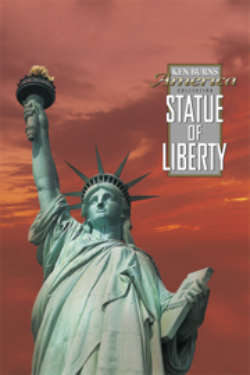
Under the new plan, the Park Service was also expected to protect more than a dozen non-military historic sites. Among them were the Statue of Liberty and Mount Rushmore, as well as many of the District of Columbia's most hallowed places, including the Lincoln Memorial and the National Mall. National parks now preserved more than natural wonders and wildlife; they embraced the idea of America itself.
George Melendez Wright and the Balance of Nature
Add to Scrapbook
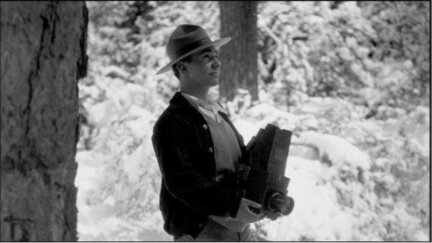
George Melendez Wright, Yosemite National Park |
Add to Scrapbook
Joseph Dixon and Ben Thompson with field car |
George Melendez Wright was working in Yosemite as assistant park naturalist when he became convinced that the park managers had overlooked a responsibility which Wright called "the very heart of the national park system:" preserving wildlife in its natural state.
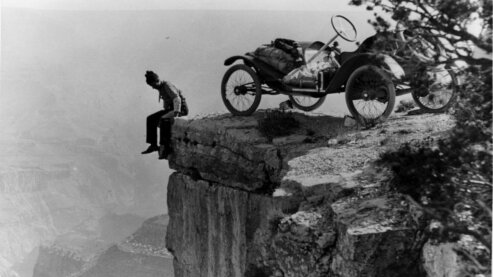
The young Wright managed to persuade his superiors to authorize a scientific survey of wildlife conditions in the parks. In the summer of 1930, he set off with two colleagues on an 11,000-mile tour of the western parks. Their task would take them four consecutive years.
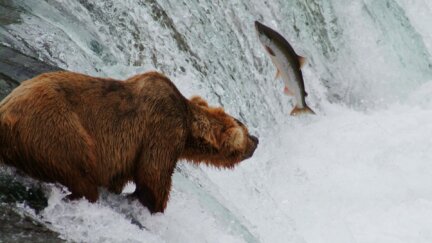
Everywhere he went, Wright discovered disturbing evidence that the equilibrium of nature was out of kilter in the parks. Coyotes, wolves and mountain lions – even badgers, hawks and owls – were routinely shot as unwelcome predators. Elk, deer, and antelope were being fed hay in the wintertime, and buffalo were kept in corrals like domestic cows.
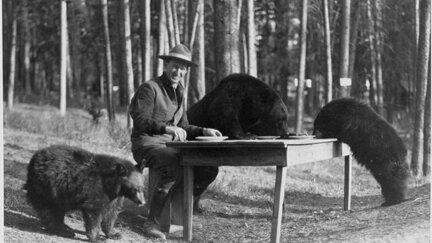
At Yellowstone, rangers stomped on the eggs of white pelicans because it was feared that grown pelicans deprived anglers of too many fish. Bears were encouraged to beg for handouts from tourists.