
Add to Scrapbook
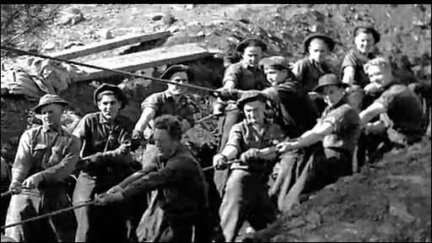
CCC workers, Iron Springs, Yosemite National Park, 1934 |
Add to Scrapbook
CCC workers breaking for lunch, Yosemite National Park, 1933 |
The Civilian Conservation Corps (continued)
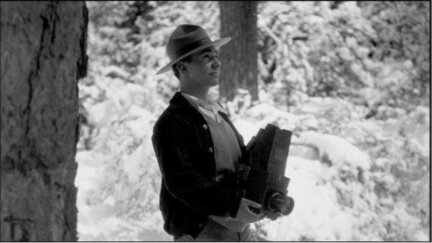
Horace Albright was part of the early planning for the CCC, and because the Park Service had projects ready to go, it was given a lead role in the new program. Within three months, 1,000 CCC camps were up and running, with nearly 300,000 young men at work in them.
For many, it was their first time away from home – and their first real encounter with the natural world. The young men were paid $30 a month, most of which was sent home to their families.
Besides the conservation work they did, the men also participated in organized sports, hobby clubs, discussion groups, and classes meant to prepare them for getting jobs once they left the camps.
In all, more than 3 million men found work with the Civilian Conservation Corps during the course of the Depression. Members of the CCC were responsible for building more than 97,000 miles of fire roads in national forests, combating soil erosion on 84 million acres of farmland, and planting 3 billion trees.
Some $218 million was pumped into projects in the national parks, including trails and buildings that remain to this day. (See sidebar video.)
Roosevelt Expands the Parks
Despite hard times, the number of park visitors continued to rise during the 1930s, from roughly 3 million a year at the start of the decade to 15.5 million in 1939. President Franklin Roosevelt was intent on setting aside even more places for people to visit.
Add to Scrapbook
Moose, Lake Ritchie, Isle Royale National Park |
Add to Scrapbook
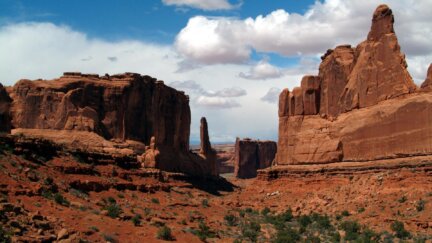
The Great Organ rock formation, Capitol Reef National Park, 1935 |
He created Isle Royale National Park in the northwestern corner of Lake Superior, and used his authority as president to create numerous national monuments that would eventually be elevated to park status. Among them:
- Joshua Tree in southern California, named for the distinctive plants whose silhouette Mormon pioneers believed looked like the prophet Joshua raising his arms to beckon them forward.
- The Dry Tortugas, a cluster of seven tiny islands 70 miles off the southernmost tip of Florida. On one island sits the largest brick fortification in the world: Fort Jefferson, used during the Civil War as a prison for Union Army deserters and for Dr. Samuel Mudd, who was exiled there as punishment for treating the broken leg of John Wilkes Booth, the assassin of President Lincoln.
- Capitol Reef in Utah, where the 100-mile Waterpocket Fold exposes a panoply of differently colored rock formations that the Navajo Indians called the "Land of the Sleeping Rainbow."
- The Channel Islands off the coast of Santa Barbara, California, home to the largest seal and sea lion breeding colonies in the nation, as well as more than 100 uniquely native species including the California brown pelican.
The Battle for Olympic National Park
Add to Scrapbook
Harold Ickes |
No one was more willing to take on entrenched interests than the president's quick-tempered Secretary of the Interior, Harold Ickes. Ickes was one of Roosevelt's closest – and most controversial – advisers; Horace Albright later called him "the meanest man who ever sat in a Cabinet office in Washington" and "the best Secretary of the Interior we ever had."
Ickes fought battles on every front. He abolished the department's segregated lunchrooms and instructed the national parks in the South to ignore local Jim Crow laws requiring separate facilities for blacks. Ickes was also tirelessly effective in advocating new parks, regardless of the opposition.