
Add to Scrapbook
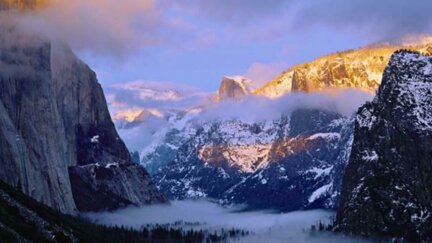
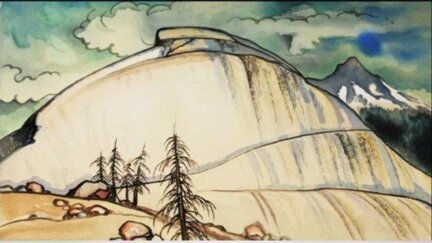
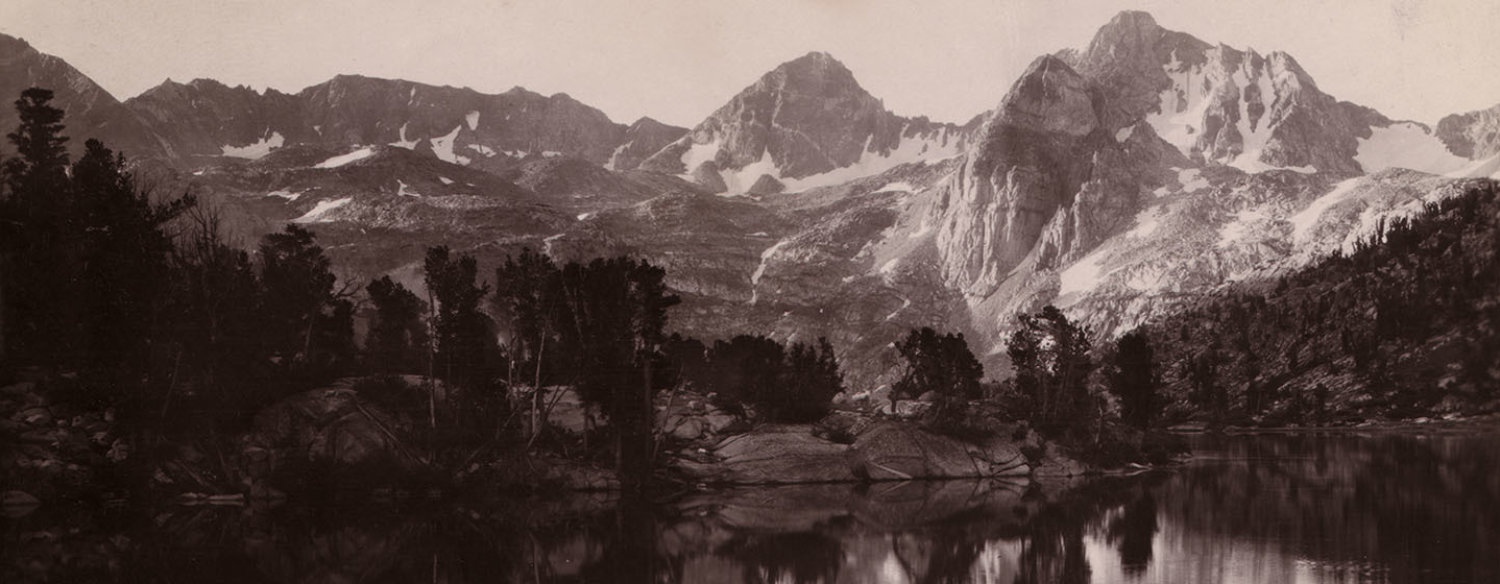
Looking southeast from base of Moro Rock, Kings Canyon National Park, 1925 |
Ansel Adams, Harold Ickes and Kings Canyon National Park (continued)
Through a series of shrewd maneuvers, Ickes turned one private-interest group against the other, waged ceaseless battle against the Forest Service's efforts to retain control over the land, and persuaded conservation groups not to abandon their support because of the compromises he felt he had to make.
But even Ickes' political mastery was not enough, until the park bill's fiercest congressional opponent tried to ensnare the bill's sponsor, California Republican Bud Gearhart, in a phony bribery scandal. Indignant colleagues rallied behind Gearhart and his bill, which now passed easily.
On March 4, 1940, President Roosevelt signed the law creating Kings Canyon National Park, a roadless park that he would never be able to visit in person because of his inability to walk unaided. Instead, he would appreciate its magnificence through the photographs of Ansel Adams.
Add to Scrapbook
Ansel Adams hiring card |
The Impact of Another World War on the National Parks
In August 1941, Ickes put Ansel Adams on the Interior Department's payroll at $22.22 a day, and told him to bring back photographs of all the parks. Over the next eight years, Adams would compile thousands of images of the national parks and visit every one of them except the Everglades.
Just a few months after Adams began his travels, the Japanese attacked Pearl Harbor and the United States was thrust into another world war. Like everything else in American life, the national parks now found themselves subordinated to the war effort. The CCC camps closed down, as the men who had been working in the parks became soldiers and shipped out overseas. Park budgets were drastically cut and pressures mounted to open the parks to timber cutting, mining, and grazing.
Add to Scrapbook
Soldiers visit Yosemite National Park during World War II, 1943, Ansel Adams photograph |
Add to Scrapbook
World War II soldiers, Wawona Tunnel Tree, Yosemite circa 1943, Ansel Adams photograph |
Add to Scrapbook
Group visiting Cliff Palace, post-restoration, Mesa Verde National Park, 1943 |
Harold Ickes did his best to minimize the damage. When pressure mounted to close the national parks for the duration of the war, he argued that in times of national stress and sorrow the people needed precisely what the national parks could offer.
When Ickes informed Roosevelt that a proposed bombing range would endanger the breeding grounds of the rare trumpeter swan that George Melendez Wright had worked so hard to preserve, the president ruled in favor of the birds. "The verdict is for the Trumpeter Swans and against the Army," Roosevelt declared. "The Army must find a different nesting place!"
With the onset of war, the number of park visitors plummeted from a record 21 million in 1941 to 9 million the next year, and then to 6.8 million in 1943. Many park rangers changed uniforms and went off to war.
Despite cutbacks, the parks still had a role to play. At Mount Rainier, units of what would become the 10th Mountain Division were taught how to survive high altitudes and cold weather. Desert training took place in Joshua Tree National Monument, and military equipment and clothing were tested at other parks.
War planners also realized that national parks could provide rest and recuperation for battle-weary soldiers. Rest camps went up in Sequoia, Carlsbad Caverns and the Grand Canyon. Mount McKinley National Park in Alaska was transformed into an Army recreation camp where soldiers stationed in the Aleutian Islands could fish, hike, ski, skate and relax. In 1943, 1.6 million soldiers found solace in a national park – one-quarter of the parks' total visitors.