
Add to Scrapbook
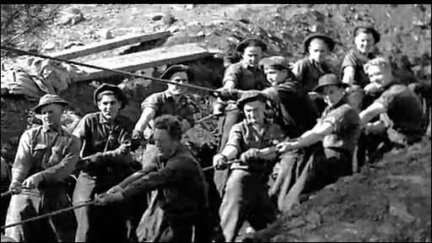
Manzanar Internment Camp, 1943 |
Add to Scrapbook
Manzanar Internment Camp, circa 1943, photo by Ansel Adams |
The Impact of Another World War on the National Parks (continued)
That same year, Ansel Adams interrupted his photographic survey and went to the Owens Valley of California to document the Manzanar internment camp.
After the attack on Pearl Harbor, President Roosevelt had signed an executive order requiring all people of Japanese descent living on the West Coast – even those who were United States citizens – to be sent to internment camps for the duration of the war.
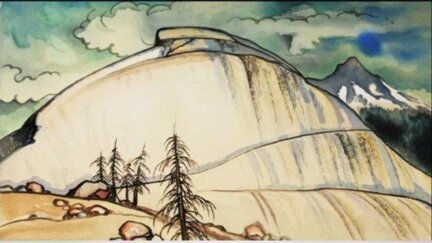
Among the people uprooted from their homes and sent to the camps was Chiura Obata, a California artist whose work was inspired by the beauty of Yosemite. (See sidebar) In some cases internment separated families; Iwao and Hanaya Masushita, a husband and wife who had been living in Seattle, were held in different camps for most of the war. (See sidebar on next page)
Ansel Adams was troubled by the government's internment policy. His photographs of Manzanar were turned into a book entitled Born Free and Equal that was published in 1944, when the U.S. was still at war with Japan. Many people thought the book was disloyal to the American cause, and it sold poorly.
Wyoming vs. Grand Teton National Park
Add to Scrapbook
John D. Rockefeller Jr., 1933 |
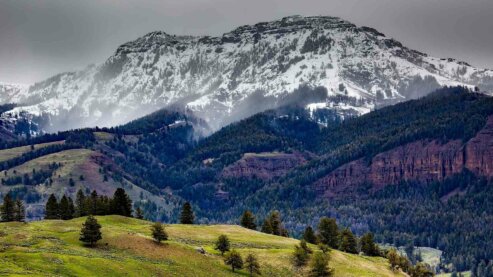
Back in the 1920s, Horace Albright had dreamed of preserving the Teton mountain range and the valley next to it as a national park. John D. Rockefeller Jr. had been a great supporter of this dream. But when Congress created Grand Teton National Park in 1929, it left the valley alone and set aside only the mountains.
Undeterred, Rockefeller continued anonymously buying up land in the valley with the intention of donating it all for the park's expansion. But Wyoming politicians, who had learned of Rockefeller's scheme, did everything they could to thwart his plan, not wanting Washington to tell them what they could and could not do with their land.
Add to Scrapbook
Horace Albright, Grand Teton National Park |
Although Albright was now a private citizen, he was more determined than ever to see his dream fulfilled. In 1943, with Congress still unwilling to enlarge the park, he, Rockefeller and Harold Ickes decided that their only hope lay in the president's authority to create a national monument under the Antiquities Act.
Rockefeller sent a letter to the White House, advising President Roosevelt that he was about to sell his land in Jackson Hole, Wyoming. He explained that for 15 years he had been trying unsuccessfully to give this land as a gift to the federal government in the hope that it would be added to the national park system.
The letter spurred the president into action. On March 15, 1943, Roosevelt signed an executive order establishing Jackson Hole National Monument, placing 221,610 acres of public land on the eastern border of Grand Teton National Park under Park Service control.
Add to Scrapbook
Actor Wallace Beery, Grand Teton National Park |
In Wyoming, the response was a declaration of political war. Roosevelt's action followed "the general lines of Adolf Hitler's seizure of Austria," wrote one journalist. Wyoming's governor threatened to use state police against any national park official attempting to assume authority in the new monument. Hoping to draw attention to their cause, some armed local ranchers – led by the aging movie star Wallace Beery – defiantly herded 500 head of cattle across the monument without a permit.
In Washington, Wyoming's delegation pushed through a bill abolishing the national monument and turning the land back to the Forest Service. Roosevelt vetoed it.