
Add to Scrapbook
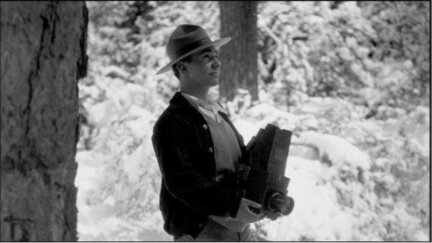
John E. Cook in Alaska, 1970s |
Add to Scrapbook
Mt. McKinley above Wonder Lake, evening, Denali National Park, Q.T. Luong photograph |
Alaska: America's Last Frontier (continued)
To handle the volatile situation, the administration chose John Cook, a Westerner who had earned a reputation as a tough problem solver. Cook promised that the new national monuments would be Alaska's "permanent pipeline," a source of tourist revenue that would still be flowing long after the oil ran out.
While Cook tried to dampen the local hostility to Carter's proclamations, the Alaska Coalition pushed Congress to settle the state's land issues once and for all. After another year and a half of debate, on December 2, 1980, President Carter signed the Alaska National Interest Lands Conservation Act into law.
It wasn't everything the Alaska Coalition had once hoped for, but it was still the largest single expansion of protected conservation lands in world history. The national park system, with 47 million acres added to its care, had suddenly more than doubled in size.
Mount McKinley National Park, which had been in existence since 1917, was nearly tripled in size. The park was officially designated a wilderness, granting increased protection to the land and wildlife, and its name was changed to Denali, the Athabaskan Indian name for the tall mountain at its center.
A Shift in Focus
In the last decades of the 20th century, more historic sites were saved – including reminders of painful episodes in American history, set aside on the belief that a great nation could openly acknowledge them. These new national historic sites included:
Add to Scrapbook
National Guard at desegregation of Little Rock High School, September 26, 1957 |
Add to Scrapbook
Soldier at Vietnam Veterans Memorial |
Add to Scrapbook
Oklahoma City National Memorial |
- Kingsley Plantation in Florida, preserving not only the owner's grand home, but also the small cabins used by the slaves who made his comfortable life possible.
- Central High School in Little Rock, Arkansas, where in 1957 federal troops had to escort nine African-American teenagers past angry mobs to their classes, crystallizing the crisis of school desegregation.
- Andersonville, a Civil War prison camp and national cemetery in Georgia.
- Vietnam Veterans Memorial in Washington, D.C., which lists the names of 58,000 dead and missing soldiers.
- Sand Creek and Washita on the Great Plains, where peaceful Cheyenne villagers were massacred by American soldiers in the 1860s.
- Manzanar in the high desert of eastern California, where American citizens of Japanese descent were imprisoned during World War II.
- Oklahoma City National Memorial, where 168 empty chairs commemorate those killed in a 1995 act of domestic terrorism.
- Flight 93 National Memorial, a field near Shanksville, Pennsylvania, where the sacrifices made by passengers aboard United Flight 93 on September 11, 2001 are commemorated.
As the nation headed into a new century, Americans would continue expanding the number of national parks – and continue using them in ever increasing numbers: from 220 million visitors in 1980 to 255 million in 1990, then edging toward 300 million a decade later.
Like the idea of America itself, the national park idea continues to be constantly debated, constantly threatened, and constantly evolving. "One learns," John Muir had said, "that the world, though made, is yet being made. That this is still the morning of creation."