
Add to Scrapbook
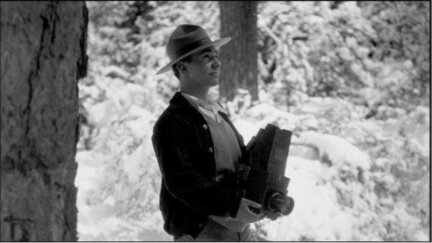
Ralph Henry Cameron, 1915 |
Add to Scrapbook
Stephen Mather at entrance to Cameron's Indian Garden Mine, Grand Canyon National Park, 1921 |
continued from page 1
In a lawsuit working its way toward the Supreme Court, Cameron's lawyers even argued that Theodore Roosevelt's executive order creating the national monument had been illegal.
In 1919, Congress finally passed a bill creating Grand Canyon National Park. A year later, the Supreme Court ruled against Cameron and ordered him to abandon the mining claims he had used to gain control of the Grand Canyon's most scenic spots.
Despite the rulings against him, Cameron refused to remove his buildings, and used his political power to ensure no action was taken to make him comply. Park rangers opposed to him sent their mail in code because they suspected that the canyon's postmaster, Cameron's brother-in-law, was opening their letters.
When Cameron proposed two giant hydroelectric dams and a platinum mine within the park, Stephen Mather decided the senator had gone too far and set out to stop him. Mather galvanized public support and all of Cameron's projects in the Grand Canyon were stopped.
Furious, Cameron had the entire appropriation for Grand Canyon National Park removed from the Senate budget. He denounced Mather on the Senate floor and stirred up spurious claims against Mather and Albright's integrity.
Add to Scrapbook
Ralph Henry Cameron's gate and toll, Grand Canyon National Park, circa 1910, Kolb Bros. photo |
But it all backfired when newspapers reported that Cameron had used his Senate position to further his private interests. Park supporters in Congress criticized his vendetta against Mather, and in 1926, the voters of Arizona refused to re-elect him.
Out of power, Cameron could no longer protect his Grand Canyon empire. His fraudulent mining claims finally had to be abandoned. Indian Gardens, the dilapidated rest stop on the trail down to the river where Cameron's outhouses contaminated the only fresh water, was turned over to the park. And at Bright Angel Trail, the toll gate was finally removed, so that the public, the people who actually owned the park, could freely use it.