
Add to Scrapbook
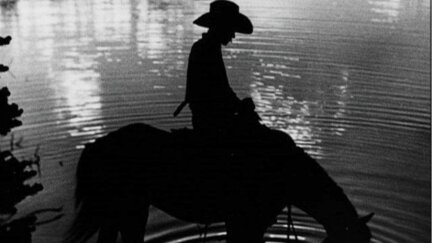
Cherokees at their home in the Smoky Mountains |
Add to Scrapbook
Horace Kephart |
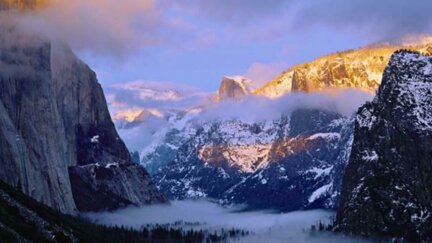
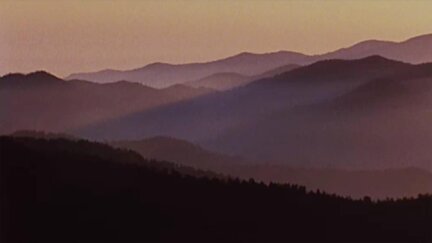
The Smoky Mountains of North Carolina and Tennessee are the tallest mountains in the Appalachian chain, hosting the world's greatest diversity of plant, animal, and insect life of any region in a temperate climate zone – including more than 100 species of native trees.
For centuries it had been the home of the Cherokees, until most of them were forced from their land and sent to Oklahoma on what came to be known as the Trail of Tears.
In their place, other people had settled or hidden in the remote mountain tops and hollows: isolated farmers, moonshiners, Confederate deserters and Union sympathizers during the Civil War, Cherokees who had evaded removal, and other people on the run from civilization for one reason or another.
Horace Kephart, who would play an important role in the fight to save the Smokies, was one such person. An expert on early western explorations, he had been head of the prestigious St. Louis Mercantile Library until his heavy drinking led to the loss of his wife, family and job. In 1904, at age 42, he decided to start over in the Smoky Mountains, a region he called "an Eden still unpeopled and unspoiled," where he tramped the woods and lived alone in a small cabin.
Add to Scrapbook
Cover of The Book of Camping and Woodcraft: A Guide for Those Who Travel in the Wilderness, May 1915 edition, by Horace Kephart |
Add to Scrapbook
Logging in the Smoky Mountains |
Add to Scrapbook
George Masa, friend of the Great Smoky Mountains |
To fill his quiet evening hours, Kephart wrote a book, Camping and Woodcraft: A Guidebook for Those Who Travel in the Wilderness, which became known as the "camper's Bible." He quickly published another book, Our Southern Highlanders, about the people living around him.
Looking around him, Kephart was appalled at the devastation caused by industrial logging in the mountains. Giant lumber companies were buying up land and beginning systematically to strip the mountains of their forest canopy. By the mid-1920s, more than 300,000 acres had been clear-cut. Much of the Smokies, one resident said, looked as if it had been "skinned."
Kephart and a few like-minded people proposed that the Smoky Mountains be made into a national park to protect the 100,000 acres of virgin forest that still remained.
Among those joining the cause was Japanese-born Masahara Iizuka, who had first come to the United States to study mining. In 1915, his job search brought him to Asheville, North Carolina, at the edge of the Smokies. He changed his name to George Masa, took a position in the laundry room at an exclusive inn, and was soon promoted to the valet desk where he became a favorite of the hotel's elite clientele.
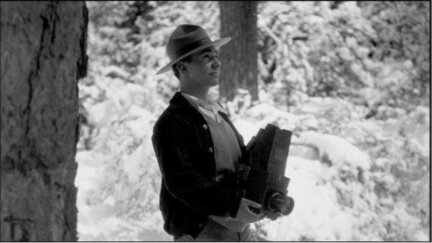
Masa's side job processing and printing guests' film blossomed into a photography business of his own. Barely 5 feet tall and weighing just over 100 pounds, Masa lugged his heavy camera equipment everywhere, searching the Smokies for the perfect vantage point and light to take a picture. The local chamber of commerce would later use his photos to promote the region.
Masa's love of the mountains brought him into contact with Horace Kephart, who recruited him into the crusade to save the Smokies. Community leaders in nearby towns also got on the bandwagon – some out of a love of the mountains, some in the belief that tourism would result in better roads and bolster the economy.