
|
| People Overview | Historical Figures | National Park Service | People Behind the Parks |
Park Visitors | Artists and Writers | Contemporary Commentators |
Add To Scrapbook
Harold Bradley, circa 1957 |
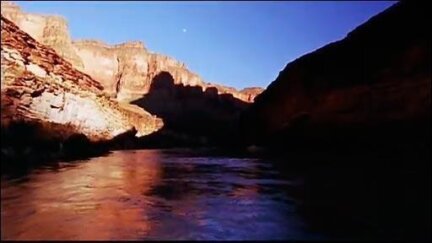
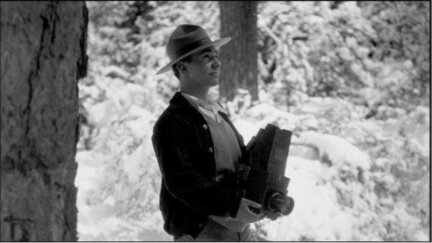
As a boy, Harold Bradley grew up listening to tales of the destruction of Yosemite's Hetch Hetchy Valley directly from John Muir, who was a family friend. At age 73, Bradley, a retired chemistry professor, heard about plans for a pair of dams in the Echo Park section of Dinosaur National Monument in Colorado. He embarked on a "one-man crusade," showing his home movies of the threatened area to anyone who would watch, and leading Sierra Club outings through Dinosaur. His efforts inspired others to take action and helped to prevent the dams from being built.
Add To Scrapbook
Ernest Coe, friend of the Everglades |
Ernest Coe, a landscape architect from Connecticut who moved to Miami in 1925, became one of the leaders of the efforts to make the Everglades a national park. Concerned about the development threats to the Everglades and the steady loss of rare birds and orchids, he formed the Tropical Everglades National Park Association in 1928 and began his crusade.
Known for his tireless persistence – often to the aggravation of elected officials in Florida – Coe worked for six years to get a park bill passed in Congress. It was another 13 years before the land was acquired for the new park. Coe was disappointed that the boundaries weren't as large as he had proposed, but in the years after his death in 1951, those sections that had been omitted were saved as the Florida Keys National Marine Sanctuary, Big Cypress National Preserve, and Biscayne National Park.
Coe is often called "the father of the Everglades," and the main visitor center in the park is named for him.
Add To Scrapbook
George Dorr, circa 1875 |
Dorr was among the wealthy "cottagers" of Mount Desert Island in Maine. Inspired by Charles W. Eliot's campaign to preserve land on the island, Dorr became the most active member of the group, working to buy or receive gifts of land that would be made accessible to the public. He negotiated many of the transactions (often using his own inheritance, and later with money donated by John D. Rockefeller Jr.), mapped many of the island's trails, and lobbied tirelessly for protecting the island - first as a national monument and then, in 1919, as a national park.
After Acadia National Park was created, Dorr served as its first superintendent until his death.
Add To Scrapbook
Charles W. Eliot |
Eliot was the president of Harvard University who had a "cottage" on Mount Desert Island in Maine. His son, also named Charles, a landscape architect with Frederick Law Olmsted's firm in Boston, made the first proposal that much of the island be saved from development and opened for public use. When Charles Jr. died of meningitis, Charles W. Eliot took on his son's dream and organized the Hancock County Trustees of Public Reservations. He recruited George Dorr, and later, John D. Rockefeller Jr., into the effort that ultimately resulted in Acadia National Park.
Add To Scrapbook
Journalist and activist, Juanita Greene |
Journalist and environmentalist Juanita Greene spearheaded the movement to stop commercial development of Biscayne Bay in the 1960s. Greene persuaded the Miami Herald, which favored development, to cover the budding opposition movement and to allow her to write occasional opinion pieces advocating her point of view. Along with Lloyd Miller and Art Marshall, and with the help of Lancelot Jones, she worked to have Biscayne Bay protected as a national park.
A longtime friend of Marjory Stoneman Douglas (who helped create Everglades National Park), Greene later became a leader of Friends of the Everglades, an organization founded by Douglas.
Create personalized postcards using images from The National Parks series and email them to friends or family.
Download some of the glorious images from the documentary to enjoy on your desktop.
Discover the "hidden" stories of the national parks that explore the role of minorities in the creation and protection of the parks.
You own 391 national parks. Come for a visit and take away the experience of a lifetime. Help the National Park Service make America's Best Idea even better!