
|
| People Overview | Historical Figures | National Park Service | People Behind the Parks |
Park Visitors | Artists and Writers | Contemporary Commentators |
Add To Scrapbook
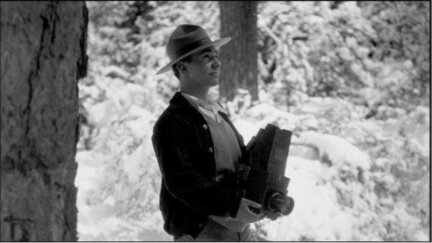
Burton Appleton, CCC veteran, Glacier National Park, circa 1930's |
Burton Appleton, from Brooklyn, New York, enrolled in the Civilian Conservation Corps at age 17. He had not been further than 50 miles from home in his life, so when he was sent to work in Glacier National Park in northwest Montana, it was his first real encounter with the natural world. Appleton is convinced that the only reason he was able to matriculate at the New York State College of Forestry was because of his experience in the CCC.
Add To Scrapbook
J.L. Crawford |
J.L. Crawford was born on January 5, 1914, in a lumber shack on the family farm, where Zion Park headquarters stands today. As he grew up, he saw the park develop. He later worked as a dishwasher at Zion Lodge. After he returned from Europe and World War II, he was hired as a seasonal naturalist at Zion National Park.
Add To Scrapbook
George Hartzog as assistant superintendent at Rocky Mountain National Park, circa 1957 |
Hartzog was born in Colleton, South Carolina, in 1920. He was appointed the seventh director of the National Park Service in 1964 and served for nine years, having previously served as superintendent of Jefferson Expansion National Memorial in St. Louis and associate director of the NPS in Washington. As director of the NPS, he expanded the park system to include 69 areas that otherwise would have been lost. These included national historic sites, parks, and trails.
Hartzog wanted to make the park system relevant to an urban society so he established urban recreation areas such as Gateway in New York and Golden Gate in San Francisco. He also worked to open career doors to minorities and women. To him, the park system's role in preserving and interpreting American history was just as crucial as protecting the large, natural parks.
In 1968, Hartzog appointed Grant Wright to head the U.S. Park Police, the first African-American man to head a major police force in the United States, and Robert G. Stanton as the first black park superintendent since Captain Charles Young nearly 70 years earlier. Hartzog selected several women to be superintendents and was instrumental in winning congressional approval of the 1971 Alaska Native Claims Settlement Act, which ultimately allowed 80 million acres of Alaskan wild lands to be protected for national parks and wildlife refuges.
In 1973, Hartzog was forced out of office after the Park Service revoked a special use permit allowing President Richard M. Nixon's friend, Bebe Rebozo, to dock his houseboat at Biscayne National Monument in Florida.
Create personalized postcards using images from The National Parks series and email them to friends or family.
Download some of the glorious images from the documentary to enjoy on your desktop.
Discover the "hidden" stories of the national parks that explore the role of minorities in the creation and protection of the parks.
You own 391 national parks. Come for a visit and take away the experience of a lifetime. Help the National Park Service make America's Best Idea even better!