
|
|

RANCH LIFE AND THE HUNTING TRAIL
by Theodore Roosevelt
CHAPTER 8
SHERIFF'S WORK ON A RANCH
In our own immediate locality we have had more difficulty with
white desperadoes than with the redskins. At times there has been a
good deal of cattle-killing and horse-stealing, and occasionally a
murder or two. But as regards the last, a man has very little more to
fear in the West than in the East, in spite of all the lawless acts
one reads about. Undoubtedly a long-standing quarrel sometimes ends
in a shooting-match; and of course savage affrays occasionally take
place in the bar-rooms; in which, be it remarked, that, inasmuch as
the men are generally drunk, and, furthermore, as the revolver is at
best a rather inaccurate weapon, outsiders are nearly as apt to get
hurt as are the participants. But if a man minds his own business and
does not go into bar-rooms, gambling saloons, and the like, he need
have no fear of being molested; while a revolver is a mere foolish
incumbrance for any but a trained expert, and need never be carried.
Against horse-thieves, cattle-thieves, claim-jumpers, and the like,
however, every ranchman has to be on his guard; and armed collisions
with these gentry are sometimes inevitable. The fact of such
scoundrels being able to ply their trade with impunity for any length
of time can only be understood if the absolute wildness of our land
is taken into account. The country is yet unsurveyed and unmapped;
the course of the river itself, as put down on the various Government
and railroad maps, is very much a mere piece of guesswork, its bed
being in many parts &emdash;as by my ranch &emdash;ten or fifteen
miles, or more, away from where these maps make it. White hunters
came into the land by 1880; but the actual settlement only began in
1882, when the first cattlemen drove in their herds, all of Northern
stock, the Texans not passing north of the country around the
head-waters of the river until the following year, while until 1885
the territory through which it ran for the final hundred and fifty
miles before entering the Big Missouri remained as little known as
ever.
Some of us had always been anxious to run down the river in a boat
during the time of the spring floods, as we thought we might get good
duck and goose shooting, and also kill some beaver, while the trip
would, in addition, have all the charm of an exploring expedition.
Twice, so far as we knew, the feat had been performed, both times by
hunters, and in one instance with very good luck in shooting and
trapping. A third attempt, by two men on a raft, made the spring
preceding that on which we made ours, had been less successful; for,
when a score or so of miles below our ranch, a bear killed one of the
two adventurers, and the survivor returned.
We could only go down during a freshet; for the Little Missouri,
like most plains' rivers, is usually either a dwindling streamlet, a
mere slender thread of sluggish water, or else a boiling, muddy
torrent, running over a bed of shifting quicksand, that neither man
nor beast can cross. It rises and falls with extraordinary suddenness
and intensity, an instance of which has just occurred as this very
page is being written. Last evening, when the moon rose, from the
ranch veranda we could see the river-bed almost dry, the stream
having shrunk under the drought till it was little but a string of
shallow pools, with between them a trickle of water that was not
ankle deep, and hardly wet the fetlocks of the saddle-band when
driven across it; yet at daybreak this morning, without any rain
having fallen near us, but doubtless in consequence of some heavy
cloudburst near its head, the swift, swollen current was foaming brim
high between the banks, and even the fords were swimming-deep for the
horses.
Accordingly we had planned to run down the river sometime towards
the end of April, taking advantage of a rise; but an accident made us
start three or four weeks sooner than we had intended.
In 1886 the ice went out of the upper river very early, during the
first part of February; but it at times almost froze over again, the
bottom ice did not break up, and a huge gorge, scores of miles in
length, formed in and above the bend known as the Ox-bow, a long
distance up-stream from my ranch. About the middle of March this
great Ox-bow jam came down past us. It moved slowly, its front
forming a high, crumbling wall, and creaming over like an immense
breaker on the seashore: we could hear the dull roaring and crunching
as it plowed down the river-bed long before it came in sight round
the bend above us. The ice kept piling and tossing up in the middle,
and not only heaped itself above the level of the banks, but also in
many places spread out on each side beyond them, grinding against the
cottonwood trees in front of the ranch veranda, and at one moment
bidding fair to overwhelm the house itself. It did not, however, but
moved slowly down past us with that look of vast, resistless,
relentless force that any great body of moving ice, as a glacier, or
an iceberg, always conveys to the beholder. The heaviest pressure
from the water that was backed up behind being, of course, always in
the middle, this part kept breaking away, and finally was pushed on
clear through, leaving the river so changed that it could hardly be
known. On each bank, and for a couple of hundred feet out from it
into the stream, was a solid mass of ice, edging the river along most
of its length, at least as far as its course lay through lands that
we knew; and in the narrow channel between the sheer ice-walls the
water ran like a mill-race.
At night the snowy, glittering masses, tossed up and heaped into
fantastic forms, shone like crystal in the moonlight; but they soon
lost their beauty, becoming fouled and blackened, and at the same
time melted and settled down until it was possible to clamber out
across the slippery hummocks.
We had brought out a clinker-built boat especially to ferry
ourselves over the river when it was high, and were keeping our
ponies on the opposite side, where there was a good range shut in by
some very broken country that we knew they would not be apt to cross.
This boat had already proved very useful and now came in handier than
ever, as without it we could take no care of our horses. We kept it
on the bank, tied to a tree, and every day would carry it or slide it
across the hither ice bank, usually with not a little tumbling and
scrambling on our part, lower it gently into the swift current, pole
it across to the ice on the farther bank, and then drag it over that,
repeating the operation when we came back. One day we crossed and
walked off about ten miles to a tract of wild and rugged country,
cleft in every direction by ravines and cedar cañons, in the
deepest of which we had left four deer hanging a fortnight before, as
game thus hung up in cold weather keeps indefinitely.
The walking was very bad, especially over the clay buttes; for the
sun at midday had enough strength to thaw out the soil to the depth
of a few inches only, and accordingly the steep hillsides were
covered by a crust of slippery mud, with the frozen ground
underneath. It was hard to keep one's footing, and to avoid falling
while balancing along the knife-like ridge crests, or while clinging
to the stunted sage brush as we went down into the valleys. The deer
had been hung in a thicket of dwarfed cedars; but when we reached the
place we found nothing save scattered pieces of their carcasses, and
the soft mud was tramped all over with round, deeply marked
footprints, some of them but a few hours old, showing that the
plunderers of our cache were a pair of cougars &emdash;"mountain
lions," as they are called by the Westerners. They had evidently been
at work for some time, and had eaten almost every scrap of flesh; one
of the deer had been carried for some distance to the other side of a
deep, narrow, chasm-like gully across which the cougar must have
leaped with the carcass in its mouth. We followed the fresh trail of
the cougars for some time, as it was well marked, especially in the
snow still remaining in the bottoms of the deeper ravines; finally it
led into a tangle of rocky hills riven by dark cedar-clad gorges, in
which we lost it, and we retraced our steps, intending to return on
the morrow with a good track hound.
But we never carried out our intentions, for next morning one of
my men who was out before breakfast came back to the house with the
startling news that our boat was gone &emdash;stolen, for he brought
with him the end of the rope with which it had been tied, evidently
cut off with a sharp knife; and also a red woolen mitten with a
leather palm, which he had picked up on the ice. We had no doubt as
to who had stolen it; for whoever had done so had certainly gone down
the river in it, and the only other thing in the shape of a boat on
the Little Missouri was a small flat-bottomed scow in the possession
of three hard characters who lived in a shack, or hut, some twenty
miles above us, and whom we had shrewdly suspected for some time of
wishing to get out of the country, as certain of the cattle-men had
begun openly to threaten to lynch them. They belonged to a class that
always holds sway during the raw youth of a frontier community, and
the putting down of which is the first step towards decent
government. Dakota, west of the Missouri, has been settled very
recently, and every town within it has seen strange antics performed
during the past six or seven years. Medora, in particular, has had
more than its full share of shooting and stabbing affrays,
horse-stealing, and cattle-killing. But the time for such things was
passing away; and during the preceding fall the vigilantes
&emdash;locally known as "stranglers," in happy allusion to their
summary method of doing justice &emdash;had made a clean sweep of the
cattle country along the Yellowstone and that part of the Big
Missouri around and below its mouth. Be it remarked, in passing, that
while the outcome of their efforts had been in the main wholesome,
yet, as is always the case in an extended raid of vigilantes, several
of the sixty odd victims had been perfectly innocent men who had been
hung or shot in company with the real scoundrels, either through
carelessness and misapprehension or on account of some personal
spite.
The three men we suspected had long been accused &emdash;justly or
unjustly &emdash;of being implicated both in cattle-killing and in
that worst of frontier crimes, horse-stealing: it was only by an
accident that they had escaped the clutches of the vigilantes the
preceding fall. Their leader was a well-built fellow named Finnigan,
who had long red hair reaching to his shoulders, and always wore a
broad hat and a fringed buckskin shirt. He was rather a hard case,
and had been chief actor in a number of shooting scrapes. The other
two were a half-breed, a stout, muscular man, and an old German,
whose viciousness was of the weak and shiftless type.
We knew that these three men were becoming uneasy and were anxious
to leave the locality; and we also knew that traveling on horseback,
in the direction in which they would wish to go, was almost
impossible, as the swollen, ice-fringed rivers could not be crossed
at all, and the stretches of broken ground would form nearly as
impassable barriers. So we had little doubt that it was they who had
taken our boat; and as they knew there was then no boat left on the
river, and as the country along its banks was entirely impracticable
for horses, we felt sure they would be confident that there could be
no pursuit.
Accordingly we at once set to work in our turn to build a
flat-bottomed scow, wherein to follow them. Our loss was very
annoying, and might prove a serious one if we were long prevented
from crossing over to look after the saddle-band; but the determining
motive in our minds was neither chagrin nor anxiety to recover our
property. In any wild country where the power of the law is little
felt or heeded, and where every one has to rely upon himself for
protection, men soon get to feel that it is in the highest degree
unwise to submit to any wrong without making an immediate and
resolute effort to avenge it upon the wrong-doers, at no matter what
cost of risk or trouble. To submit tamely and meekly to theft, or to
any other injury, is to invite almost certain repetition of the
offence, in a place where self-reliant hardihood and the ability to
hold one's own under all circumstances rank as the first of virtues.
Two of my cowboys, Seawall and Dow, were originally from Maine,
and were mighty men of their hands, skilled in woodcraft and the use
of the ax, paddle, and rifle. They set to work with a will, and, as
by good luck there were plenty of boards, in two or three days they
had turned out a fõrst-class flat-bottom, which was roomy, drew very
little water, and was dry as a bone; and though, of course, not a
handy craft, was easily enough managed in going down-stream. Into
this we packed flour, coffee, and bacon enough to last us a fortnight
or so, plenty of warm bedding, and the mess kit; and early one cold
March morning slid it into the icy current, took our seats, and
shoved off down the river.
There could have been no better men for a trip of this kind than
my two companions, Seawall and Dow. They were tough, hardy, resolute
fellows, quick as cats, strong as bears, and able to travel like bull
moose. We felt very little uneasiness as to the result of a fight
with the men we were after, provided we had anything like a fair
show; moreover, we intended, if possible, to get them at such a
disadvantage that there would not be any fight at all. The only risk
of any consequence that we ran was that of being ambushed; for the
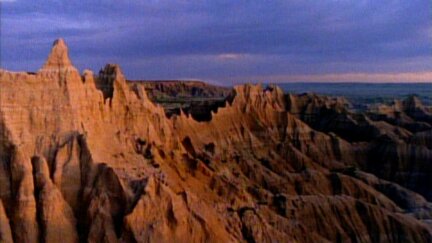
extraordinary formation of the Bad Lands, with the ground cut up into
gullies, serried walls, and battlemented hilltops, makes it the
country of all others for hiding-places and ambuscades.
For several days before we started the weather had been bitterly
cold, as a furious blizzard was blowing; but on the day we left there
was a lull, and we hoped a thaw had set in. We all were most warmly
and thickly dressed, with woolen socks and underclothes, heavy
jackets and trousers, and great fur coats, so that we felt we could
bid defiance to the weather. Each carried his rifle, and we had in
addition a double-barreled duck gun, for water-fowl and beaver. To
manage the boat, we had paddles, heavy oars, and long iron-shod
poles, Seawall steering while Dow sat in the bow. Altogether we felt
as if we were off on a holiday trip, and set to work to have as good
a time as possible.
The river twisted in every direction, winding to and fro across
the alluvial valley bottom, only to be brought up by the rows of
great barren buttes that bounded it on each edge. It had worn away
the sides of these till they towered up as cliffs of clay, marl, or
sandstone. Across their white faces the seams of coal drew sharp
black bands, and they were elsewhere blotched and varied with brown,
yellow, purple, and red. This fantastic coloring, together with the
jagged irregularity of their crests, channeled by the weather into
spires, buttresses, and battlements, as well as their barreness and
the distinctness with which they loomed up through the high, dry air,
gave them a look that was a singular mixture of the terrible and the
grotesque. The bottoms were covered thickly with leafless cottonwood
trees, or else with withered brown grass and stunted, sprawling sage
bushes. At times the cliffs rose close to us on either hand, and
again the valley would widen into a sinuous oval a mile or two long,
bounded on every side, as far as our eyes could see, by a bluff line
without a break, until, as we floated down close to its other end,
there would suddenly appear in one corner a cleft through which the
stream rushed out. As it grew dusk the shadowy outlines of the buttes
lost nothing of their weirdness; the twilight only made their uncouth
shapelessness more grim and forbidding. They looked like the
crouching figures of great goblin beasts.
Those two hills on the right
Crouched like two bulls locked horn in horn in fight&emdash;
While to the left a tall scalped mountain....
The dying sunset kindled through a cleft:
The hills, like giants at a hunting, lay
Chin upon hand, to see the game at bay&emdash;
might well have been written after seeing the strange, desolate
lands lying in western Dakota.
All through the early part of the day we drifted swiftly down
between the heaped-up piles of ice, the cakes and slabs now dirty and
unattractive looking. Towards evening, however, there came long
reaches where the banks on either side were bare, though even here
there would every now and then be necks where the jam had been
crowded into too narrow a spot and had risen over the side as it had
done up-stream, grinding the bark from the big cottonwoods and
snapping the smaller ones short off. In such places the ice-walls
were sometimes eight or ten feet high, continually undermined by the
restless current; and every now and then overhanging pieces would
break off and slide into the stream with a loud sullen splash, like
the plunge of some great water beast. Nor did we dare to go in too
close to the high cliffs, as bowlders and earth masses, freed by the
thaw from the grip of the frost, kept rolling and leaping down their
faces and forced us to keep a sharp lookout lest our boat should be
swamped.
At nightfall we landed, and made our camp on a point of
wood-covered land jutting out into the stream. We had seen very
little trace of life until late in the day, for the ducks had not yet
arrived; but in the afternoon a sharp-tailed prairie fowl flew across
stream ahead of the boat, lighting on a low branch by the water's
edge. Shooting him, we landed and picked off two others that were
perched high up in leafless cottonwoods, plucking the buds. These
three birds served us as supper; and shortly afterward, as the cold
grew more and more biting, we rolled in under our furs and blankets
and were soon asleep.
In the morning it was evident that instead of thawing it had grown
decidedly colder. The anchor ice was running thick in the river, and
we spent the first hour or two after sunrise in hunting over the
frozen swamp bottom for white-tail deer, of which there were many
tracks; but we saw nothing. Then we broke camp and again started
down-stream &emdash;a simple operation, as we had no tent, and all we
had to do was to cord up our bedding and gather the mess kit. It was
colder than before, and for some time we went along in chilly
silence, nor was it until midday that the sun warmed our blood in the
least. The crooked bed of the current twisted hither and thither, but
whichever way it went the icy north wind, blowing stronger all the
time, drew steadily up it. One of us remarking that we bade fair to
have it in our faces all day, the steersman announced that we
couldn't, unless it was the crookedest wind in Dakota; and half an
hour afterward we overheard him muttering to himself that it was the
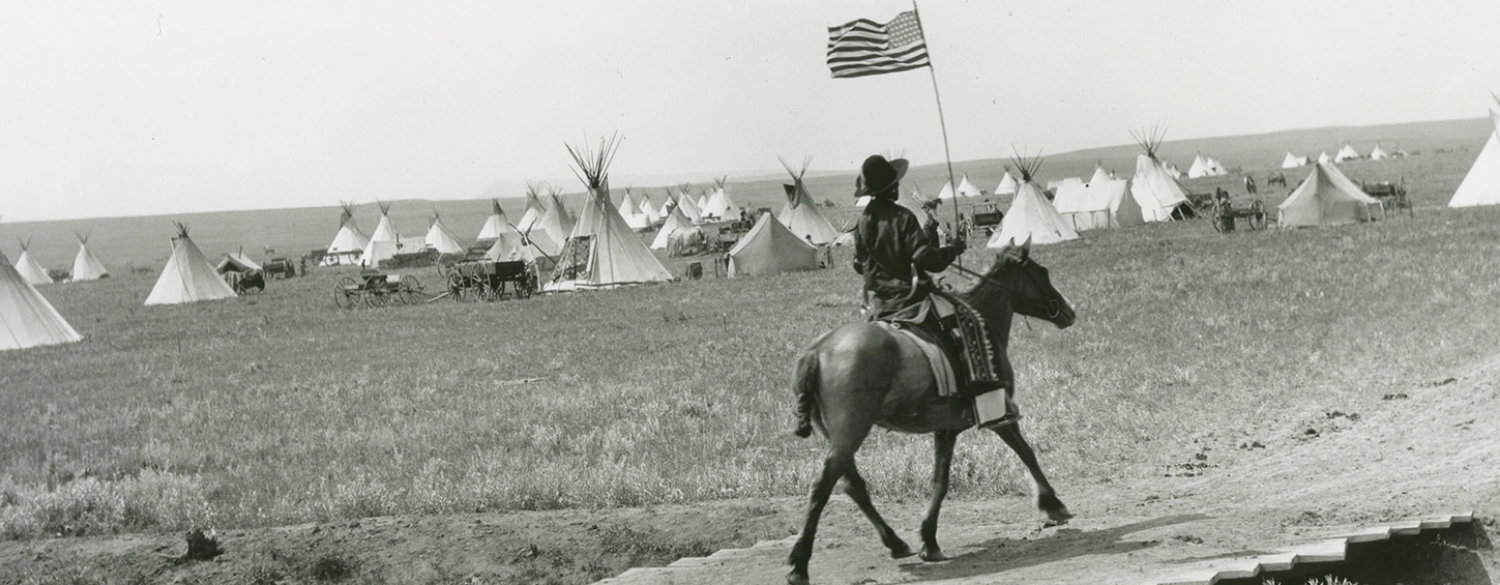
crookedest wind in Dakota. We passed a group of tepees on one bottom,
marking the deserted winter camp of some Grosventre Indians, which
some of my men had visited a few months previously on a trading
expedition. It was almost the last point on the river with which we
were acquainted. At midday we landed on a sand-bar for lunch
&emdash;a simple enough meal, the tea being boiled over a fire of
driftwood, that also fried the bacon, while the bread only needed to
be baked every other day. Then we again shoved off. As the afternoon
waned the cold grew still more bitter, and the wind increased,
blowing in fitful gusts against us, until it chilled us to the marrow
when we sat still. But we rarely did sit still; for even the rapid
current was unable to urge the light-draught scow down in the teeth
of the strong blasts, and we only got her along by dint of hard work
with pole and paddle. Long before the sun went down the ice had begun
to freeze on the handles of the poles, and we were not sorry to haul
on shore for the night. For supper we again had prairie fowl, having
shot four from a great patch of bulberry bushes late in the
afternoon. A man doing hard open-air work in cold weather is always
hungry for meat.
During the night the thermometer went down to zero, and in the
morning the anchor ice was running so thickly that we did not care to
start at once, for it is most difficult to handle a boat in the deep
frozen slush. Accordingly we took a couple of hours for a deer hunt,
as there were evidently many white-tail on the bottom. We selected
one long, isolated patch of tangled trees and brushwood, two of us
beating through it while the other watched one end; but almost before
we had begun four deer broke out at one side, loped easily off,
evidently not much scared, and took refuge in a deep glen or gorge,
densely wooded with cedars, that made a blind pocket in the steep
side of one of the great plateaus bounding the bottom. After a short
consultation, one of our number crept round to the head of the gorge,
making a wide detour, and the other two advanced up it on each side,
thus completely surrounding the doomed deer. They attempted to break
out past the man at the head of the glen, who shot down a couple, a
buck and a yearling doe. The other two made their escape by running
off over ground so rough that it looked fitter to be crossed by their
upland-loving cousins, the black-tail.
This success gladdened our souls, insuring us plenty of fresh
meat. We carried pretty much all of both deer back to camp, and,
after a hearty breakfast, loaded our scow and started merrily off
once more. The cold still continued intense, and as the day wore away
we became numbed by it, until at last an incident occurred that set
our blood running freely again.
We were, of course, always on the alert, keeping a sharp lookout
ahead and around us, and making as little noise as possible. Finally
our watchfulness was rewarded, for in the middle of the afternoon of
this, the third day we had been gone, as we came around a bend, we
saw in front of us the lost boat, together with a scow, moored
against the bank, while from among the bushes some little way back
the smoke of a camp-fire curled up through the frosty air. We had
come on the camp of the thieves. As I glanced at the faces of my two
followers I was struck by the grim, eager look in their eyes. Our
overcoats were off in a second, and after exchanging a few muttered
words, the boat was hastily and silently shoved towards the bank. As
soon as it touched the shore ice I leaped out and ran up behind a
clump of bushes, so as to cover the landing of the others, who had to
make the boat fast. For a moment we felt a thrill of keen excitement,
and our veins tingled as we crept cautiously towards the fire, for it
seemed likely that there would be a brush; but, as it turned out,
this was almost the only moment of much interest, for the capture
itself was as tame as possible.
The men we were after knew they had taken with them the only craft
there was on the river, and so felt perfectly secure; accordingly, we
took them absolutely by surprise. The only one in camp was the
German, whose weapons were on the ground, and who, of course, gave up
at once, his two companions being off hunting. We made him safe,
delegating one of our number to look after him particularly and see
that he made no noise, and then sat down and waited for the others.
The camp was under the lee of a cut bank, behind which we crouched,
and, after waiting an hour or over, the men we were after came in. We
heard them a long way off and made ready, watching them for some
minutes as they walked towards us, their rifles on their shoulders
and the sunlight glinting on the steel barrels. When they were within
twenty yards or so we straightened up from behind the bank, covering
them with our cocked rifles, while I shouted to them to hold up their
hands &emdash;an order that in such a case, in the West, a man is not
apt to disregard if he thinks the giver is in earnest. The half-breed
obeyed at once, his knees trembling as if they had been made of
whalebone. Finnigan hesitated for a second, his eyes fairly wolfish;
then, as I walked up within a few paces, covering the center of his
chest so as to avoid overshooting, and repeating the command, he saw
that he had no show, and, with an oath, let his rifle drop and held
his hands up beside his head.
It was nearly dusk, so we camped where we were. The first thing to
be done was to collect enough wood to enable us to keep a blazing
fire all a night long. While Seawall and Dow, thoroughly at home in
the use of the ax, chopped down dead cottonwood trees and dragged the
logs up into a huge pile, I kept guard over the three prisoners, who
were huddled into a sullen group some twenty yards off, just the
right distance for the buckshot in the double-barrel. Having captured
our men, we were in a quandary how to keep them. The cold was so
intense that to tie them tightly hand and foot meant, in all
likelihood, freezing both hands and feet off during the night; and it
was no use tying them at all unless we tied them tightly enough to
stop in part the circulation. So nothing was left for us to do but to
keep perpetual guard over them. Of course we had carefully searched
them, and taken away not only their firearms and knives, but
everything else that could possibly be used as a weapon. By this time
they were pretty well cowed, as they found out very quickly that they
would be well treated so long as they remained quiet, but would
receive some rough handling if they attempted any disturbance.
Our next step was to cord their weapons up in some bedding, which
we sat on while we took supper. Immediately afterward we made the men
take off their boots &emdash;an additional safeguard, as it was a
cactus country, in which a man could travel barefoot only at the risk
of almost certainly laming himself for life &emdash;and go to beds
all three lying on one buffalo robe and being covered by another, in
the full light of the blazing fire. We determined to watch in
succession a half-night apiece, thus each getting a full rest every
third night. I took first watch, my two companions, revolver under
head, rolling up in their blankets on the side of the fire opposite
that on which the three captives lay; while I, in fur cap, gantlets,
and overcoat, took my station a little way back in the circle of
firelight, in a position in which I could watch my men with the
absolute certainty of being able to stop any movement, no matter how
sudden. For this nightwatching we always used the double-barrel with
buckshot, as a rifle is uncertain in the dark; while with a shot-gun
at such a distance, and with men lying down, a person who is watchful
may be sure that they cannot get up, no matter how quick they are,
without being riddled. The only danger lies in the extreme monotony
of sitting still in the dark guarding men who make no motion, and the
consequent tendency to go to sleep, especially when one has had a
hard day's work and is feeling really tired. But neither on the first
night nor on any subsequent one did we ever abate a jot of our
watchfulness.
Next morning we started down-stream, having a well-laden flotilla,
for the men we had caught had a good deal of plunder in their boats,
including some saddles, as they evidently intended to get horses as
soon as they reached a part of the country where there were any, and
where it was possible to travel. Finnigan, who was the ringleader,
and the man I was especially after, I kept by my side in our boat,
the other two being put in their own scow, heavily laden and rather
leaky, and with only one paddle. We kept them just in front of us, a
few yards distant, the river being so broad that we knew, and they
knew also, any attempt at escape to be perfectly hopeless.
For some miles we went swiftly down-stream, the cold being bitter
and the slushy anchor ice choking the space between the boats; then
the current grew sluggish, eddies forming along the sides. We paddled
on until, coming into a long reach where the water was almost backed
up, we saw there was a stoppage at the other end. Working up to this,
it proved to be a small ice jam, through which we broke our way only
to find ourselves, after a few hundred yards, stopped by another. We
had hoped that the first was merely a jam of anchor ice, caused by
the cold of the last few days; but the jam we had now come to was
black and solid, and, running the boats ashore, one of us went off
down the bank to find out what the matter was. On climbing a hill
that commanded a view of the valley for several miles, the
explanation became only too evident &emdash;as far as we could see,
the river was choked with black ice. The great Ox-bow jam had
stopped, and we had come down to its tail.
We had nothing to do but to pitch camp, after which we held a
consultation. The Little Missouri has much too swift a current,
&emdash;when it has any current at all, &emdash;with too bad a
bottom, for it to be possible to take a boat up-stream; and to walk
meant, of course, abandoning almost all we had. Moreover we knew that
a thaw would very soon start the jam, and so made up our minds that
we had best simply stay where we were, and work down-stream as fast
as we could, trusting that the spell of bitter weather would pass
before our food gave out.
The next eight days were as irksome and monotonous as any I ever
spent: there is very little amusement in combining the functions of a
sheriff with those of an arctic explorer. The weather kept as cold as
ever. During the night the water in the pail would freeze solid. Ice
formed all over the river, thickly along the banks; and the clear,
frosty sun gave us so little warmth that the melting hardly began
before noon. Each day the great jam would settle down-stream a few
miles, only to wedge again, leaving behind it several smaller jams,
through which we would work our way until we were as close to the
tail of the large one as we dared to go. Once we came round a bend
and got so near that we were in a good deal of danger of being sucked
under. The current ran too fast to let us work back against it, and
we could not pull the boat up over the steep banks of rotten ice,
which were breaking off and falling in all the time. We could only
land and snub the boats up with ropes, holding them there for two or
three hours until the jam worked down once more &emdash;all the time,
of course, having to keep guard over the captives, who had caused us
so much trouble that we were bound to bring them in, no matter what
else we lost.
We had to be additionally cautious on account of being in the
Indian country, having worked down past Killdeer Mountains, where
some of my cowboys had run across a band of Sioux &emdash;said to be
Tetons &emdash;the year before. Very probably the Indians would not
have harmed us anyhow, but as we were hampered by the prisoners, we
preferred not meeting them; nor did we, though we saw plenty of fresh
signs, and found, to our sorrow, that they had just made a grand hunt
all down the river, and had killed or driven off almost every head of
game in the country through which we were passing.
As our stock of provisions grew scantier and scantier, we tried in
vain to eke it out by the chase; for we saw no game. Two of us would
go out hunting at a time, while the third kept guard over the
prisoners. The latter would be made to sit down together on a blanket
at one side of the fire, while the guard for the time being stood or
sat some fifteen or twenty yards off. The prisoners being unarmed,
and kept close together, there was no possibility of their escaping,
and the guard kept at such a distance that they could not overpower
him by springing on him, he having a Winchester or the
double-barreled shot-gun always in his hands cocked and at the ready.
So long as we kept wide-awake and watchful, there was not the least
danger, as our three men knew us, and understood perfectly that the
slightest attempt at a break would result in their being shot down;
but, although there was thus no risk, it was harassing, tedious work,
and the strain, day in and day out, without any rest or let up,
became very tiresome.
The days were monotonous to a degree. The endless rows of hills
bounding the valley, barren and naked, stretched along without a
break. When we rounded a bend, it was only to see on each hand the
same lines of broken buttes dwindling off into the distance ahead of
us as they had dwindled off into the distance behind. If, in hunting,
we climbed to their tops, as far as our eyes could scan there was
nothing but the great rolling prairie, bleak and lifeless, reaching
off to the horizon. We broke camp in the morning, on a point of land
covered with brown, leafless, frozen cottonwoods; and in the
afternoon we pitched camp on another point in the midst of a grove of
the same stiff, dreary trees. The discolored river, whose eddies
boiled into yellow foam, flowed always between the same banks of
frozen mud or of muddy ice. And what was, from a practical
standpoint, even worse, our diet began to be as same as the scenery.
Being able to kill nothing, we exhausted all our stock of provisions,
and got reduced to flour, without yeast or baking-powder; and
unleavened bread, made with exceedingly muddy water, is not, as a
steady thing, attractive.
Finding that they were well treated and were also watched with the
closest vigilance, our prisoners behaved themselves excellently and
gave no trouble, though afterward, when out of our hands and shut up
in jail, the half-breed got into a stabbing affray. They conversed
freely with my two men on a number of indifferent subjects, and after
the first evening no allusion was made to the theft, or anything
connected with it; so that an outsider overhearing the conversation
would never have guessed what our relations to each other really
were. Once, and once only, did Finnigan broach the subject. Somebody
had been speaking of a man whom we all knew, called "Calamity," who
had been recently taken by the sheriff on a charge of horse-stealing.
Calamity had escaped once, but was caught at a disadvantage the next
time; nevertheless, when summoned to hold his hands up, he refused,
and attempted to draw his own revolver, with the result of having two
bullets put through him. Finnigan commented on Calamity as a fool for
"not knowing when a man had the drop on him"; and then, suddenly
turning to me, said, his weather-beaten face flushing darkly: " If
I'd had any show at all, you d have sure had to fight, Mr. Roosevelt;
but there wasn't any use making a break when I'd only have got shot
myself, with no chance of harming any one else." I laughed and
nodded, and the subject was dropped.
Indeed, if the time was tedious to us, it must have seemed
never-ending to our prisoners, who had nothing to do but to lie still
and read, or chew the bitter cud of their reflections, always
conscious that some pair of eyes was watching them every moment, and
that at least one loaded rifle was ever ready to be used against
them. They had quite a stock of books, some of a rather unexpected
kind. Dime novels and the inevitable "History of the James Brothers"
&emdash;a book that, together with the "Police Gazette," is to be
found in the hands of every professed or putative ruffian in the West
&emdash;seemed perfectly in place; but it was somewhat surprising to
find that a large number of more or less drearily silly "society "
novels, ranging from Ouida's to those of The Duchess and Augusta J.
Evans, were most greedily devoured. As for me, I had brought with me
"Anna Karenina," and my surroundings were quite gray enough to
harmonise well with Tolstoi.
Our commons grew shorter and shorter; and finally even the flour
was nearly gone, and we were again forced to think seriously of
abandoning the boats. The Indians had driven all the deer out of the
country; occasionally we shot prairie fowl, but they were not
plentiful. A flock of geese passed us one morning, and afterward an
old gander settled down on the river near our camp; but he was over
two hundred yards off, and a rifle-shot missed him. Where he settled
down, by the way, the river was covered with thick glare ice that
would just bear his weight; and it was curious to see him stretch his
legs out in front and slide forty or fifty feet when he struck,
balancing himself with his outspread wings.
But when the day was darkest the dawn appeared. At last, having
worked down some thirty miles at the tail of the ice jam, we struck
an outlying cow-camp of the C-Diamond ranch, and knew that our
troubles were almost over. There was but one cowboy in it, but we
were certain of his cordial help, for in a stock country all make
common cause against either horse-thieves or cattle-thieves. He had
no wagon, but told us we could get one up at a ranch near Killdeer
Mountains, some fifteen miles off, and lent me a pony to go up there
and see about it &emdash;which I accordingly did, after a sharp
preliminary tussle when I came to mount the wiry bronco (one of my
men remarking in a loud aside to our cowboy host, "the boss ain't no
bronco-buster"). When I reached the solitary ranch spoken of, I was
able to hire a large prairie schooner and two tough little bronco
mares, driven by the settler himself, a rugged old plainsman, who
evidently could hardly understand why I took so much bother with the
thieves instead of hanging them off-hand. Returning to the river the
next day, we walked our men up to the Killdeer Mountains. Seawall and
Dow left me the following morning, went back to the boats, and had no
further difficulty, for the weather set in very warm, the ice went
through with a rush, and they reached Mandan in about ten days,
killing four beaver and five geese on the way, but lacking time to
stop to do any regular hunting.
Meanwhile I took the three thieves into Dickinson, the nearest
town. The going was bad, and the little mares could only drag the
wagon at a walk; so, though we drove during the daylight, it took us
two days and a night to make the journey. It was a most desolate
drive. The prairie had been burned the fall before, and was a mere
bleak waste of blackened earth, and a cold, rainy mist lasted
throughout the two days. The only variety was where the road crossed
the shallow headwaters of Knife and Green rivers. Here the ice was
high along the banks, and the wagon had to be taken to pieces to get
it over. My three captives were unarmed, but as I was alone with
them, except for the driver, of whom I knew nothing, I had to be
doubly on my guard, and never let them come close to me. The little
mares went so slowly, and the heavy road rendered any hope of escape
by flogging up the horses so entirely out of the question, that I
soon found the safest plan was to put the prisoners in the wagon and
myself walk behind with the inevitable Winchester. Accordingly I
trudged steadily the whole time behind the wagon through the
ankle-deep mud.
It was a gloomy walk. Hour after hour went by always the same,
while I plodded along through the dreary landscape &emdash;hunger,
cold, and fatigue struggling with a sense of dogged, weary
resolution. At night, when we put up at the squalid hut of a frontier
granger, the only habitation on our road, it was even worse. I did
not dare to go to sleep, but making my three men get into the upper
bunk, from which they could get out only with difficulty, I sat up
with my back against the cabin-door and kept watch over them all
night long. So, after thirty-six hours' sleeplessness, I was most
heartily glad when we at last jolted into the long, straggling main
street of Dickinson, and I was able to give my unwilling companions
into the hands of the sheriff.
Under the laws of Dakota I received my fees as a deputy sheriff
for making the three arrests, and also mileage for the three hundred
odd miles gone over &emdash;a total of some fifty dollars.*
[*One of the men wrote me from prison, giving me his reasons for
taking the boat. Part of his letter is worth giving, not only because
it contains his own story, but also for the sake of the delicious
sense of equality shown in the last few sentences. He had been
explaining that he believed I had accused him of stealing some
saddles: "In the first place I did not take your boat Mr. Roosevelt
because I wanted to steal something, no indeed, when I took that
vessel I was labouring under the impression, die dog or eat the
hachetteÉWhen I was a couple of miles above your ranch the boat I had
sprung a leak and I saw that I could not make the Big Missouri in it
in the shape that it was in. I thought of asking assistance of you,
but I supposed that you had lost some saddles and blamed me for
taking them. Now there I was with a leaky boat and under the
circumstances what was I two do, two ask you for help, the answer I
expected two get was two look down the mouth of a Winchester. I saw
your boat and made up my mind two get possession of it. I was bound
two get out of that country cost what it might, when people talk
lynch law and threaten a persons life, I think that it is about time
two leave. I did not want to go back up river on the account that I
feared a mobÉI have read a good many of your sketches of ranch life
in the papers since I have been here, and they interested me deeply.
"Yours sincerely, "&c.
"P. S. Should you stop over at Bismarck this fall make a call to
the Prison. I should be glad to meet you."]
Ranch Life and
the Hunting Trail Continued
Show Ranch Life Contents |