
History of the Samurai
For more than 800 years, the samurai helped to lay the
foundations of Japan's culture. Their reverence for honor,
duty, and service remains ingrained in Japanese society even
today. Together with their renowned martial capabilities,
these characteristics made the samurai what historian Stephen
Turnbull calls "the knights of old Japan." In this interactive
time line, familiarize yourself with the samurai and their
challenges, and learn how the warrior class evolved.—Rima Chaddha

|
|
Those who serve
8th–10th centuries
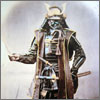
The term "samurai" comes from the Japanese word
saburau, meaning "to serve," and was first used
in A.D. 702 to describe mid-to-low-ranking court
administrators and, later, armed imperial guards. Their
title was mostly metaphorical, referring to their
loyalty to the emperor. By the 10th century, when
provincial governors began offering heavy rewards for
military service, the samurai as we know them came into
being. The term eventually gained strong aristocratic
overtones and brought great prestige to the samurai's
lineage—so much so that warriors would recite
their ancestry on the battlefield.
Left: A samurai in traditional armor, 1860s
|
|
|
Rival clans
Mid-12th century
By the 11th century, powerful military clans had begun
vying for power. Two particularly strong family groups,
the Taira and the Minamoto, stood out from the rest and
went on to influence Japanese politics for centuries to
come. Each took part in the Hogen Rebellion of 1156, a
civil war fought over the disputed imperial line of
succession following the death of the emperor Toba. The
conflict resulted in the Taira rising to power to form
the first samurai-led government in the history of
Japan.
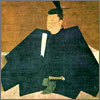
Left: Taira no Shigemori, eldest son of the Taira
patriarch during the Hogen Rebellion
|
|
|
The Gempei War
Late 12th century
In 1180, the Minamoto clan resumed hostilities with the
Taira in what became the first armed conflict of the
Gempei War (so-named for the Chinese reading of both
clans' names). The war spelled defeat for the Taira and
changed the role of shogun—previously a
commissioned military leader hired to dispose of enemies
of the throne—to permanent military dictator. The
war also had lasting implications for the samurai and
fostered many of the codes of excellence by which these
warriors led their lives, including selfless heroism,
high personal standards of conduct, and martial prowess.
Even the samurai's understanding of art and poetry can
be traced to stories of the Gempei War.
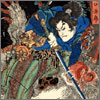
Left: The Gempei War spawned many myths. Here, a samurai
battles a great beast.
|
|
|
Wind of the gods
13th century
As infighting increased through the following century,
so did the need to defend Japan from foreign invaders.
Among them were Genghis Khan's Mongol successors, who
attacked Japan in 1274 and again in 1281. The Japanese
were severely outnumbered each time, but a major storm
during the first invasion destroyed, by some accounts,
200 Mongol ships, while a typhoon thwarted the second
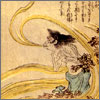
siege. Together, these storms are known as
kamikaze ("wind of the gods"), a term that would
take on a more sinister definition during World War II
when Japanese pilots carried out suicide attacks. The
belief in a protective divine shield—as well as in
Zen Buddhism, which allowed soldiers to overcome their
fear of dying—became essential to the samurai way
of life. The warriors believed they were largely
safeguarded from death but needed to prepare for the
possibility in order to perform their best in battle.
Left: An artist's representation of the kamikaze
|
|
|
Way of the Warrior
14th century
Fighting continued within Japan, which soon had not one
but two rival governments: Emperor Go-Daigo's court to
the south versus a new northern court established by the
ruling shogunate. From these so-called Nanbokucho
Wars, or the "Wars Between the Courts," emerged Kusunoki
Masashige, a samurai who would be venerated for
centuries as an exemplar of warrior conduct through his
unstinting loyalty to his lord, Emperor Go-Daigo.
Masashige was a brilliant strategist, but in 1336,
Go-Daigo refused to accept the warrior's counsel, and
the samurai knowingly undertook what would become a
suicide mission. When death at the hands of the
opposition became imminent, Masashige and 600 of his
troops committed seppuku (ritual suicide) on the
battleground. Being killed by the enemy was
dishonorable, but seppuku, a key aspect of the samurai
code of honor known as bushido, allowed warriors
an honorable end.
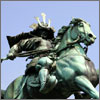
Left: Masashige's statue outside the Imperial Palace in
Tokyo
|
|
|
The Warring States
15th century
The Warring States period (c. 15th to early 17th
centuries) was a time of widespread conflict, both
physical and social, among the dominant clans of Japan.
Only the strong would survive, and strength lay in
assembling large armies and the most advanced weapons.
Foot soldiers learned to use traditional samurai weapons
such as the bow, while the samurai became adept with the
famed katana sword. Although crude Chinese
handguns reached Japan by the early 16th century, the
later introduction of the European arquebus and its
armor-piercing bullets caused a revolution in warfare.
The Japanese soon began producing their own firearms.
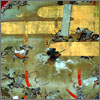
Left: A painting depicting one of the period's many
brutal battles
|
|
|
Continuing strife
16th century
Toyotomi Hideyoshi was the next samurai to change the
course of Japanese (and warrior) history. Through a
series of successful political and military campaigns,
he asserted control over all of Japan by 1591. His power
was greater than that of any previous shogun, but it
wouldn't last: Hideyoshi stretched himself thin with
attempted conquests of China and Korea. Two years after
Hideyoshi's death in 1598, a provincial leader, Tokugawa
Ieyasu, defeated Hideyoshi's armies and took control of
the recentralized military government. Ieyasu's family
line ruled Japan through the mid-19th century.
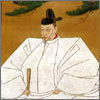
Left: Toyotomi Hideyoshi rose from peasant stock to lead
Japan.
|

|
|
Knights of Japan
17th century
By the first few decades of the 17th century, Japan had
finally achieved an era of relative peace. The samurai
had no armies to fight, but they remained the ruling
class of Japan. Many went on to become administrative
bureaucrats. Bushido, the code by which samurai once
guided their lives, became formalized, much like
knightly chivalry in Europe when the medieval warrior
class became obsolete. A samurai could legally still cut
down any commoner who showed him insufficient respect,
but his martial days were largely over. What remained
was the samurai ideal of unwavering devotion to one's
lord, which survives today in the great value that the
Japanese place on loyalty.
Left: Samurai fought in the 1868-69 Boshin War, which
marked the end of the shogunate.
|
|
|
End of the samurai
19th–20th centuries
The samurai maintained their elite status into the
mid-1800s, when Western influences began to take hold.
In 1853, Commodore Matthew Perry and his American fleet
sailed into Japanese waters and began to push for trade
concessions, helping to compel the government by the
following year to open its ports to foreigners. Awed by
the West's military prowess, the Japanese went on to
modernize their forces and did away with many of the
samurai's special rights. Thus, the sword-slashing
warrior of yore abandoned his neatly kept ponytail for a
shaven head and a modern, government-issue uniform.
Still, the samurai's ethos of honor and patriotism lives
on in the Japanese spirit.
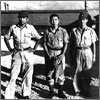
Left: World War II Japanese soldiers in Western-style
uniforms

|
|

We recommend you visit the
interactive version. The text to the left is provided for printing purposes.
|




