PRODUCED BY
Michael Kirk, Jim Gilmore, Mike Wiser
WRITTEN & DIRECTED BY
Michael Kirk
ANNOUNCER: Tonight on FRONTLINE, a bio-attack, anthrax.
NEWSCASTER: Fears over Anthrax spread to Washington.
ANNOUNCER: After a massive investigation—
NOAH SHACHTMAN, Contributing Editor, WIRED: Seven years, millions of dollars—
ANNOUNCER: The FBI’s prime suspect committed suicide.
PAUL KEMP, Ivins’s Attorney: They bragged that they got their man.
ANNOUNCER: But a joint FRONTLINE, ProPublica and McClatchy newspapers investigation raises serious questions about the government’s case.
Tonight on FRONTLINE, The Anthrax Files.
NEWSCASTER: One Florida man is in the hospital with anthrax.
NEWSCASTER: —hospitalized with inhalation anthrax—
NARRATOR: In October of 2001, just weeks after 9/11, there was a chilling new wave of attacks.
NEWSCASTER: —diagnosed with anthrax has died.
NEWSCASTER: —anthrax reported at a Florida hospital—
NEWSCASTER: —disturbing news from Boca Raton, Florida—
NEWSCASTER: Another Anthrax case, this one in New York.
NEWSCASTER: Five more people—
NARRATOR: Five deaths, attacks in Florida and New York. Tens of thousands of Americans were given antibiotics.
NEWSCASTER: Anthrax exposure.
NEWSCASTER: —the mailrooms of every major newspaper, television network and wire service—
NEWSCASTER: Newsrooms looked like crime scenes.
NARRATOR: The nation’s capital was hit.
NEWSCASTER: The anthrax scare has now reached Capitol Hill—
Pres. GEORGE W. BUSH: I just talked to Leader Daschle. His office received a letter, and it had anthrax in it. They will not take this country down!
NARRATOR: A massive FBI criminal investigation would soon be under way.
NEWSCASTER: The letter arrived in Senator Daschle’s office on Friday and was opened and handled by an intern this morning.
GRANT LESLIE, Fmr. Senate Intern: As an eager Senate intern, the first thing that they needed us to do was open the mail.
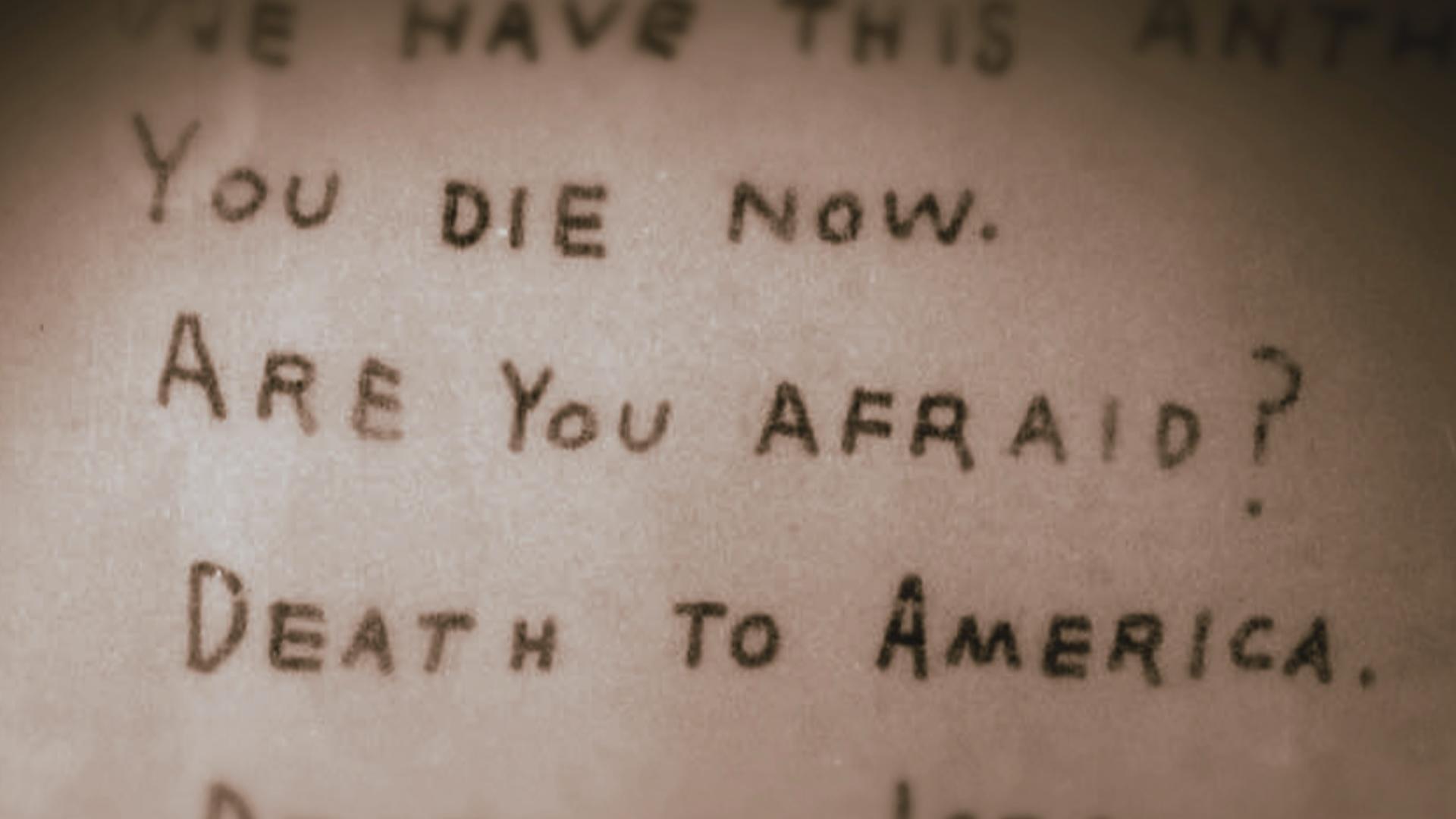
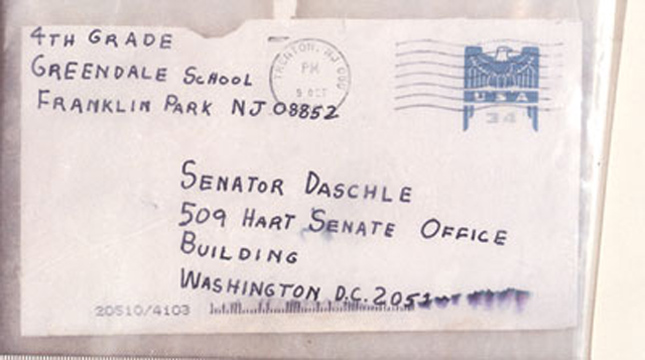
NARRATOR: The envelope was on the top of the stack.
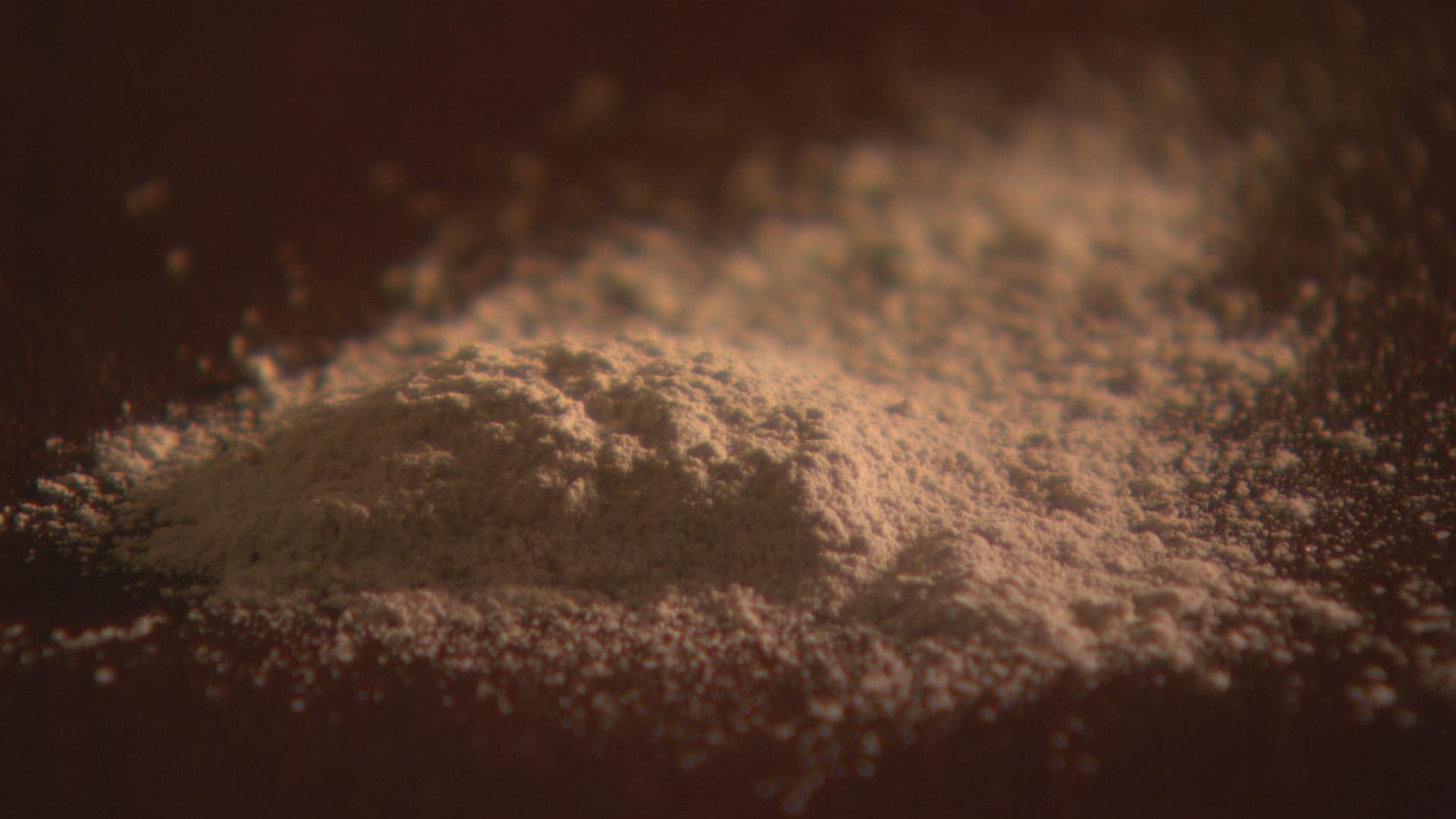
GRANT LESLIE: I remember looking at it, and it looked like children’s handwriting and the return address was the 4th grade class. So I took the scissors and cut into the corner of the letter just about an inch, and white powder immediately fell out all over me.
LAURIE GARRETT, Author, I Heard the Sirens Scream: She sees spores, and immediately puts her finger bravely on the ripped bit of the envelope to protect everybody from more spores coming out.
GRANT LESLIE: It looked like baby powder. I was wearing a dark gray skirt and black shoes, and you could see it just vividly on the dark colors.
NARRATOR: The powder was anthrax, a deadly bacteria.
RACHEL LIEBER, Asst. U.S. Attorney: It was a crime in progress because it was live anthrax spores. The fear was that it was absolutely spreading through the entire Senate office building.
NARRATOR: This particular anthrax was highly floatable and potentially quite deadly.
STEPHEN ENGELBERG, Managing Editor, ProPublica: It travels hundreds and hundreds of feet. It takes months to decontaminate these offices. Spores are everywhere. They keep popping up.
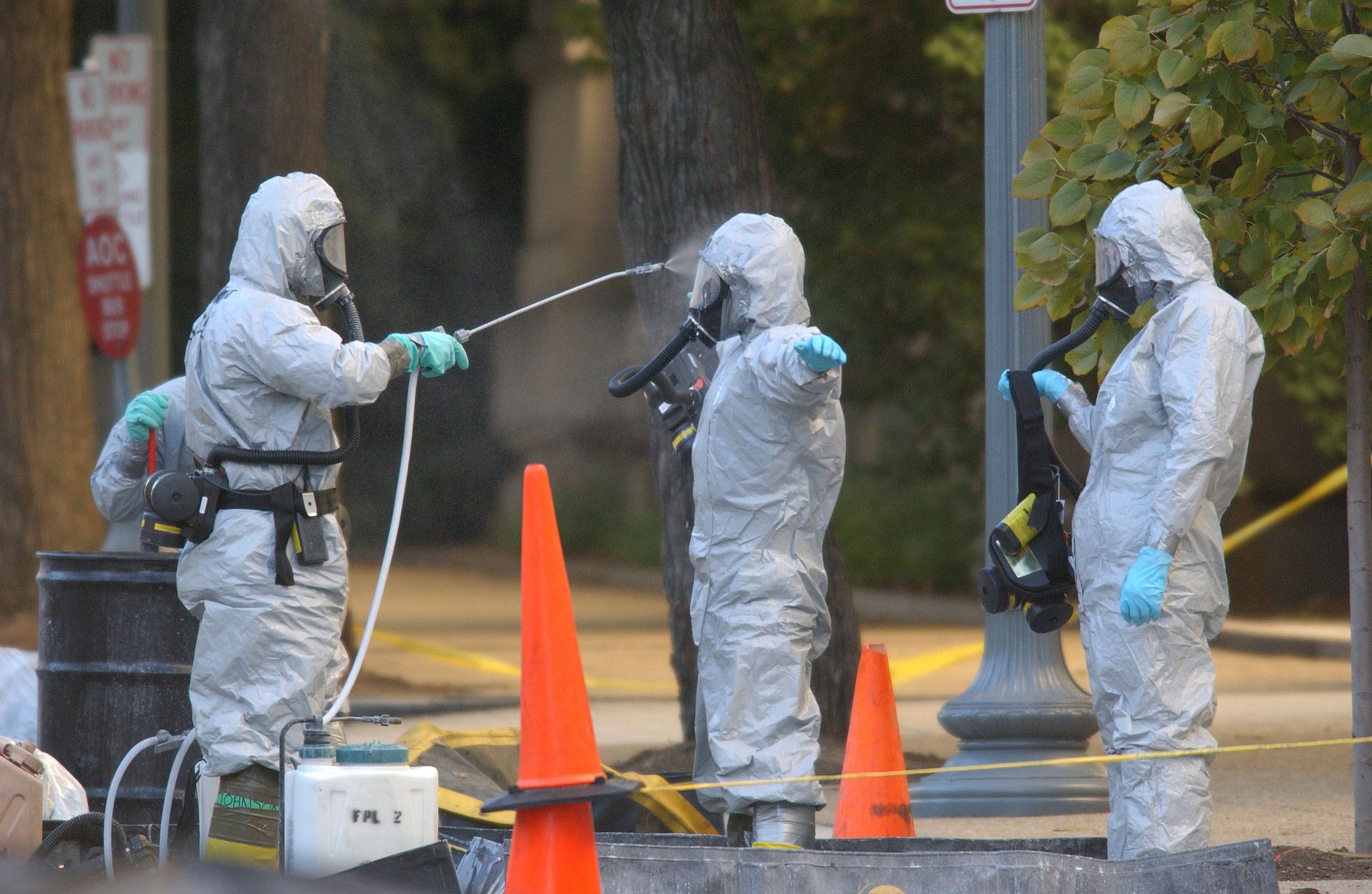
NARRATOR: The contaminated buildings were closed. The intern and members of Congress were given antibiotics. Washington was in full crisis mode.
Pres. GEORGE W. BUSH: We’re looking. We’re on the search to find out who’s conducting these evil acts.
NARRATOR: The president’s security advisers now had a new item on their agenda.
TOM RIDGE, Dir., Homeland Security: Not only are we dealing with the aftermath of 9/11, but suddenly, we have people concerned about anthrax being delivered in envelopes.
NARRATOR: The president demanded answers from the FBI. Its new director was Robert Mueller.
STEPHEN ENGELBERG: The internal pressures to solve that crime as quickly as possible must have been almost impossible to imagine, that somebody could sit with that and not feel a sort of daily, hourly, weekly sort of crushing weight.
NARRATOR: For the FBI, the powder was the murder weapon. But right away, they had a problem. The FBI lab was not equipped to handle a bio-weapon like anthrax.
JENIFER SMITH, Ph.D., Special Agent, FBI Lab: It became important to get that evidence and get it processed. And in the laboratory, we realized we couldn’t process it there. We were going to— it was going to require that the evidence be taken somewhere else.
HENRY HEINE, Ph.D., Army Scientist, USAMRIID: The FBI had never dealt with a crime like this. They didn’t have the tools, the expertise or anything else. Those tools and expertise were at USAMRIID.
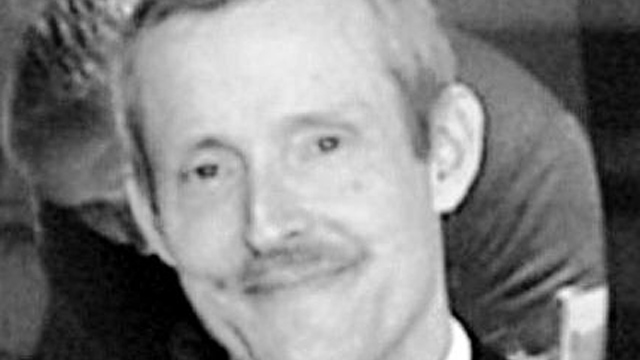
NARRATOR: USAMRIID, the U.S. Army Medical Research Institute of Infectious Diseases. Located in Maryland, USAMRIID is the center of the Army’s bio-defense effort. They took the powder there to the lab of one of the Army’s top anthrax vaccine experts, Dr. Bruce Ivins.
RACHEL LIEBER: His reputation was that of an extraordinary microbiologist. He did the truly preliminary snapshot assessments of this material because he was so good at what he did.
Col. W. RUSSELL BYRNE, M.D., USAMRIID: He was just fascinated with the way it was just like a mist. It was so light, you couldn’t weigh it. It was very dangerous stuff.
NARRATOR: Ivins and the scientists at the Army’s bio-lab said this was something new. Unlike the wet anthrax they worked with, the powder was dry and very deadly.
Lt. Col. JEFFREY ADAMOVICZ, Ph.D., USAMRIID: He was the first one to describe it as “energetic.” The material literally would float and waft within the bag, for instance. And so when anyone brought a hand near the bag, a lot of these spores would migrate towards the hand.
NARRATOR: They knew this highly floatable anthrax was something special. Ivins wrote a report for the FBI.
REPORT: “These are not ‘garage’ spores. The nature of the spore preparation suggests very highly that professional manufacturing techniques were used in the production and purification of the spores.”
NARRATOR: Bruce Ivins had spoken— only a professional could have done the job. Now the FBI wanted to know where it had come from. They flew samples of the anthrax on a private jet to a high-tech lab in Arizona.
PAUL KEIM, Ph.D., Genetics Consultant, FBI: I went out and met the plane when it landed at the Flagstaff airport. The ramp came down and this woman came off the plane with a box. I went over to meet her and she said, “Dr. Keim?” And I said, “Yes.” She said, “This is the anthrax.” And I said, “Oh.” [laughs]
NARRATOR: Dr. Paul Keim’s specially equipped lab could tell the difference between the DNA of one type of anthrax and another.
PAUL KEIM: We had one of the largest collections of different types of anthrax, what we call strains of anthrax, from around the world.
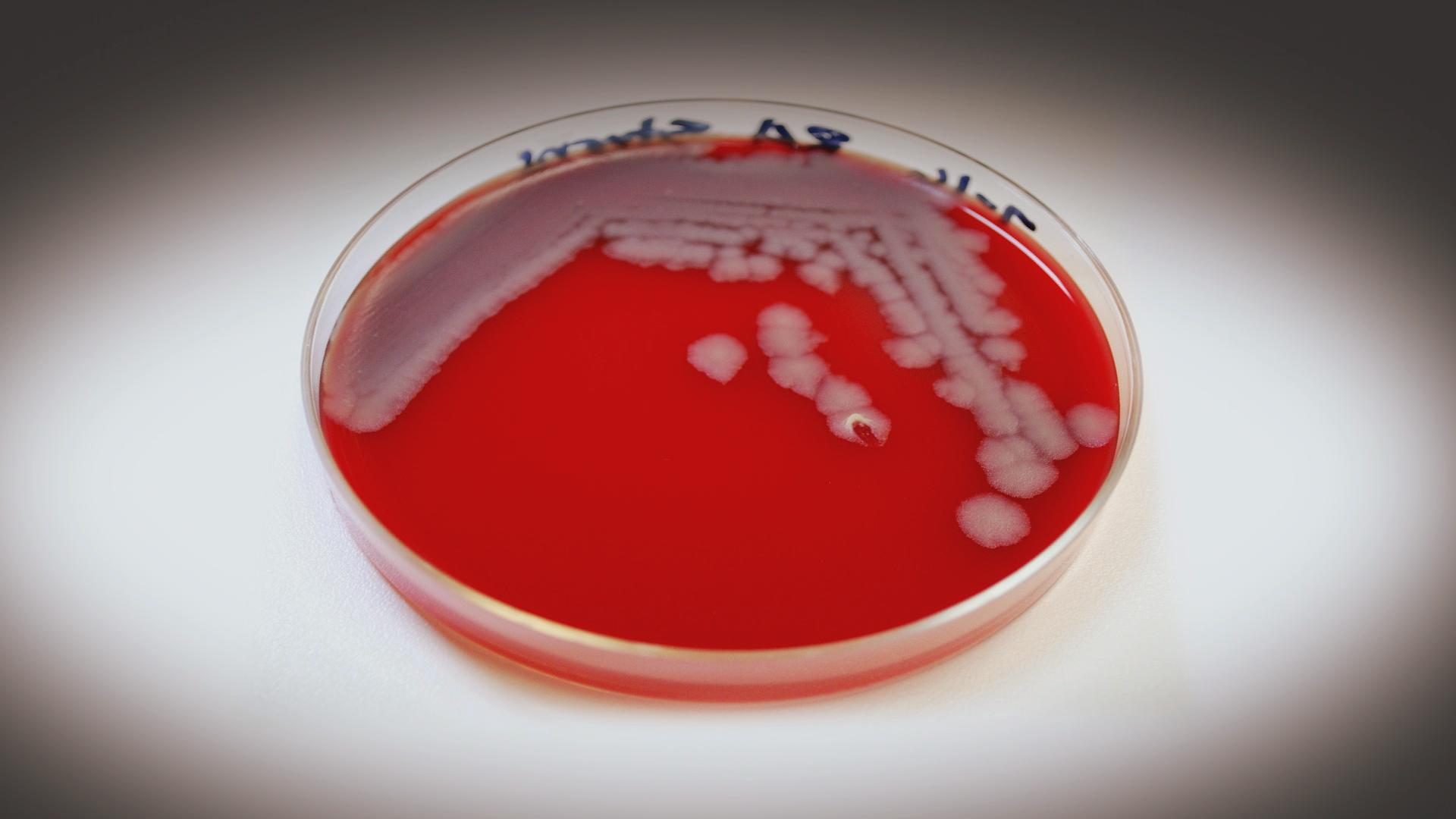
NARRATOR: When they looked at the FBI’s spores, they were stunned. All of them came from a single strain of anthrax, the Ames strain.
PAUL KEIM: We were surprised it was the Ames strain. And it was chilling at the same time.
NARRATOR: Because it was so virulent, the Ames strain was the anthrax of choice for the U.S. Army’s bio-weapon vaccine program.
STEPHEN ENGELBERG, Managing Editor, ProPublica: Once you heard it was the Ames strain, you began to think to yourself, “Ah. This doesn’t sound like a job from the outside. It sounds much more like an inside job.”
NARRATOR: The home of the Ames strain was the hot suites back in Maryland at USAMRIID.
Col. W. RUSSELL BYRNE: Oh, yeah, that pointed right at USAMRIID. That was our bug. That made it USAMRIID— I mean, in my opinion.
NARRATOR: For decades, the labs there had been at the heart of America’s bio-warfare program. They made germs there on an industrial scale. But by the ’70s, bio-weapons were banned, and the army focused on bio-defense. Now the FBI was beginning to believe someone had resurrected the dark arts of bio-weapons.
BRAD GARRETT, FBI Special Agent: Is it a scientist that’s gone rabid, basically, and decided they needed a cause for whatever reason to send out these mailings?
THOMAS DELLAFERA, Postal Inspector: There was a behavioral profile put together that suggested that it wasn’t a foreign al Qaeda-ist actor, it was more of a domestic type threat, a— you know, a dysfunctional adult in the United States who did this.
NARRATOR: They gave the investigation an official FBI name, “Amerithrax.” The agents reasoned that the killer was a home-grown scientist, maybe even one of the scientists helping them on the case.
RACHEL LIEBER, Asst. U.S. Attorney: That’s quite a dichotomy, to have the experts who were helping you also be the suspects. But I think that’s just— that’s the nature of this kind of event. It’s the nature of this kind of crime that the people you have to rely on are the ones who are themselves capable.
NARRATOR: Almost everyone was a suspect.
Lt. Col. JEFFREY ADAMOVICZ: We were heroes in the morning and suspects in the afternoon. And that literally was on many days how it played out.
HENRY HEINE, Ph.D., Army Scientist, USAMRIID: They had a list of questions, but— and one of the questions was, “Did you do it?” I guess they have to ask that question. You know, “Did you do it, or do you know anybody that you think might have done it?”
Col. W. RUSSELL BYRNE: They would even suggest people. They would even say, “What do you think about so-and-so?” And I’m a little afraid to tell you they asked about that because that one could get me in trouble, but it was— I laughed.
STEPHEN ENGELBERG: The FBI begin to follow their playbook. This is a maddeningly slow process, and the political level wants results. They want the damn case cracked.
NEWSCASTER: Without a clear suspect, the government has been frustrated for months—
NEWSCASTER: —an unsolved puzzle—
NEWSCASTER: The hunt for a perpetrator is floundering.
NEWSCASTER: There’s a growing sense of urgency.
NARRATOR: It was growing into one of the largest FBI cases ever— thousands of interviews, dozens of agents, millions of dollars. The White House continued to pressure FBI director Robert Mueller for answers.
TOM RIDGE: We met every day, and that was a subject that was a daily subject for months and months.
FRAN TOWNSEND, White House Terrorism Adviser: You can imagine, the director of the FBI, Bob Mueller, comes in each time with a set number of things he plans to brief the president. And much to poor Bob Mueller’s chagrin, President Bush, or the vice president, would say to Bob, “So, how are we doing on the anthrax case?” And you could see poor Bob Mueller’s shoulders slump. He’s, like, “We’re working on it.”
NOAH SHACHTMAN, Contributing Editor, WIRED: Months go by. The case doesn’t get immediately resolved because this is stone cold whodunnit, and so the pressure starts to mount from outside.
NARRATOR: Then a columnist at The New York Times entered the fray.
KRISTOF COLUMN: “I think I know who sent out the anthrax last fall. He’s an American insider, a man working in the military bio-weapons field.”
NARRATOR: Nicholas Kristof began to insist the FBI pursue a man he thought could be the killer, a scientist he called “Mr. Z.”
LAURIE GARRETT, Author, I Heard the Sirens Scream: He started running column after column referring to Z in various euphemistic ways, but all of us who were on the story knew exactly who he was talking about.
NARRATOR: According to Kristof and others in the media, Dr. Steven Hatfill had access to anthrax when he worked at the Army’s lab in Maryland.
VICTOR GLASBERG, Hatfill’s Attorney: Nick Kristof is not small potatoes. He is a well-respected, Pulitzer Prize-winning columnist. And he was hammering this point.
NICHOLAS KRISTOF: He had access to anthrax spores, and he’s certainly got an incredible past that bears scrutiny. In his lectures, for example, he has talked a great deal about anthrax.
THOMAS DELLAFERA, Postal Inspector: We read the newspapers, we hear the news, we know what’s going on out there. That asserted a lot of pressure on us, a pressure to, “Look, guys, we’ve got to get this done.”
NARRATOR: The FBI playbook calls for pressure, pushing a suspect for a confession. They decided to squeeze Steven Hatfill. It started with what the FBI calls “bumper lock” — 24-hour surveillance — and they let him know they were doing it.
BRAD GARRETT, FBI Special Agent: Management was convinced he was the right guy. And so as a result, there were, you know, intense surveillance — bumper-lock type surveillance — of Dr. Hatfill that went on for months.
STEPHEN ENGELBERG, Managing Editor, ProPublica: There is a brutal, sustained attempt by the FBI in these cases to turn or crack the suspect, and it doesn’t look much like what happens on TV. It can be quite rough. And what they were doing to Hatfill clearly was an effort to create pressure in the hope that he would crack.
NARRATOR: Another playbook tactic is search and seizure. Hatfill’s apartment was taken apart.
VICTOR GLASBERG, Hatfill’s Attorney: When they showed up for the raid, they brought the press. They brought the press en masse. They had them all over the place with their trucks, with their helicopters.
NOAH SHACHTMAN, Contributing Editor, WIRED: He returns to his home to find a full-blown media circus— helicopters swooping in the air, all kinds of camera crews around as his place is kind of being ransacked.
NEWSCASTER: Today the FBI searched the apartment of a former government scientist. They’re looking closely for any clues—
NEWSCASTER: Items taken from throughout his apartment will be analyzed.
NEWSCASTER: The apartment belongs to a former employee at the Army’s biowarfare laboratory. The man—
STEPHEN ENGELBERG: I think the public got the point. It meant, you know, “This is probably the guy. We got him. We’re on him. Relax. Case is going to get cracked.”
NARRATOR: The FBI was hoping to find physical evidence that tied Hatfill to the mailing— specifically, stray anthrax spores. But inside the apartments of both Hatfill and his girlfriend, there were no tell-tale spores or equipment that could have been used to produce anthrax.
GREG GORDON, Reporter, McClatchy Newspapers: What the FBI ultimately couldn’t find was a spore or any kind of evidence that he had carried this out.
BRAD GARRETT: I didn’t see any real evidence. And that, you know, obviously was troubling to me. And I had a lot of conversations with the case agents about, “Well, you might be onto the right guy, but you’re not coming up with any evidence that says he’s the right guy.”
STEPHEN ENGELBERG: The FBI here dealing with something very frustrating, which is they feel they’ve got their man, but they can’t find any spores. “Where are the damn spores?”
NARRATOR: Despite the lack of physical evidence, at headquarters, Director Mueller insisted his agents stay after Hatfill.
BRAD GARRETT: Many people in management, in upper management, were convinced that Dr. Hatfill was the right guy — I mean, it was just very clear — and that they were not going to get off that train.
NARRATOR: Mueller and the FBI wanted to ratchet up the pressure even more. And across the street at the Justice Department, Mueller’s boss, John Ashcroft, did just that at a press conference.
JOHN ASHCROFT, U.S. Attorney General: I’d be pleased to respond to questions. Yes, sir?
REPORTER: Sir, is Steven Hatfill still a suspect in the anthrax case?
JOHN ASHCROFT: Mr. Hatfill is a person of interest to the Department of Justice and we continue the investigation. And for me to comment further would be inappropriate.
STEPHEN ENGELBERG: This was really an extraordinary moment. Their lips may have been saying, “We will not confirm that Dr. Hatfill is under investigation,” but their body language was saying, “Look here, this is the guy.”
NARRATOR: But Steven Hatfill did not do what the Justice Department and the FBI intended, break under the pressure. Instead, he went on the offensive.
STEVEN HATFILL: Good afternoon, ladies and gentlemen—
LAURIE GARRETT: Hatfill doesn’t fold. On the contrary, the very sort of gregarious, energetic core of Hatfill becomes filled with rage. “How dare they take me on?”
STEVEN HATFILL: I want to look my fellow Americans directly in the eye and declare to them I am not the anthrax killer. I know nothing about the anthrax attacks. I had absolutely nothing to do with this terrible crime.
THOMAS DELLAFERA, Postal Inspector: We were surprised. We weren’t expecting him to do that. We didn’t think it was at a point where he was going to go public with a position.
STEVEN HATFILL: John Ashcroft has now twice publicly told the American people that I am a “person of interest” in last year’s anthrax attacks.
VICTOR GLASBERG: It was his life. It was his anguish. And he was not guilty of what he was being charged with.
STEVEN HATFILL: Mr. Ashcroft has not only violated Justice Department regulations and guidelines which bind him as the nation’s top law enforcement official, but in my view, he has broken the 9th Commandment, “Thou shalt not bear false witness.”
REPORTER: He says that the FBI has mistreated him. What is your response to that?
JOHN ASHCROFT: I have no comment in that respect.
NARRATOR: Without a confession or hard evidence, the attorney general still couldn’t seek an indictment against Hatfill. Director Mueller was frustrated. His agents resorted to a technique rarely used by the FBI, calling in bloodhounds.
NEWSCASTER: Their secret weapon has been a three-member team of bloodhounds.
OFFICIAL: Just stand still. Don’t move, please.
STEPHEN ENGELBERG: Many people in the FBI would say this was probably one of the low points.
BRIAN ROSS, ABC News: The team includes this dog, named Lucy, from the Long Beach, California, Police Department, and two others from California, Tinkerbell and Knight.
NARRATOR: The anthrax letters had an unusual scent. The FBI said the dogs picked up that scent at the exact same place, Steven Hatfill’s apartment.
BRIAN ROSS: —former U.S. government scientist Steven Hatfill—
STEPHEN ENGELBERG: To the people who saw him as a viable suspect, the dogs were just one more piece of a matrix of circumstantial evidence.
NARRATOR: Then after a tip, the FBI thought the bloodhounds had found the location of Hatfill’s bio-weapons lab, supposedly hidden near a pond in the Maryland woods.
BRAD GARRETT: It seemed a bit of a stretch that you could track an odor, or a smell, to a location months and months and months after someone had been to a particular spot by a lake. But you know, they believed that that had some real potential.
NARRATOR: Investigators had come to believe Hatfill somehow had produced the deadly anthrax powder in an improvised underwater lab.
NEWSCASTER: Engineers are draining a Maryland pond today—
NEWSCASTER: —draining a pond looking for evidence related to the anthrax attacks.
NEWSCASTER: Almost a million and a half gallons—
NEWSCASTER: The pond is a huge undertaking that will take three to four weeks and cost of about a quarter million dollars.
VICTOR GLASBERG: I think the draining of the pond is the most outstanding example of really loony-tunes behavior, instead of whatever kind of deliberate investigatory techniques should have been used.
HENRY HEINE: In one of these ponds, they found a plastic box with a hole in the side of it. And they brought it down and they showed it to everybody. And they said, you know, “What do you think this is?”
NARRATOR: They thought they might finally have something. They took it to USAMRIID, the Army lab.
JOHN EZZELL:: He brought down this plastic container the FBI had brought— they had delivered to USAMRIID.
NARRATOR: Dr. John Ezzell, who worked at the lab, was also a consultant for the FBI. His speech is now impaired by Parkinson’s disease. Ezzell had bad news for the FBI.
JOHN EZZELL: To me, it looked like some sort of version of a turtle trap. Dave Wilson from the FBI turns around and starts walking out of the lab and says, “My God, you mean I just spent $20,000 today on a turtle trap?” And I said, “Well, you may have.”
VICTOR GLASBERG: A turtle trap. Yes, they did find a turtle trap. We were chuckling. But of course, for Steve, it’s a bittersweet chuckle because he’s still on the receiving end of the joke until his name is clear.
NARRATOR: It would take nearly five years before Hatfill was officially cleared. He won a $5.8 million judgment against the United States government for invasion of privacy.
At the White House, the president continued to insist the FBI wrap up the case.
NOAH SHACHTMAN, Contributing Editor, WIRED: Five years into this case, there’s still no suspect. And that was unacceptable in the biggest case in FBI history, the biggest act of bioterrorism on U.S. soil.
NARRATOR: Mueller reassigned the chief investigator and brought in a new team.
EDWARD MONTOOTH, Lead Investigator, FBI: The mandate was to look at it with fresh eyes and determine, is there something that needs to be done with the investigation that hadn’t been completed yet?
NARRATOR: Ed Montooth had worked counter-terrorism and homicide. Science and bio-weapons weren’t his strong suit, but he believed they held the key to the case.
GREG GORDON, Reporter, McClatchy Newspapers: The FBI has been locked in for way too long on the wrong track. At this point, science is going to take a major role in this investigation.
NARRATOR: There was a promising new lead in the science, a clue from the spores at a civilian lab run by top genetics expert Claire Fraser-Liggett.
CLAIRE FRASER-LIGGETT, Ph.D., Genetics Consultant, FBI: The idea is very much like the way that DNA sequence is used in human forensics today.
NARRATOR: The idea was simple: comb through the DNA of the Ames strain found in the letters.
CLAIRE FRASER-LIGGETT: That could be used as a way to trace back to a potential source flask and do attribution.
NARRATOR: The scientists found a marker, a way of tracing the DNA of the Ames, microscopic mutants known as “morphs.”
STEPHEN ENGELBERG: That is potentially very valuable information because it allows you to say, “There’s a murder weapon here. We might be able to identify the exact flask, the exact collection of where this came from. If we can match what’s in the attack powder, the mutants, to mutants in some flask somewhere, we may have a real clue.”
CLAIRE FRASER-LIGGETT: So all of a sudden now, we had a molecular marker that could be used to try and trace back to where this material may have come from.
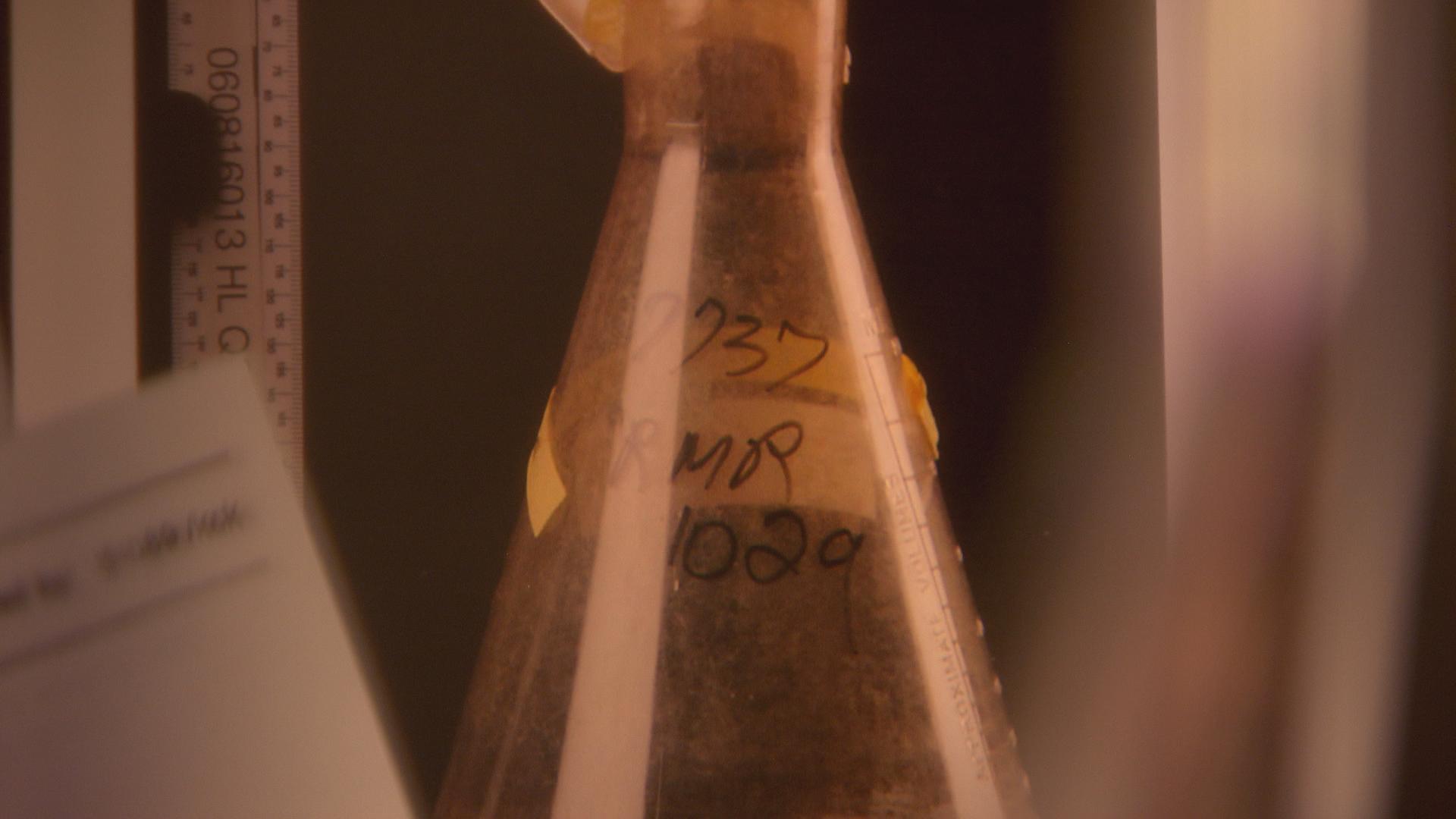
NARRATOR: The FBI believed the deadly spores matched one particular flask of liquid anthrax labeled RMR-1029. More than 100 people had access to the flask, but the FBI decided to focus on one, the primary custodian, their own consultant, Dr. Bruce Ivins.
NOAH SHACHTMAN: Bruce Ivins— he was the guy who controlled that flask. It was in his possession. And that told the investigators that maybe Bruce Ivins was the guy.
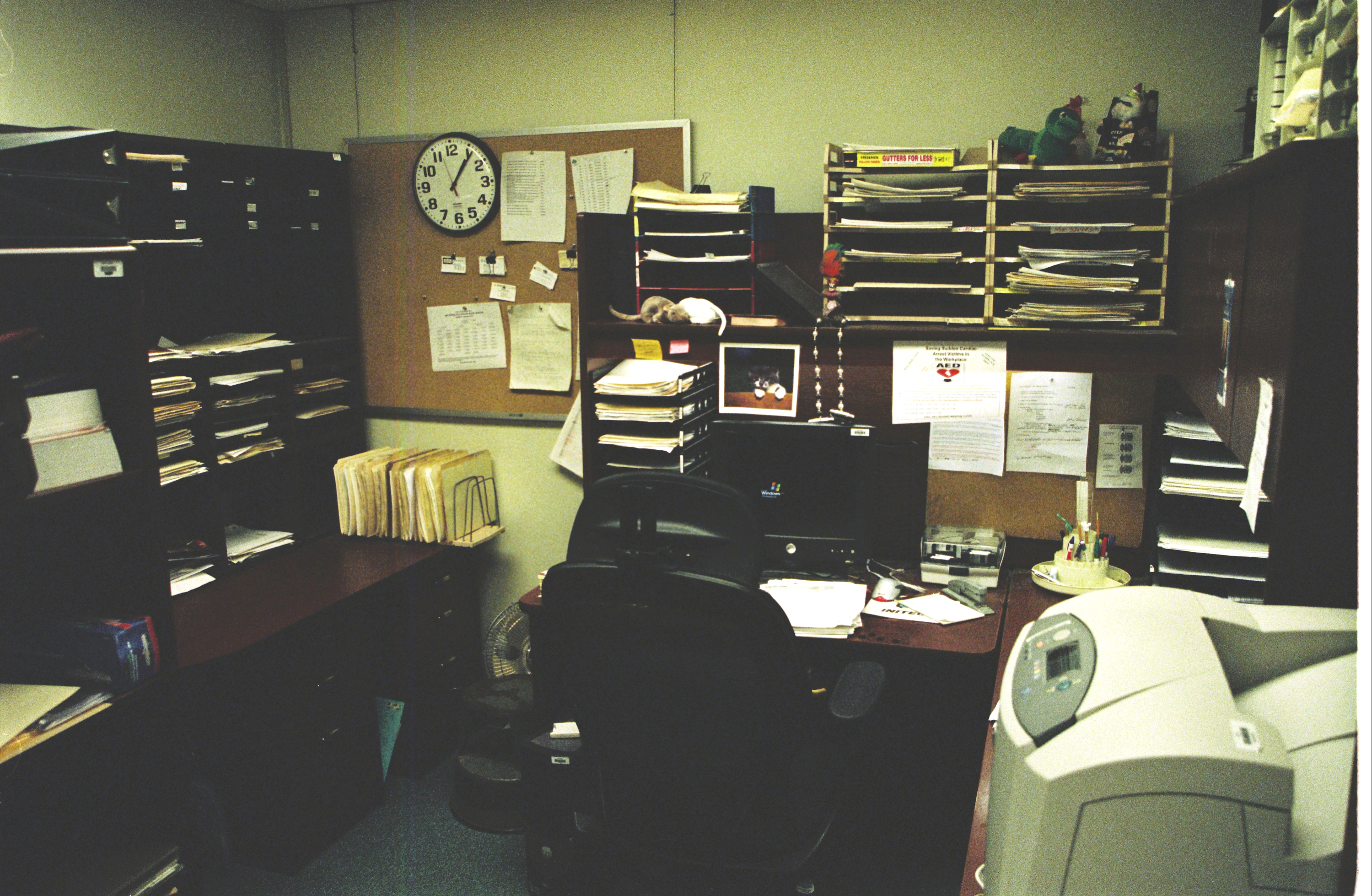
NARRATOR: The FBI discovered Ivins had spent a lot of time alone at night in the lab.
RACHEL LIEBER, Asst. U.S. Attorney: His lab hours spiked in August and then really September and October of 2001. Never before and never after had he shown anything like that those late night and weekend lab access hours. That was extraordinary.
NARRATOR: They questioned Ivins.
EDWARD MONTOOTH: Ultimately, at the end of the day, he had several different stories. For instance, one of them was, “Well, I just liked to go in there to get away from a bad situation at home and be left alone.”
RACHEL LIEBER: And finally, ultimately, I think in one of the interviews, he conceded, “I just— I don’t have a good reason.”
NARRATOR: Ivins’s colleagues got wind of the FBI suspicions. Ivins’s boss asked him about it.
Lt. Col. JEFFREY ADAMOVICZ: I said, “Bruce, you know, they say that you were keeping odd hours.” I said, “I know you work a lot, you, know odd hours. All of us do, you know. But do you remember, you know, what you were doing there? What were you doing?” He said, “Do you remember what you were doing in the suite 10 years ago?” You know?
NARRATOR: In fact, FRONTLINE, ProPublica and McClatchy newspapers have taken a close look at Ivins’s lab work records. The FBI chart was based on the night hours in only one lab. But our research shows it was not unusual for Ivins to work late at the other labs and offices throughout the Army complex. And during those days the FBI found suspicious, Ivins was in fact conducting a number of time-sensitive experiments in the lab.
HENRY HEINE, Ph.D., USAMRIID: He was in the middle of a very important vaccine test experiment. He had a series of animals that had been vaccinated, and so he was in there checking his animals.
NARRATOR: And many of Ivins’s colleagues say that even that many hours in the lab wouldn’t have given him enough time to produce the anthrax.
Lt. Col. JEFFREY ADAMOVICZ: The FBI insinuated that Bruce did this in a week in the laboratory at nights. And we all knew that that wasn’t, in fact, reasonable, it wasn’t practical, and given the limitations of the laboratory, just wasn’t possible in that timeframe.
NARRATOR: Ivins’s colleagues also insist it would have been impossible for him to produce the powder unnoticed.
Col. W. RUSSELL BYRNE, M.D., USAMRIID: People notice things that are unusual in the suites. They find out what’s going on. Somebody would ask him, “Bruce, what experiment’s going on? What are you doing here?” Your life depends on questions like that. And so it’s just— he couldn’t have, in my opinion, known that he would not be observed.
NARRATOR: And the FBI did not find any physical evidence — spores or remnants of anthrax DNA — on the equipment they believe Ivins used to make the powder.
CLAIRE FRASER-LIGGETT: I would find it surprising that you could take a piece of equipment in which you had grown any bacterial organism, whether it be anthrax or anything else, and get it completely clean, where there was no trace. Now, does that mean it’s impossible? No. But the amount of time and effort that would likely need to be put in to making that happen would be enormous.
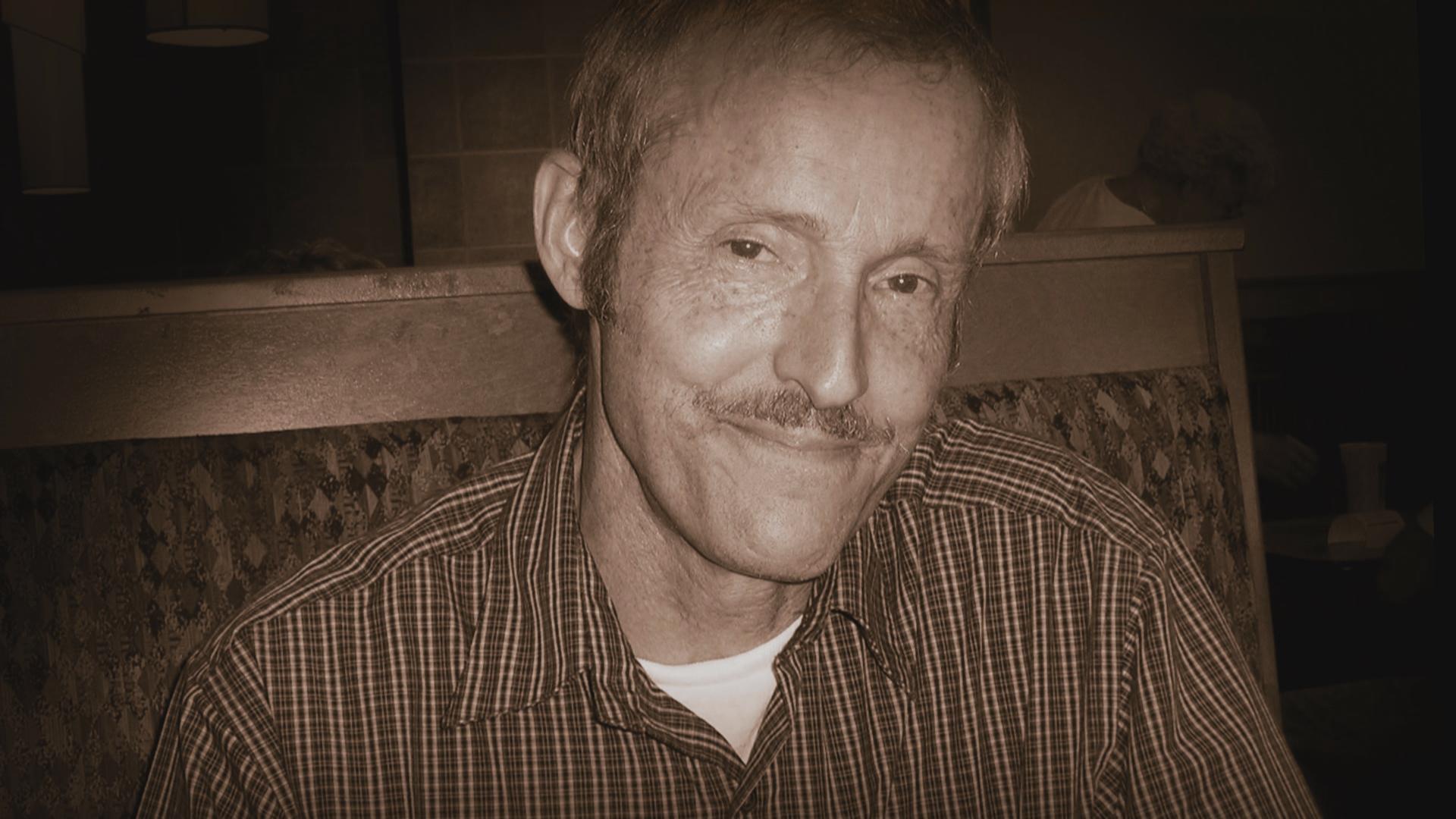
NARRATOR: But who was Bruce Ivins? He appeared to be a consummate professional.
PAUL KEIM, Ph.D., Genetics Consultant, FBI: Bruce was a well-known, well-respected member of the anthrax research community. He was doing this cutting-edge work on the development of new vaccines.
CLAIRE FRASER-LIGGETT: He was almost a legend of sorts in the field of development of an anthrax vaccine.
NARRATOR: In 2003, the Department of Defense had awarded him its top civilian citation. And his friends told the FBI he seemed to be fun-loving.
Col. W. RUSSELL BYRNE: I remember him juggling. To me, he was much more of a kind of a Dick Van Dyke character. He just— he saw things as being funny a lot of the time. And he also knew that he was funny. He also knew that he was comical. So that’s the person I knew.
[www.pbs.org: More recollections of Ivins]
NARRATOR: But the FBI believed they had uncovered a darker side of Bruce Ivins. Montooth and his agents dug into Ivins’s insurance records and thousands of his e-mails.
THOMAS DELLAFERA: The subpoena of e-mails from USAMRIID was quite massive. It was, like, 30 terabytes of material.
NARRATOR: They were looking for unstable behavior. They turned it all over to a forensic psychiatrist.
GREGORY SAATHOFF, M.D., Psychiatric Consultant, FBI: It was a mountain of records, 10 years of medical insurance information and pharmaceutical records.
NARRATOR: They found a history of psychiatric problems, some of it in e-mails.
EMAIL: “There is some sinister monster waiting inside me for the right chance to escape.”
EMAIL: “There are some things that are eating away that I feel I can’t tell anyone.”
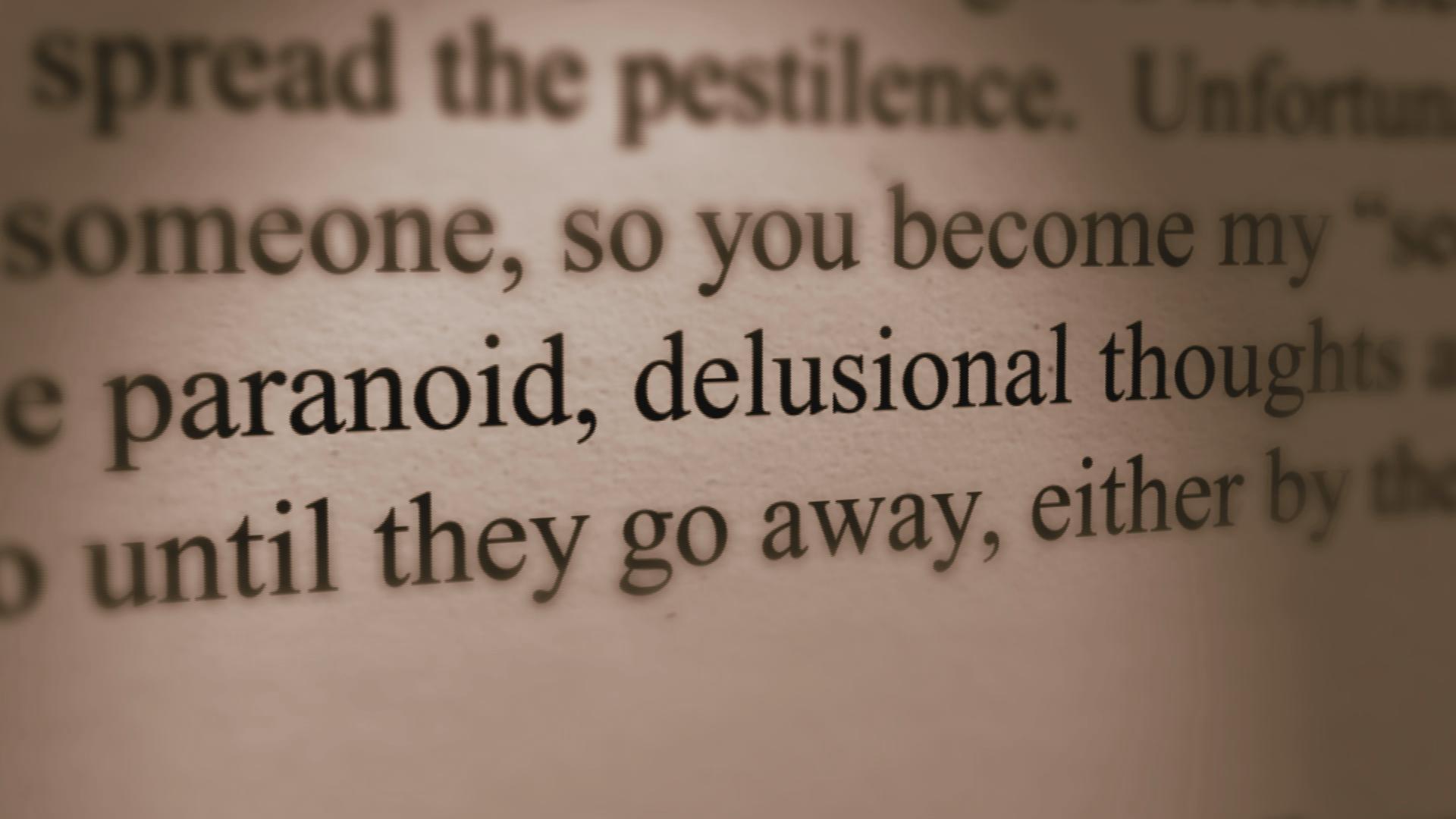
EMAIL: “I get incredible paranoid delusional thoughts at times.”
Dr. GREGORY SAATHOFF: The e-mails revealed two sides of Dr. Ivins. In the space of 24 hours, you might see some e-mails that are very emotional, expressing anger, frustration, even agitation. But then also, e-mails that were to colleagues, very, very professional, very succinct, very direct.
[www.pbs.org: Read Ivins’s e-mails]
NARRATOR: In Ivins’s past, investigators came upon something that seemed important. When Ivins was on a fellowship in the ’70s, he developed an interest in one of his colleagues.
NANCY HAIGWOOD, Ph.D., UNC Colleague: He was a little bit of an odd duck. He was persistently friendly in a way that scientists typically are not. It seemed as though Bruce wanted more attention than he was getting.
NARRATOR: It got worse when Ivins discovered Haigwood was a member of Kappa Kappa Gamma sorority.
NANCY HAIGWOOD: He seemed to take an inordinate interest in it. And I remember at one point saying, “Bruce, this is just, you know, way beyond the bounds.” You know, “I don’t want to talk about this anymore.”
NARRATOR: Years later, Bruce Ivins couldn’t forget Nancy Haigwood and he couldn’t forget her sorority.
NANCY HAIGWOOD: I came home from work one day to discover that the fence outside our home and the car that belonged to my fiance had been spray-painted with red paint, with “Kappa Kappa Gamma.” And of course, when I saw “Kappa Kappa Gamma,” my first thought was, “This has to be Bruce Ivins.”
RACHEL LIEBER: He found out where she lived and vandalized her car and spray-painted “KKG,” I think on the sidewalk or the fence in front of the house. And she really was an embodiment of Kappa to him.
NARRATOR: Ivins’s KKG obsession gave investigators an idea. They returned to the mailbox where the attack letters had been mailed.
THOMAS DELLAFERA: It was a very busy street corner opposite Princeton University. We then started doing searches around the street location and came up with a KKG reference. It’s about 30 to 60 feet from our box.
NARRATOR: The KKG administrative offices were actually 175 feet from the mailbox, on the fourth floor of an office building. But to the FBI, it was more than a coincidence.
RACHEL LIEBER: We knew it was a really big deal. It is a way to connect Dr. Ivins to that crime, to the location where the letters were mailed.
NARRATOR: At FBI headquarters, they had something they believed was even stronger. They thought they had caught Ivins intentionally misleading them about the alleged murder weapon, RMR-1029.
EDWARD MONTOOTH: It just showed us his willingness and deliberate attempt to mislead us and actually tell us mistruths.
NARRATOR: The FBI had found matches between the anthrax in the letters and one particular source.
NOAH SHACHTMAN: Samples start coming back positive. And all of those samples that turn out positive have all been drawn up originally from Bruce Ivins’s 1029 flask.
NARRATOR: But the sample Bruce Ivins gave them from RMR-1029 did not match. To investigators, it was proof Ivins was trying to mislead them.
THOMAS DELLAFERA: This is the only one we know of that wasn’t right, that didn’t come back to what it was supposed to be.
PAUL KEIM: And so they instantly began to wonder if this wasn’t an attempt to obscure the fact that RMR-1029 was the source of the anthrax letters.
NARRATOR: Ivins insisted it was an innocent mistake. But prosecutors didn’t believe him.
RACHEL LIEBER: This was the ultimate act of deception, to mislead and misdirect the investigation. If you send something that is supposed to be from the murder weapon, but you send something that doesn’t match, that’s the ultimate act of deception. That’s why it’s so important.
[www.pbs.org: Read Lieber’s interview]
NARRATOR: But there was more to the story. Ivins had submitted another sample two months before the one the FBI found suspicious. That sample was a positive match.
JEFFREY ADAMOVICZ: If you were purposely trying to deceive someone, you would submit an incorrect sample both times. Why would you submit one correct sample and one incorrect sample? It doesn’t seem to be the act of a— you know, a clever criminal, certainly.
NARRATOR: And an exhaustive review of more than 27,000 pages of FBI documents by our investigative team shows that Ivins had provided yet another sample, and the FBI knew about it.
They redacted the information from documents released to the public. We discovered an unredacted version which shows Ivins provided the sample to a scientist working with the FBI. It was also a positive match.
And as to that claim that Ivins was the only one to submit a negative sample— it has been newly challenged.
[www.pbs.org: Explore some of the documents]
HENRY HEINE: I had various samples from RMR-1029 sitting aside in my refrigerator. In the subpoena in the collection in 2004, the FBI took all of those. They were all negative.
INTERVIEWER: But how can that be?
HENRY HEINE: Exactly.
NARRATOR: The Justice Department’s lead prosecutor, Rachel Lieber, disputes Dr. Heine’s allegation. And we asked Director Mueller to answer our questions about the FBI case. He declined to participate.
The FBI had been watching Ivins at home and at work, but they still didn’t have one crucial piece of evidence, the anthrax spores they had never found in the Hatfill investigation.
GREG GORDON, Reporter, McClatchy Newspapers: It was time they were going to have to do a search of his office, his home, his car, everything. They’re looking for a spore.
NARRATOR: Montooth knew the search would put Ivins on full alert.
EDWARD MONTOOTH: At that point, we decided that we were going to do the search warrants. And that would be, really, the time when we would tip our hands to Dr. Ivins that we would— that we were seriously looking at him.
NARRATOR: But Ivins’s mental health was fragile. The FBI psychiatrist was warning too much pressure could push him over the edge.
Dr. GREGORY SAATHOFF: This was a middle-aged white male with concerns about his health, struggling with substance use, both in terms of prescription drugs and alcohol. This is somebody who was at risk for suicide.
NOAH SHACHTMAN: The arguments go back and forth. Is it worth it to go overt? Could we risk seeing our main suspect kill himself or go hurt others? And they say, “Well, we don’t really have any other choice. We’re going to go in.”
NARRATOR: On November 1st, 2007, postal inspectors and agents from the FBI descended on Ivins’s home.
EDWARD MONTOOTH: We went up to his residence and started an actual search warrant. Simultaneously, we had teams of postal inspectors and FBI agents go interview the family members. And it was at that time Dr. Ivins learned that not only was he being interviewed, but his family was being interviewed and the search was going on.
NARRATOR: They were after spores. They sent in special teams and sealed off the house.
PAUL KEMP, Ivins’s Attorney: They execute search warrants at his house, for his cars, at the daughter’s apartment, everywhere, and freeze-wrap his cars and cart them away, essentially looking for any hint of anthrax.
NARRATOR: But there were no anthrax spores to be found— not in his car and not in his house.
To the FBI’s own science consultant, it raises serious doubts.
CLAIRE FRASER-LIGGETT: The fact that no spores were found, the smoking guns that you would have expected to see if he had been the perpetrator, weren’t there. That’s an aspect of the investigation that I think represents a big hole and really gives me pause to think about, you know, how strong was this case against Dr. Ivins?
NARRATOR: Without spores or other physical evidence, the FBI was left with a circumstantial case— odd hours in the lab, a history of mental problems, his peculiar interest in a sorority, and a belief he had tried to mislead them.
Now the FBI wanted a confession. And they had leverage. They knew his history of mental problems, and in his basement they had discovered his darkest personal secrets.
EDWARD MONTOOTH: What we did find were kind of some unusual things. Like, he was conducting a shooting range in his basement. He had numerous stun guns and things like that.
NOAH SHACHTMAN: There’s women’s underwear found. There’s guns found. There’s all kinds of strange stuff. There’s lyrics dedicated to Christa McAuliffe, the astronaut who died on the space shuttle. So all kinds of strange little stuff.
NARRATOR: They called Ivins to Washington for a formal interview.
RACHEL LIEBER: I think that he was nervous. Understandably, I think anybody, when they’re brought into a room full of FBI agents and prosecutors, it’s not the most comfortable experience.
PAUL KEMP: He wanted to help them because he thought by helping them, it could bring this misery to an end. And he was convinced that they wanted to do the right thing. I was not.
NARRATOR: They began by digging into Ivins’s interest in Kappa Kappa Gamma.
EDWARD MONTOOTH: He sat there and said, “Oh, you don’t understand. It’s an obsession, and you can’t understand it.”
RACHEL LIEBER: And he methodically explained to us about his habit of driving three or four hours in any given direction to visit Kappa Kappa Gamma houses.
GREG GORDON: He basically admits to sneaking into one of KKG’s on-campus chapters and stealing their secret cipher book so that he’s got all their secret codes.
EDWARD MONTOOTH: The things we suspected, based on just our investigation, were now confirmed by Dr. Ivins as somebody that had no qualms about conducting late-night surveillance on sorority houses, to see the comings and goings of the co-eds, to determine when it is safe to break into a house.
NARRATOR: The guns, the women’s underwear, the Kappa Kappa Gamma obsession— Ivins’s most humiliating secrets.
GREG GORDON: He is now seeing his world come apart. If he’s innocent, he has to be feeling that he’s going to get crucified. And if he’s guilty, he sees the walls closing in.
Lt. Col. JEFFREY ADAMOVICZ: He had this feeling that everybody knew, like everybody was perhaps looking at him, including his co-workers.
PAUL KEMP: They were using a technique that law enforcement does all the time, and that shows desperation, which is push the person, lie to the person, try and get him to make some admission. They were headed towards, quote, “getting their man.” They themselves admitted that they were trying to rescue the reputation of the FBI.
NARRATOR: At the end, Bruce Ivins was a wreck, but he wouldn’t confess to being the anthrax killer.
STEPHEN ENGELBERG: Under this kind of pressure, Steven Hatfill called a press conference and denied that he was the guy. Bruce Ivins is not made of such stern stuff. And it is clear from records that we can now have access to — his emails and so on — that Bruce Ivins begins to crumble. He is not strong enough to withstand this kind of pressure, and he begins to spiral downward.
NARRATOR: And the FBI knew it.
EDWARD MONTOOTH: We had him under surveillance at different times, and we would see him walking down the street, muttering to himself, sometimes acting somewhat incoherent.
THOMAS DELLAFERA: It became apparent to us, and we became concerned of it, that he was devolving, or starting to lose composure and control.
NARRATOR: At the Army lab, they revoked his access to the hot suites. Some of his colleagues were told not to talk to him.
HENRY HEINE: Bruce became, you know, at this point, totally isolated. He stopped coming to the social things. It was starting to take a real toll on Bruce, what they were doing, what they were saying to him.
STEPHEN ENGELBERG: The federal government is essentially undressing this very secretive, dark, troubled man. He does things that he knows are completely outside the bounds of what are acceptable within the community in which he lives.
NARRATOR: Bruce Ivins finally broke. It happened during a group therapy session.
Dr. GREGORY SAATHOFF: He spoke about having a gun being delivered to him, and that he was going to go out in a blaze of glory. He ended the session, as I understand, by saying to one of the patients at the group meeting, “You’ll see me in the papers.”
NARRATOR: Police reports say Ivins threatened to take revenge on his colleagues.
POLICE REPORT: “He wasn’t going to face the death penalty. He described his plan, the bulletproof vest, a gun, a list of co-workers, people that had wronged him.”
NARRATOR: The next day, police forcibly removed Bruce Ivins from the lab.
Col. W. RUSSELL BYRNE: I think that was the worst thing that happened to him.
HENRY HEINE: The base police and the local police showed up and hauled him out of the building.
Col. W. RUSSELL BYRNE: Being walked out of the place he’d been working at for more than 25 years, where he’d been a trusted and productive colleague— I knew that would have a huge impact on him.
BRUCE IVINS: [voicemail message] Jean, this is Bruce Ivins. I just wanted to tell you how just disappointed and betrayed I feel about what happened.
NARRATOR: He made a call to his therapist, who had petitioned for him to be involuntarily confined to a mental institution.
BRUCE IVINS: I got arrested by the police. I had the guys with the guns. I got roughed up. And it was a terrible experience. The FBI, they’re all over my family and all over my case.
NARRATOR: Two weeks later, Ivins returned home. With the FBI watching his house, he left a note for his wife.
NOTE: “I have a terrible headache. I’m going to take some Tylenol and sleep in tomorrow. Please let me sleep. Please.”
NARRATOR: That night, a year-and-a-half after the FBI first started investigating him, Bruce Ivins took a large dose of Tylenol PM. It destroyed his liver and shut down his kidneys. He collapsed in the bathroom.
LAURIE GARRETT: He clearly can’t take it anymore, and he chooses a very terrible way to die, downs a bottle of Tylenol. And it has to have been a slow, agonizing death.
NARRATOR: He would die in the hospital a few days later.
NEWSCASTER: —in a day filled with questions about a major new development in the case of the 2001 anthrax attacks—
NEWSCASTER: A top U.S. bio-defense researcher has apparently committed suicide.
NEWSCASTER: —news that Ivins had become the focus of the FBI’s anthrax investigation—
NARRATOR: At the FBI, Director Mueller presided over an all-out scramble. They had lost their man. They put together a hastily arranged press conference. U.S. attorney Jeffrey Taylor spoke for Mueller and Montooth.
JEFFREY TAYLOR, U.S. Attorney: We stand here today firmly convinced that we have the person who committed those attacks, and we are confident that had this gone to trial, we would have proved him guilty beyond a reasonable doubt.
NARRATOR: Just days after his suicide, the government publicly made its case against Bruce Ivins.
JEFFREY TAYLOR: We have a flask that’s effectively the murder weapon from which those spores were taken that was controlled by Dr. Ivins.
Dr. Ivins was working inordinate hours alone at night—
He had submitted a questionable sample of anthrax from his flask.
He had detailed threats in his group therapy session.
He had, quote, “incredible paranoid delusional thoughts at times.”
Based upon the totality of the evidence we have gathered against him, we are confident that Dr. Ivins was the only person responsible for these attacks.
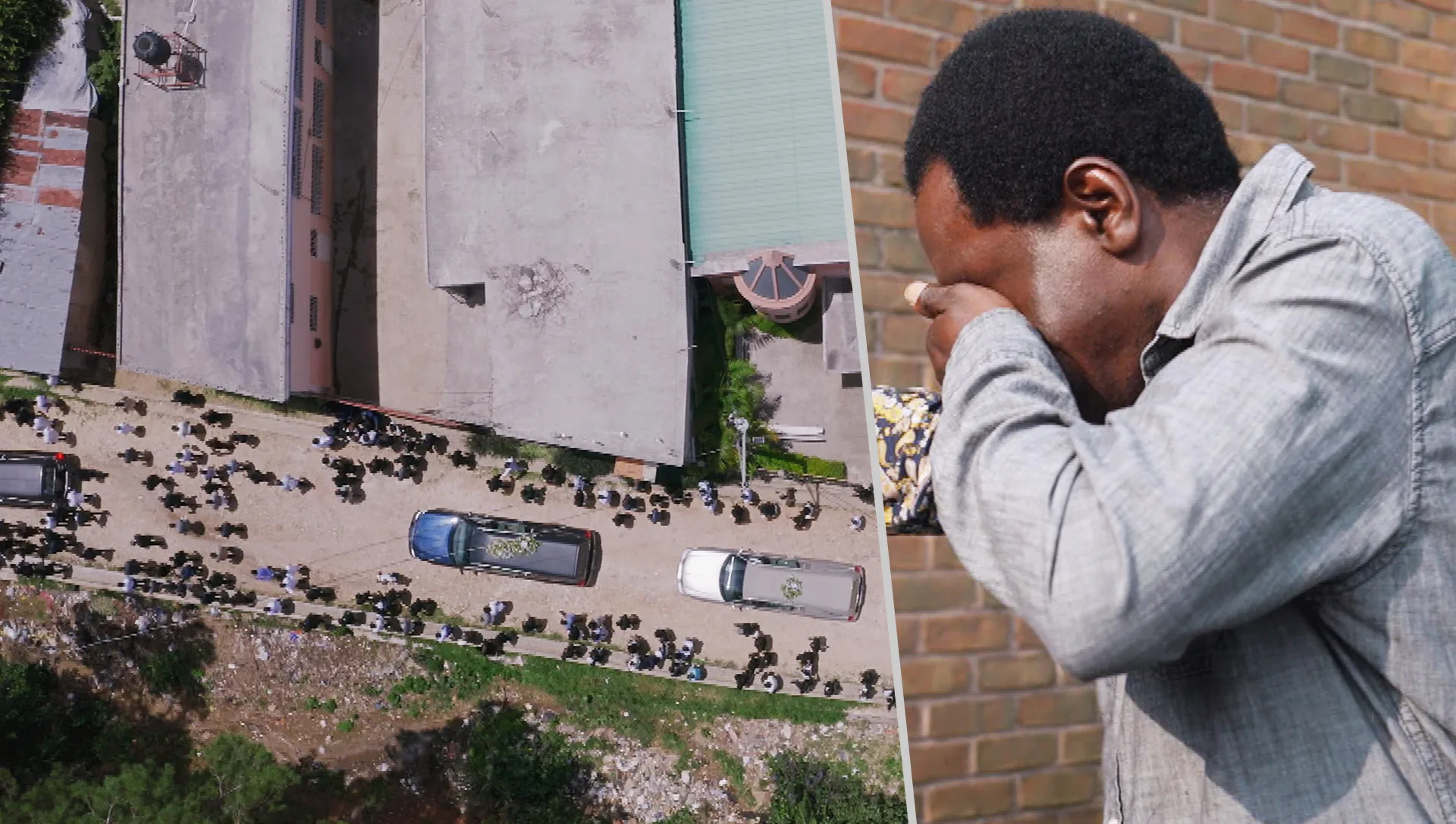
NARRATOR: A few days later, Ivins’s family and colleagues gathered for a memorial service.
Col. W. RUSSELL BYRNE: The church was full. I mean, you know, most— most people— most mass murderers don’t have that kind of loyalty. It was really sad. It makes me sad to think about it. And it was heartbreaking, having to get together and talk about him and know he’s dead.
NARRATOR: The scientists had watched the FBI operate for nearly seven years, first in pursuit of Steven Hatfill, and then with the death of Bruce Ivins.
Lt. Col. JEFFREY ADAMOVICZ: I was upset. I had a feeling right then when that had occurred that, you know, again, that the FBI had some role in this. I mean, because of the way that he had been stressed and the way he was had been treated. I think they broke him probably a little harder than they thought they would.
PAUL KEIM: He was hounded to death, whether he was innocent or guilty. I think that pressure is what pushed him over the top. Could the FBI have done it differently? I don’t know.
NEWSCASTER: There are calls this morning for a congressional investigation into the 2001 anthrax attacks—
NEWSCASTER: FBI director Robert Mueller is on Capitol Hill today—
NEWSCASTER: Many questions remain about the—
NARRATOR: On Capitol Hill, where two of the attack letters had been sent, Mueller faced the Congress and the cameras.
Sen. ARLEN SPECTER (D), Pennsylvania: I have grave doubts about sufficiency of evidence for proof beyond a reasonable doubt.
Sen. PATRICK LEAHY (D), Vermont: I believe there are others out there that could be charged with murder.
Sen. CHARLES GRASSLEY ®, Iowa: There are many unanswered questions the FBI must address.
ROBERT MUELLER, FBI Director: We have looked at every lead and followed every lead to determine whether anybody else was involved, and we will continue to do so.
NARRATOR: Mueller couldn’t stop the second-guessing. He made a surprising move.
ROBERT MUELLER: —because of the importance of the science to this case—
NARRATOR: He handed over the scientific evidence to the National Academy of Sciences for review.
ROBERT MUELLER: —to undertake an independent review of the scientific approach used during—
Sen. PATRICK LEAHY: OK, let me interrupt— let me interrupt that point.
NARRATOR: It was a risk. The FBI was asking an independent board of scientists to review the crucial piece of their evidence, that flask they believed was the murder weapon, RMR-1029.
NEWSCASTER: They’re questioning this. They’re looking into the science that the FBI used to link—
NEWSCASTER: What does this report mean for the FBI investigation?
NARRATOR: When the report was finally released, there was a surprise.
ALICE GAST, Ph.D., Chair, NAS Amerithrax Review: It is not possible to reach a definitive conclusion about the origins of the B. Anthracis in the mailings based on the scientific evidence alone.
NARRATOR: In a carefully worded statement, the National Academy of Sciences questioned the FBI’s assertion that Ivins’s flask was the murder weapon.
NAS REPORT: “The scientific data alone do not support the strength of the government’s repeated assertions that RMR-1029 was conclusively identified as the parent material to the anthrax powder used in the mailings.”
NARRATOR: The report found the genetic fingerprint that pointed to Ivins’s flask wasn’t necessarily one-of-a-kind.
ALICE GAST, Ph.D., National Academy of Sciences: It’s not possible to really put a very precise linkage between the letter samples and the flask.
NARRATOR: It called into question the centerpiece of the FBI’s case.
STEPHEN ENGELBERG: You couldn’t be absolutely certain that the attack powder was made from RMR 1029 based on the science the FBI had used. And that’s a serious thing. If it’s not the murder weapon, the whole foundation of the case is in jeopardy because if that’s not the murder weapon, then you have to go back to the beginning and say, “Well, what was, and who had access to that?”
NARRATOR: The report concluded the FBI overstated much of the scientific evidence against Ivins.
ALICE GAST: It isn’t possible to reach a definitive conclusion based on the scientific evidence alone. It’s very important for us to understand the limits of science in an investigation such as this.
NEWSCASTER: —today a report that undercuts the FBI’s case against the alleged anthrax attacker.
NEWSCASTER: A panel of scientists came out questioning the FBI’s findings.
NEWSCASTER: —scientifically strong as the FBI made it out to be—
NEWSCASTER: —and raising fresh doubt about the investigation.
NARRATOR: At the Justice Department, they continue to insist the case is stronger than just the science.
RACHEL LIEBER, Asst. U.S. Attorney: It’s not just the science. It’s not just strange behavior on the part of Dr. Ivins. It’s not just an obsession or two. It’s not just the mailbox. It’s the confluence of all these things taken together. That’s compelling evidence. And only when you take a step back and you look at all the evidence taken together can you realize that this is the right person.
NARRATOR: But after a decade, 600,000 man-hours and tens of millions of dollars, one of the key scientists who worked on the investigation says she’s not convinced the government has made its case against Bruce Ivins.
CLAIRE FRASER-LIGGETT, Ph.D., Genetics consultant, FBI: This was not an airtight case, by any means. For an awful lot of people, there is a desire to really want to say that, “Yes, Ivins was the perpetrator. This case can reasonably be closed.” But I think— I think part of what’s driving that is the fact that if he wasn’t the perpetrator, then it means that person is still out there.