ARCHIVED PROGRAMS
May. 2, 2000(90 minutes) For years there existed a rumor that Thomas Jefferson had a long-standing relationship and several children by Sally Hemings, a woman who was his slave. Now, DNA tests all but prove the rumor true. An early hero of the anti-slavery movement, Jefferson wrote brilliantly of the corrupting influence of slavery on blacks and whites alike. Yet it is now apparent that he lived a dual life, sharing his house with his white daughter and grandchildren while his unacknowledged mistress and his children by her worked in the same house as slaves. In a personal essay, FRONTLINE correspondent Shelby Steele examines Jefferson's life and follows the descendants of Jefferson and Hemings as they undergo DNA testing, search out their family history, and try to sort out their place along America's blurred color line.
(Web site ») Feb. 15, 2000(60 minutes) On February 19, 1999, in Sylacauga, Alabama, 39-year-old computer programmer Billy Jack Gaither was murdered - the victim of a violent hate crime. One of the convicted killers testified he killed Gaither because he was "queer." Why have gays like Gaither and Matthew Shepard become the targets of such brutality? On February 15, nearly one year after the Gaither murder, FRONTLINE correspondent Forrest Sawyer explores the roots of homophobia in America-as a catalyst for hate crimes and as a phenomenon that permeates our society-and asks how these attitudes, beliefs, and fears contribute to the recent rise in violence against gays.
(Web site ») Oct. 5, 1999(60 minutes) How fair are standardized tests? What do they measure? And what's their impact on racial diversity on America's college campuses? FRONTLINE examines the debate over fairness in college admissions, looking at the national obsession with test scores, the multimillion dollar test prep industry, and the legal challenges to race-sensitive admissions policies. A diverse set of students are followed through the stressful college admissions cycle as they dream of attending some of the country's most prestigious universities.
(Web site ») Feb. 10, 1998(60 minutes) Today, America has the largest black middle class in its history, yet half of all black children are born into poverty. Have the walls of segregation tumbled down, only to be replaced by walls of class? FRONTLINE correspondent and Harvard University professor Henry Louis Gates, Jr., grapples with the issues facing the 'two nations of black America' as he takes a personal journey that measures the distance between the beneficiaries of affirmative action and those they left behind.
(Web site ») Nov. 26, 1996(150 minutes) FRONTLINE producer June Cross tells the intricate story of her own family through the prism of the changing face of race relations in America. Cross, born to a white mother and an African-American father in the early 1950s, was given away by her mother to live with a black family in Atlantic City when she was four.She only saw her mother and stepfather, TV star Larry Storch, on visits to Hollywood during school vacations. But Cross's mother was afraid her husband's career would be destroyed if the truth about Cross was discovered, so she kept her a secret. FRONTLINE takes viewers on an epic journey across the racial divide, into the hidden world of Hollywood and deep into the complicated relationship between a daughter and the mother who gave her away.
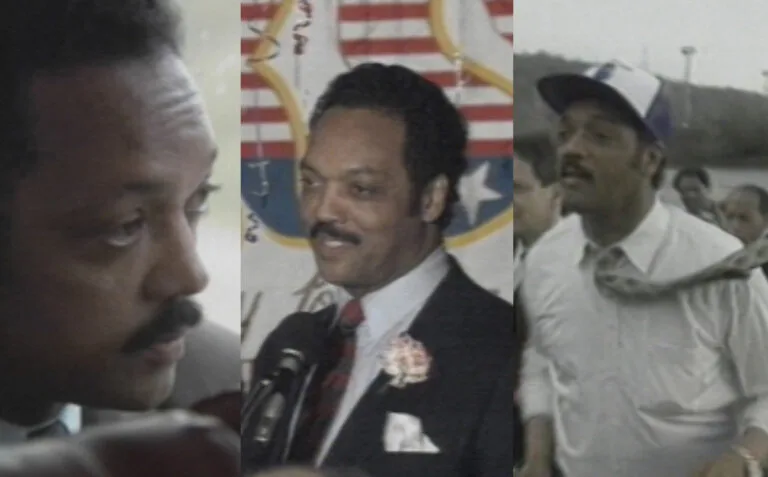
(Web site ») Apr. 30, 1996(90 minutes) Through five decades, Jesse Jackson has been trying to realize the promise of his own potential he first embraced as a boy in segregated Greenville, South Carolina. His life has been a headlong rush toward that end, fueled by a mix of personal aggrievement, ambition, his own vision of what America should be, and his quixotic but enduring belief that he might be able to change the country and the world. Drawn from journalist Marshall Frady's biography, Pilgrimage, the program is not only a rare in-depth look at the man, but also offers a portrait of race and politics in post-war America.
(Web site ») May. 23, 1995
The Confessions of RosaLee
(60 minutes) The Washington Post ran a week-long series of front-page articles about one Washington, D.C., resident and her family. Reporting on the interrelationships of poverty, racism, crime, illiteracy, and drug use and their persistence over generations, reporter Leon Dash spent four years getting to know RosaLee Cunningham, a thief, former prostitute and drug addict, and the mother of eight children. Dash observed first-hand the poverty, drug use, and crime now cycling through a third generation of RosaLee's family. FRONTLINE examines the reaction and controversy Dash's powerful report had among policymakers and amidst the African-American community and reveals what happens when the reporter-as-objective-observer erases the boundary between himself and his subject.Oct. 18, 1994
School Colors
(150 minutes) Integration. It was called the greatest social experiment of our generation. But 40 years after Brown v. Bd of Ed, many of our schools are still sharply segregated along color lines. America's changing demographics have tested the limits of our racial and ethnic tolerance, leaving many of us to ask whetther the nation's diversity will enrich us or tear us apart. Follows one year in the lives of Berkeley CA students and principal.Apr. 27, 1993
LA Is Burning: 5 Reports from a Divided City
(90 minutes) One year after Los Angeles' three days and nights of beatings, looting, and burning, how well do we understand what happened there-and why? Frontline revisits Los Angeles to explore those questions through the eyes of five people who have thought and written about the city from the perspectives of its different communities, races, and classes.Nov. 24, 1992
In Search of Our Fathers
(60 minutes) Marco Williams was 24 years old when he learned his father's name. It was the first of many things he would discover about himself and his family in a journey into his family's past. Frontline airs the first-person story of Williams's seven-year search to learn about his father, to uncover the circumstances surrounding his birth, and to come to terms with what it means to grow up fatherless.Oct. 13, 1992
Thomas and Hill: Public Hearing, Private Pain
(60 minutes) Frontline expolores how Clarence Thomas's bitter Supreme Court nomination hearing, replete with charges of sexual harassment, reached deep into the psyche of black America. Through interviews with prominent Aftican-Americans, the program finds that the dynamics of race-being black in America-were inescapably at the heart of the story and that little common understanding existed in the way blacks and whites viewed the nomination battle.Jun. 23, 1992
Your Loan Is Denied
(60 minutes) Peter and Dolores Green, African-American professionals, are suing a Chicago-area bank for refusing to finance their purchase of the home they have lived in for 30 years. Correspondent Bill Schechner finds mortgage-lending discrimination a systemic problem in America's financial institutions. In a co-production with the Center for Investigative Reporting, Frontline examines the devastating effects of discriminatory lending practices on neighborhoods fighting for economic survival.Jun. 11, 1991
The Color of Your Skin
(60 minutes) An intimate journey into America's great racial divide, reported by David Maraniss. For 16 weeks, behind a two-way mirror in a small room at the US military's intensive race relations course, a dozen Americans-black, white, and Hispanic-confront each other with their racial anger, pain, and bewilderment. This group's dramatic struggle poses the vital question: can America overcome its racial conflicts and make equality work?Apr. 2, 1991
Black America's War
(60 minutes) Nearly thirty percent of all US soldiers in the Gulf War were black Americans. But blacks were much more skeptical than whites about the decision to go to war. Harvard Law Professor Charles Ogletree leads a Frontline town meeting that explores the source of black attitudes and the impact of the war on the lives of black Americans.Dec. 18, 1990
The Spirit of Crazy Horse
(60 minutes) One hundred years after the massacre at Wounded Knee, Milo Yellow Hair recounts the story of his people-from the lost battles for their land against the invading whites-to the bitter internal divisions and radicalization of the 1970's-to the present-day revival of Sioux cultural pride, which has become a unifying force as the Sioux try to define themselves and their future.May. 15, 1990
Seven Days in Bensonhurst
(60 minutes) The 1989 murder of Yusef Hawkins by white youths in the Bensonhurst section of New York City set off a racial and political fire storm. On the eve of the first verdicts in the murder case, writer Shelby Steele returns to talk to the participants and tries to unravel the forces that propelled this racial crisis.Feb. 13, 1990
Throwaway People
(60 minutes) Correspondent Roger Wilkins investigates the economic and social roots of the black underclass, focusing on the struggle of young black men in one neighborhood in Washington, DC.Feb. 7, 1989
Running with Jesse
(60 minutes) An inside look at the historic 1988 presidential campaign of the Reverend Jesse Jackson. Frontline profiles the Jackson strategy, his relationship with the press and his difficulties with the Jewish community and New York's Mayor Koch. The program chronicles the hopes and the hype of a campaign that became a crusade.Jun. 21, 1988
Indian Country
(60 minutes) The Quinault Indians of Washington State seem to have everything-strong leadership, a landmark court victory guaranteeing fishing rights, business deals with the Japanese, and a lush, beautiful reservation. But the Quinaults still face crushing problems-unemployment, poverty, alcoholism, and suicide. Frontline reporter Mark Trahant searches for answers to the Quinault's dilemma in the Bureau of Indian Affairs, Congress, the White House and in the heart of the Quinault people.May. 10, 1988
Racism 101
(60 minutes) Frontline explores the disturbing increase in racial incidents and violence on America's college compuses. The attitudes of black and white students reveal increasing tensions at some of the country's best universities where years after the civil rights struggle, full integration is still only a dream.Jun. 16, 1987
Keeping the Faith
(60 minutes) The black church was once the soul of its community. It was a rallying point and a force for change. Now, as the black middle class grows and the church evolves, correspondent Roger Wilkins asks whom does it serve and to what end?May. 5, 1987
The Bombing of West Philly
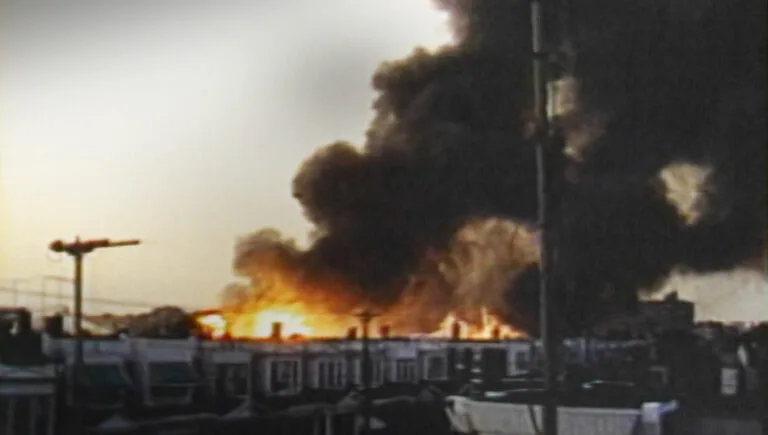
(60 minutes) 'I could hear the bullets all around me, hitting all around the house. I was forced back by gunfire,' says Ramona Africa, the only adult survivor of MOVE, a small, violent, urban cult. Years of tension ended May 13, 1985, when police bombed Africa's house. The surrounding neighborhood burned out of control, leaving 250 homeless. Frontline correspondent Leon Dash examines why the bombing really happened.Jun. 17, 1986
Assault on Affirmative Action
(60 minutes) The Supreme Court ruled against a Memphis firefighter who successfully fought for an affirmative action plan for the hiring of fellow firefighters in 1984. As a result, the Justice Department asked 50 cities to tighten their affirmative action policies. Correspondent George Curry examines the 20 year conflict over these policies and reveals the point of view of those whom it affects.May. 20, 1986
The Bloods of 'Nam
(60 minutes) A high percentage of men on the frontlines in Vietnam were young, poor, undereducated, and black. By most accounts, they had the highest casualties. But these young men say they were fighting two wars-against the enemy and against discrimination. Correspondent Wallace Terry, the author of 'Bloods,' the national bestseller on which this film is based, talks with black veterans who fought discrimination in Vietnam and who later confronted disillusionment when they came home.Apr. 2, 1984
The Struggle for Birmingham
(60 minutes) This special election report focuses on Birmingham, Alabama, which was a key battlefield in the black struggle for civil rights in the 1960's. Now, 20 years later, Birmingham is one of the new battlefields for a mature black political movement. Frontline correspondent Richard Reeves examines black political power today and the struggle for the heart and soul of the black voter.Mar. 7, 1983
Children of Pride
(60 minutes) Kojo Odo, a 42 year-old single black man, took in his first child a decade ago-a 7 year old boy with his arm missing. No one wanted the youngster. Each of Odo's 21 children came to him with a physical or mental handicap. Frontline looks at the daily life of this remarkable family and Odo's battle to keep the family together.Jan. 31, 1983
In the Shadow of the Capitol
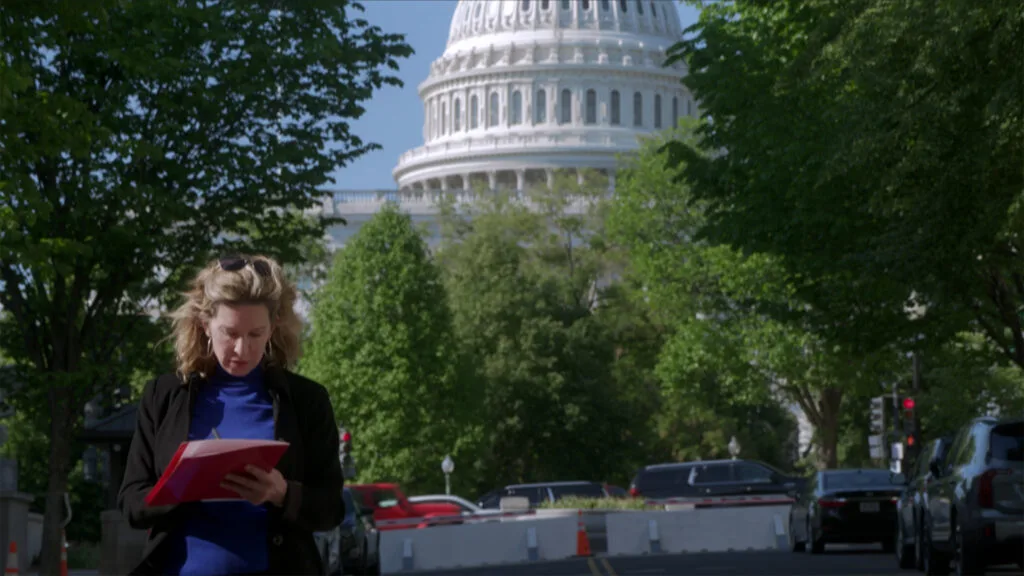
(60 minutes) Frontline correspondent Charles Cobb journeys to a Washington, DC that tourists rarely see. The nation's capital, seventy-five percent black, faces widespread poverty, yet it is run by some of the civil-rights movement's most effective and militant organizers, including Mayor Marion Barry.