Despite the warning, Riddell promoted its Revolution helmet — used by players from youth leagues up to the NFL — as providing better protection against concussions.
The NFL’s intervention in the fate of Junior Seau’s brain — the most prized specimen yet in the race to document the relationship between football and brain damage — was part of an aggressive strategy to dictate who leads the science of concussions.
Should former NFL players be able to sue the league for brain injuries they suffered on the field? That question was the focus of a preliminary hearing Tuesday into concussion litigation filed by more than 4,000 NFL veterans.
A preliminary hearing this week will determine whether more than 4,000 former players can sue the NFL in court for allegedly concealing the link between football and brain damage.
The disclosures come as oral arguments begin Tuesday in U.S. District Court in Philadelphia on the NFL’s motion to dismiss a lawsuit, which involves more than 4,000 former players who allege the league concealed the effects of football-related head trauma.
In an effort to reduce the number of head injuries that occur on the field, NFL owners have approved a new rule that will penalize players from striking opponents with the crown of their helmets.
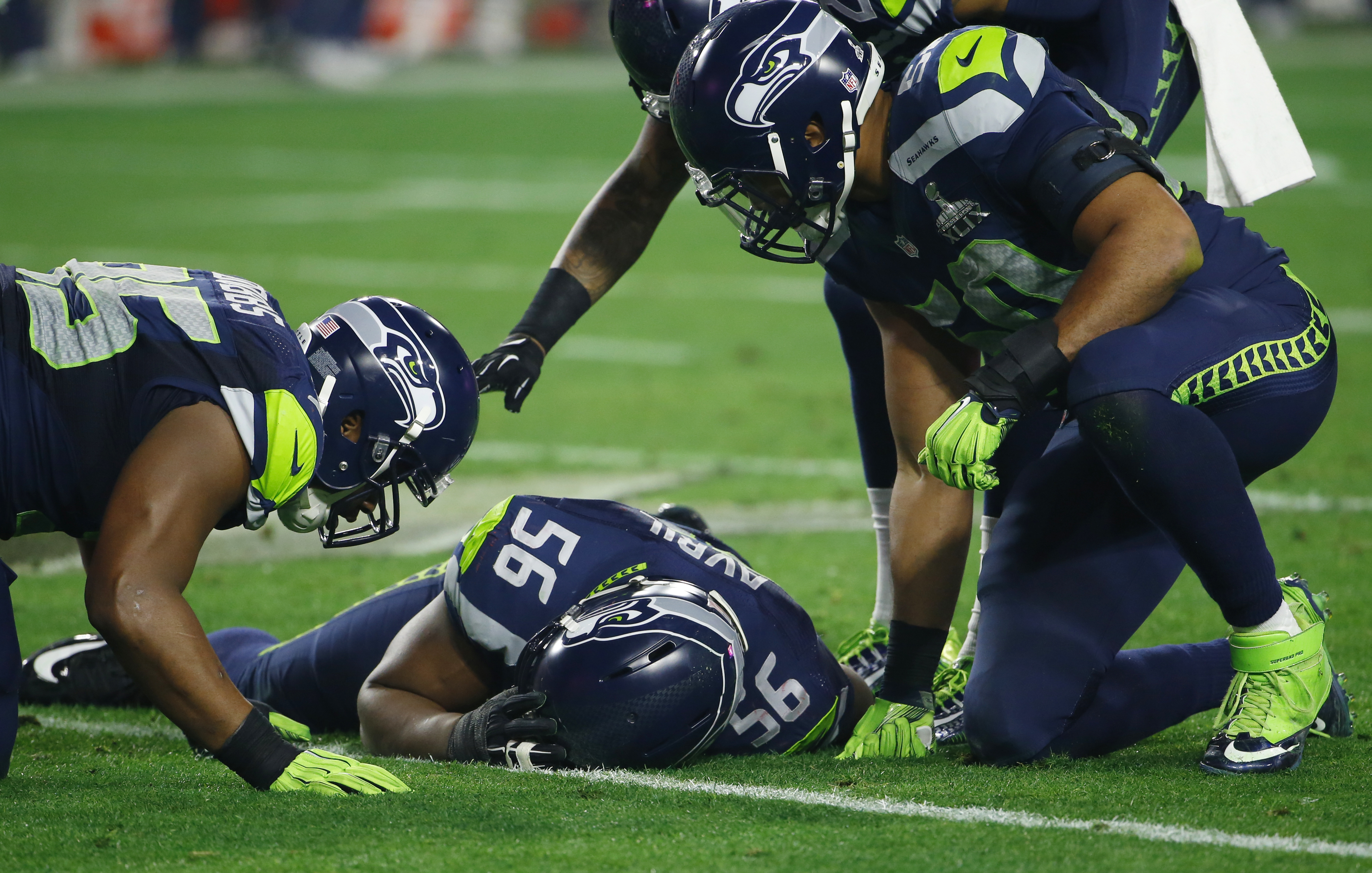
The past NFL season saw more than 160 players go down with a head injury. Along the way, there have been landmark breakthroughs in brain research, a high-profile wrongful death lawsuit, and even a commentary on violence in football by President Obama.
The president said that if he had a son, he’d think twice about letting him play football. His comments, which have spurred a range of reaction from players, come amid an NFL season in which 170 concussions have been reported on team injury reports.
The family Junior Seau is suing the NFL, claiming the linebacker’s suicide last May was caused by head trauma he sustained over more than 20 seasons in the league.
It’s the first time researchers have identified signs of the crippling brain disease known as Chronic Traumatic Encephalopathy, or CTE, in living patients.
The former NFL linebacker, whose suicide stunned the football world, suffered from the same chronic brain condition that has also been documented in the brains of 50 deceased players, NIH researchers have found.
Nearly 10 players per week were diagnosed with a concussion during the NFL regular season, but that figure is poised to hit zero when the first injury report to reflect postseason action is released later this week.
At least 10 players left games with possible head injuries on the last day of the NFL regular season Sunday, but because only playoff teams will continue releasing injury reports through next month’s Super Bowl, no more than three of those injuries can be officially tallied.
Through the first 15 weeks of the NFL season, roughly 10 players per week suffered a concussion. Teams appeared to outdo that pace this past weekend as at least 12 players left games due to possible head injuries.
Week 15 of the NFL season saw at least seven players removed from games because of possible head injuries, however, two players were allowed back onto the field after appearing to sustain a concussion.
An analysis of the NFL’s concussion guidelines by FRONTLINE and ESPN has revealed an array of inconsistencies in how the league tracks, treats and even describes serious head injuries.
The reported number of NFL players with concussions this season is on pace to increase more than 9 percent from last year, to an average of nearly nine per week.
After three straight weeks in which the number of officially reported head injuries reached the double digits, teams appeared to experience a sharp drop in concussions during Week 14 of the NFL season.
That brings the total to 50 confirmed cases of a degenerative brain disease found in former NFL, college and high school players. But some critics question whether the scientists are overstating their findings.
(120 minutes) Renowned climber/filmmaker David Breashears returns to Everest's worst tragedy to tell the story as it's never before been told... (Web site »)
(60 minutes) FRONTLINE investigates how the tentacles of Russian organized crime have penetrated the National Hockey League. The report exposes how major Russian crime figures are extorting Russian-born players and using their hockey connections to establish a beachhead in the U.S. and Canada. Over the course of a ten-month investigation, FRONTLINE conducted dozens of interviews with sources in the Russian underworld, professional hockey representatives and law enforcement agencies in Russia, the U.S., and Canada.<br><br>FRONTLINE's web site deepens this report with excerpts from congressional hearings and law enforcement reports, plus the extended interviews and profiles of central figures. (Web site »)
Apr. 6, 1993
The Trouble with Baseball
(60 minutes) As the 1993 baseball season begins, Frontline looks at the power struggle between the owners and players for economic control of Major League baseball and how that battle has led the national pastime to the brink of disaster.
Nov. 5, 1991
Don King, Unauthorized
(60 minutes) Frontline investigates the life and career of boxing promoter Don King, from his early street hustling days in Cleveland-where he once killed a man who owed him money-to his current position as the top boxing promoter in America. Correspondent Jack Newfield travels to training camps, title matches, and interviews fighters, managers, and trainers to tell the troubling story of a man who is bigger than the sport he promotes.
Aug. 12, 1986
Comrades VII: Steel Mill Soccer
(60 minutes) Frontline profiles the lives of players on a factory soccer team in the southern Soviet Republic of Azerbaijan as they fight for the town championship.
Feb. 19, 1985
Down for the Count
(60 minutes) Professional boxing is one of the most popular and profitable sports in America. It can also be fatal. Frontline goes inside the world of fighters, promoters, and fans who love the sport-and critics who say it should be banned.
May. 7, 1984
The Other Side of the Track
(60 minutes) Horseracing is American's number one spectator sport. In 1982, more that 77 million people wagered almost $12 billion at the nation's racetracks. Frontline gives an insider's look at the 'sport of kings,' focusing on tracks at Belmont, NY, where the rich indulge their interest in racing, and at Great Barrington in Massachussetts where infirm horses run for purses that can barely pay the feed bill.
Apr. 23, 1984
Chasing the Basketball Dream
(60 minutes) Many young men, especially many poor blacks in the nation's cities, dream of making it big by playing basketball. Charlie Cobb looks at some who make it-and many who will not-and at many of the issues in high school and college sports today. College recruiters seek the best of them, promising an educations in exchange for play. But 75% never get a college degree because, as this film suggests, colleges are too busy with their big-time sports programs to be concerned with educating their players.
Jan. 17, 1983
An Unauthorized History of the NFL
(60 minutes) In its premiere broadcast, Frontline investigates the underbelly of the NFL--the secret connections between professional football and the world of sports gambling and organized crime.