
[sorry, this video no longer available]
With transit agencies running in the red, some have found themselves linked to complex financial deals — in the hopes of creating new revenue sources — that have since soured as a result of the Recession, potentially leaving cash strapped systems owing millions more in debt. In the final segment of a two part report for Blueprint America, correspondent Rick Karr looks at the fallout of these arrangements as, in many cases, it’s not just money but the safety of riders at risk.
[UPDATE]
On the evening of June 22 in Washington, D.C., as area commuters headed home from work, a Metro train car rear-ended another car — resulting in the deaths of nine, and injuring dozens more.
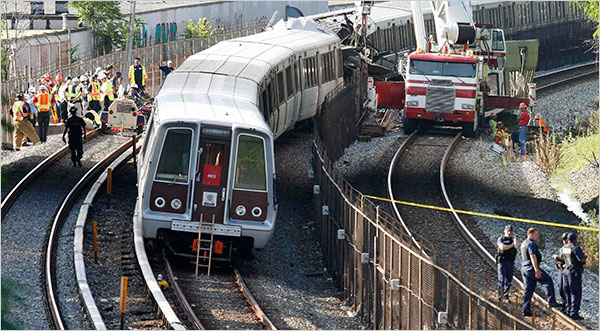 D.C. Metro crash || Photo: Reuters D.C. Metro crash || Photo: Reuters |
In the time since the accident, it has been made known that federal safety officials had previously warned that the type of train cars involved could be unsafe in crashes, and called for them to be replaced or, at least, strengthened.
Still, the Washington transit agency did nothing after the federal warning. Not because they did not also see the same problem, but because the agency could not afford to replace the cars, which make up more than a quarter of those used in the system.
Metro — like most mass transit agencies throughout the country — is on the verge of operating in deficit, as a shortfall of $154 million is projected for fiscal year 2010.
At the same time, a tax shelter, as Blueprint America previously reported in March, according to the terms of a lease-back agreement — in which Metro raised extra funds by selling its trains to private companies that would, in return, lease them back — meant the leased cars, like the ones involved in the accident, have to remain in service until a specified date or the agency could face financial penalties.


