
In This Episode << SLIDE LEFT TO SEE ADDITIONAL SEGMENTS
Islam and Modernity
KATE SEELYE: Here at al Azhar, one of the Muslim world’s oldest and most respected centers of learning and worship, Muslims come to study and pray and to ask how to live a devout life in the modern world. They come for fatwas — religious rulings that are nonbinding. Clerics give advice on how to be good Muslims in matters of religion, family and even finance.
This vendor says fatwas are indispensable.
MOHAMMED (through translator): You feel very reassured after getting a fatwa, and you know you can build your future plans on it.
SEELYE: But recently, some of Azhar’s fatwas have come under criticism. Last year a cleric ruled that an unmarried man and woman could work together alone, which is normally forbidden in Islam, but only if the woman established a maternal relationship with her colleague by breastfeeding him five times. The cleric was suspended for his fatwa, which raised questions about Islam’s relationship with modernity.
In Egypt, the modern and the traditional live side by side. Like other developing countries, Egypt has been flooded in the last decade with new technologies like satellite TV and the Internet, and that’s exposed this conservative society to a confusing mix of Western values and culture.
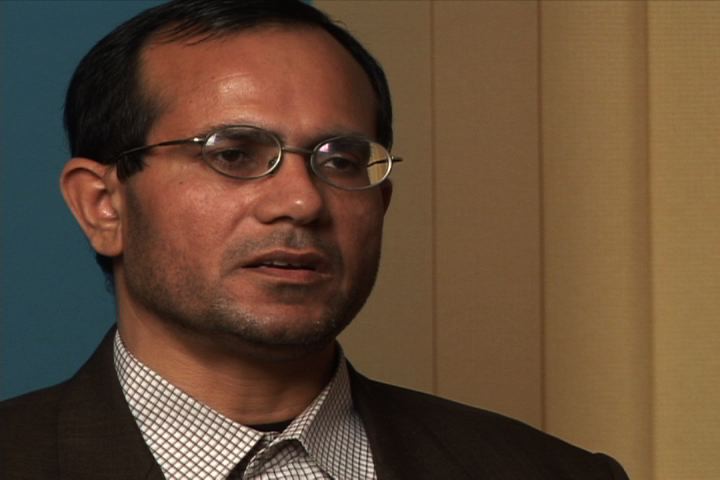 Dr. Ragab Abu Malih |
Islam Online is trying to help Muslims navigate this fast-changing environment. It’s one of the Muslim world’s most popular Internet sites and provides religious advice as well as counseling and information about health, science, and culture in both Arabic and English.
Clerics like Ragab Abu Malih take questions during live fatwa sessions four times a day. He says he receives more than 700 queries daily but can only answer a fraction of them.
Dr. RAGAB ABU MALIH (Managing Editor, Shari’ah Section, Islam Online, through translator): I think if we answered the 700 questions, then more would come. People are asking questions they never had before because of new technologies and influences.
SEELYE: Questions include whether it’s permissible to find a spouse through the Internet. Can a man divorce his wife in a text message? And what about Internet chatting? Flirting between men and women is forbidden in Islam, but can they chat online? According to clerics here, it’s best if a third party monitors the chat.
ABU MALIH (through translator): The Qur’an did not mention these details in their entirety, but it guides us in our advice.
SEELYE: But critics question the advice being given. Islam Online may be using modern technology, but it’s spreading a very traditional message. The cleric who founded the site, Yousef Qaradawi, is considered a moderate in the region. But his fatwas have opposed women traveling alone without a male guardian, and he’s ruled against women being heads of state.
For secular Muslims like Dalia Ziade, such views are decidedly anti-modern. Ziade is a human rights activist. The 26-year-old accuses religious institutions in Egypt of spreading fundamentalist beliefs, like the veiling of women.
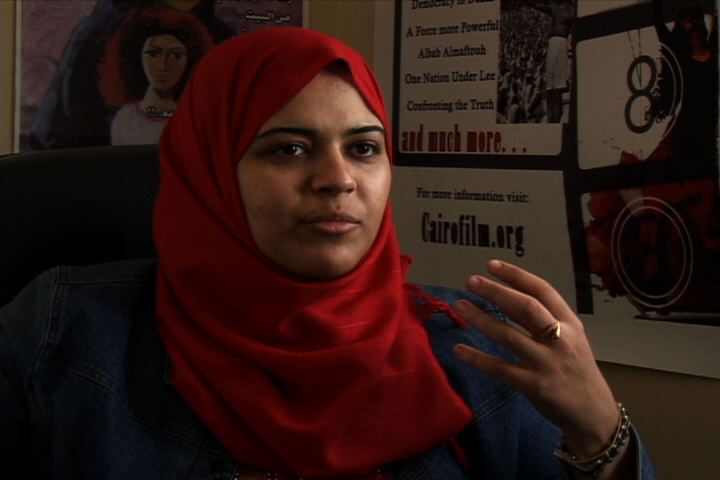 Dalia Ziade |
DALIA ZIADE (Cairo Office Director, American Islamic Congress): In my mother’s age, when she was my age, I see her photos. It was tremendously different. It was, you know, she wore short skirts and she used to wear t-shirts without sleeves, sleeveless t-shirts, and nobody used to ask her or to instruct her not to wear this or wear that.
SEELYE: Ziade says in today’s environment she has to wear a headscarf in order not to be harassed. She blames this on what she calls the growing piety movement.
Ms. ZIADE: Everyone now believes that if only he gets religious, all his problems will be solved.
SEELYE: As part of her work, Ziade’s been compiling fatwas that target women. Some clerics say they can’t walk on the same side of the street as men. This fatwa from a high-profile Islamist claims they’re not fit to be judges. Ziade says in this day and age the principles of modernity should be universal — principles like the acceptance of individual and women’s rights, reason, doubt, and the separation of mosque and state. Instead, she says, Islamists are taking Egypt back to another era.
Ms. ZIADE: You know, now I can travel anywhere in the world through my Internet connection. I can go to the U.S right now and see anything there. So how come in this open communication with the whole world I’m still in prison with these ideas?
SEELYE: These ideas like…
Ms. ZIADE: These fundamentalist ideas that go back 1,400 years ago.
SEELYE: Egyptians have always been religious, but just a few decades ago society was far more secular. Now Islam is increasingly part of the public sphere. Qur’anic chants are played in taxis, restaurants, and shops. Signs encouraging women to wear the headscarf are plastered on walls. The Niqab, the full face covering virtually unseen in the past, is increasingly common. More and more men display prayer bumps on their foreheads. The piety trend, say analysts, is fueled by political frustration, poverty, and increasing Saudi influence, and it also has the support of much of Egypt’s middle and professional classes.
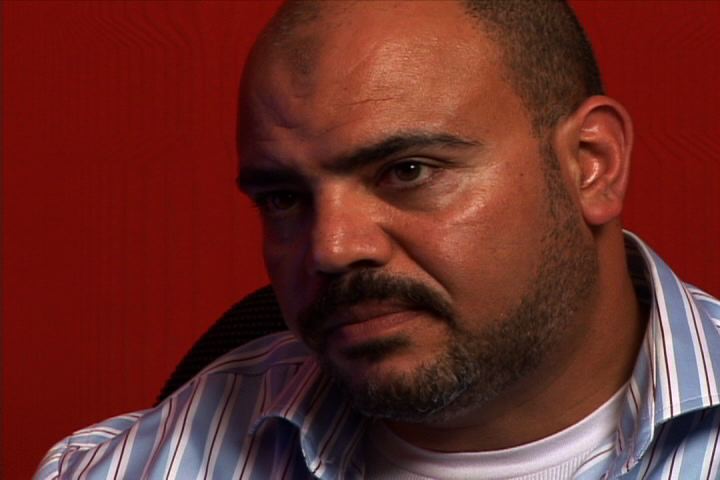 Ahmad Abu Haiba |
Ahmad Abu Haiba is a prominent media professional. He’s launching the region’s first Islamic music video channel to spread faith-based values. This video is about a farmer’s dreams of going to Mecca.
AHMAD ABU HAIBA (Executive Director, 4Shbab TV): This is how a Muslim should be: he’s a good man, he has good relations with all the people around him, he loves kids, he loves simple people.
SEELYE: Abu Haiba named his station 4Shebab, or “For Youth” in English. He says he’s using the power of satellite TV to help rebuild a Muslim youth identity.
Mr. ABU HAIBA: We don’t have a clear, stable, strong identity, and that’s what I’m trying to do. I’m trying to help the young people to establish their identity. This is the same identity that the Prophet Muhammad presented to his companions.
SEELYE: Abu Haiba hopes his videos will help counter some of what he says are the negative influences of Western music videos and television.
ABU HAIBA: And this drove us now to drugs and relationships, which really doesn’t fit with our culture.
SEELYE: In contrast, his videos emphasize community and family values, like respect for elders. Women mainly play the role of wives and mothers in the background. Abu Haiba says he doesn’t choose to embrace the principles of modernity, because they’re not in keeping with Islamic values.
ABU HAIBA: I don’t think that modernity is part of these values. I mean, when I learn Islam I know there’s a part of it that cares about people’s life and people’s life changes. But still always the major values and the major pillars as it is never change with time. Modernity is something linked with time, and Islam is timeless.
SEELYE: That view of Islam is the problem today, says Gamal al Banna, a reformist cleric. He says Islamists have a fixed reading of the Qur’an because long ago scholars banned new interpretations of the religious texts.
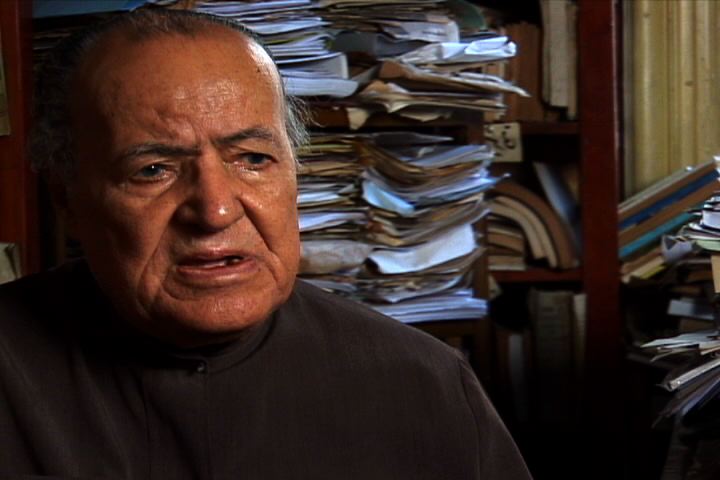 Gamal al Banna |
GAMAL AL-BANNA (President, Islamic Revival Movement, through translator): The religious institutions tell us that innovation will lead us down the wrong path. Anything that has to do with innovation is dangerous, and that’s wrong. You can’t say that religious opinions made over 1,000 years ago are valid for all times. We must have a revolution in the understanding of Islam, a revolution almost like Martin Luther’s.
SEELYE: Until then, says Banna, Islam will not be able to accommodate itself to the modern world. The 88-year-old has written dozens of books about the need for the renewal of Islam and the importance of the separation of religion and state. He’s even issued a fatwa saying Muslim women don’t have to cover their hair. Banna says Muslims must stop relying on scholars to interpret the holy texts. Instead, he says, they should read the Qur’an directly, keeping in mind its emphasis on knowledge and wisdom.
Mr. AL BANNA (through translator): The Qur’anic verse goes, “It was revealed to them, the Qur’an and wisdom.” The search for wisdom has proven itself to be a successful experiment for all peoples and all times. We have to adapt, and we have to learn from all other experiences with wisdom so that Islam isn’t a closed box, but it has an open window to the world.
SEELYE: Banna believes such reform will take place, but long after his lifetime.
For RELIGION AND ETHICS NEWSWEEKLY, I’m Kate Seelye in Cairo.
