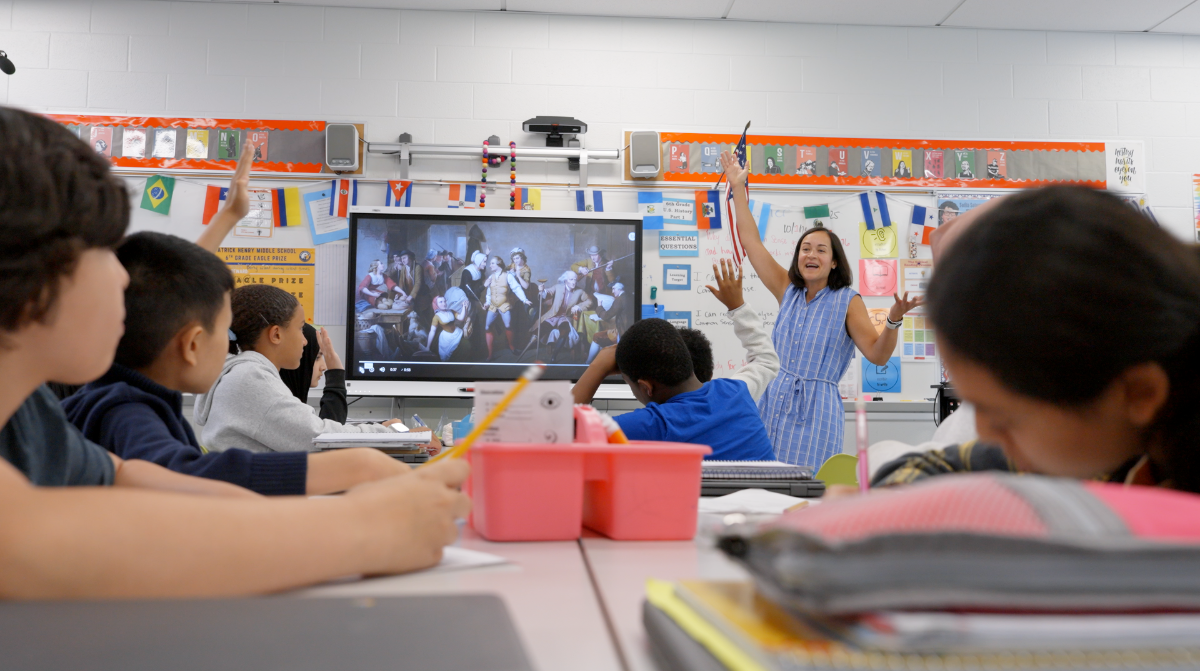


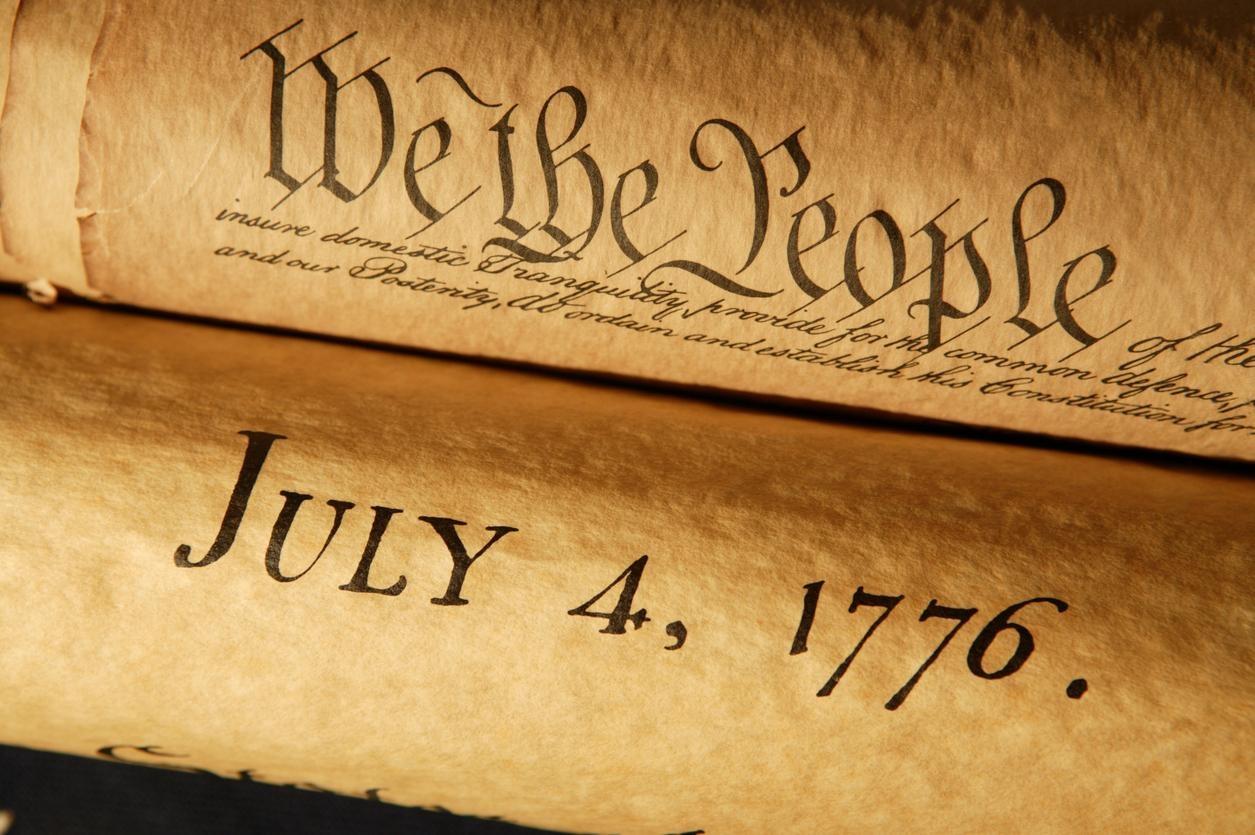
As a social studies teacher, one of my favorite parts of teaching American history is helping students discover how ideas from the past continue to shape conversations today. Every year, my government students are surprised by how often the Declaration of Independence reappears throughout American history. They expect to study it during our unit on the foundations of American independence and democracy; they don’t expect to see its language echoed in Frederick Douglass’ speeches, the women’s rights movement, the Civil Rights Movement, or even international human rights documents.
As students begin making those connections, they start to recognize a larger throughline across American history. The Declaration stops feeling like a document trapped in 1776 and instead becomes something far more relevant: a set of ideals that generations of Americans have embraced, debated, challenged, expanded, and reinterpreted for 250 years. In the process, students begin to understand why the Declaration of Independence still matters.
As the United States marks the 250th anniversary of the Declaration of Independence, there is an important opportunity for students to do more than memorize famous phrases like “all men are created equal.” It allows them to explore how each generation of Americans has redefined what those words actually mean.
One of the most effective ways I have found to teach the Declaration is to move it beyond 1776.
PBS LearningMedia’s The American Revolution Classroom Collection and, specifically, “The Declaration of Independence: Thomas Jefferson’s Influence,” provides an excellent starting point for helping students build historical context around the Revolutionary era and the Declaration’s creation. Other curriculum-aligned resources like the “Declaration of Independence | Civics 101” video, "The Declaration's Global Influence" interactive image, and the “Explore the Declaration of Independence” interactive lesson help students analyze the document’s structure, purpose, and key ideas before tracing its influence across later periods of history.
Once students understand the Declaration’s historical context, I challenge them to examine how later movements and individuals used its language and its spirit to advocate for change.
Frederick Douglass:
Frederick Douglass’ famous 1852 speech, “What to the Slave Is the Fourth of July?,” often becomes one of the clearest examples for students. Douglass praised the ideals of America’s founding while condemning the hypocrisy of slavery in the United States. Students quickly recognize the contradiction between the Declaration’s promises of equality and the reality of human bondage. More importantly, they begin to understand that Douglass used the Declaration not to reject American ideals, but to challenge the nation to live up to them. For many students, this becomes a surprising realization: Throughout American history, reformers have often used the language of the Declaration against the government itself, arguing that the nation was failing to uphold its own founding principles.
Related Classroom Resources:
- The North Star | Becoming Frederick Douglass (6-12)
- The Abolitionists | Becoming Frederick Douglass (6-12)
Elizabeth Cady Stanton:
Students notice similar patterns when examining the “Declaration of Sentiments,” which Elizabeth Cady Stanton drafted and presented at the Seneca Falls Convention in 1848. Many immediately recognize the parallels between this document and the Declaration of Independence. The structure, grievances, and language intentionally mirror the original text, but Stanton applies the Revolutionary ideas to women’s rights and political equality. For students, this moment often highlights how reform movements throughout American history have repeatedly returned to the Declaration’s language to argue for expanded rights and participation.
Related Classroom Resources:
- Seneca Falls: The Declaration’s Influence | Interactive Lesson (6-12)
- Seneca Falls Women’s Rights Convention (6-12)
Universal Declaration of Human Rights, 1948:
One of the most fascinating discussions emerges when students examine the Universal Declaration of Human Rights, adopted by the United Nations in 1948. Many students are surprised to discover that the language of natural rights and equality influenced conversations beyond the United States. Suddenly, the Declaration of Independence is no longer just an American document connected to the Revolutionary era. Instead, students begin to see how its ideas contributed to a broader global conversation about human rights, freedom, and human dignity.
The Rev. Martin Luther King Jr.:
The Rev. Martin Luther King Jr.’s 1963 “I Have a Dream” speech provides another powerful connection. King famously described the promises of the Declaration and the Constitution as a “promissory note” that had not yet been fulfilled for many Americans. Students are often struck by the idea that King framed the Declaration not as a completed achievement but as an ongoing challenge. The document’s ideals remained relevant because Americans were still debating how those promises should apply in practice.
Related Classroom Resources:
- Martin Luther King Jr. | Civil Rights Leader Video (3-8)
- Students Reflect on “I Have a Dream” Speech (6-12)
These moments help students recognize an important pattern: the Declaration of Independence has never had just one fixed meaning. Americans across different time periods have interpreted its promises in different ways, often using its language and core message to push the nation toward change.
That realization also creates opportunities for deeper classroom discussions. Students begin asking important historical and civic questions:
- Who was included in the Declaration’s promises in 1776? Who was excluded?
- How have Americans attempted to expand the Declaration’s promises over time?
- Why do people continue to invoke the Declaration today?
These questions feel especially relevant during the nation’s 250th anniversary. While anniversaries can sometimes encourage students to view history as distant or settled, the Declaration offers an opportunity to show that the debates surrounding freedom, equality, and rights are ongoing. Questions about equality, rights, representation, citizenship, and the role of government continue to shape American civic life today. While the specific issues may change over time, Americans still return to the language and ideals of the Declaration when debating what freedom and equality should look like in practice.
PBS LearningMedia provides educators with several valuable resources to support these conversations. In addition to The American Revolution Classroom Collection, you may find the webinar “Teach the Declaration’s Global Impact Using Media and Artifacts” especially useful for helping your students analyze visuals, artifacts, and primary sources related to the Declaration’s influence across different periods and places.
One of the most rewarding parts of teaching the Declaration is watching students realize that its story did not end in 1776. For 2½ centuries, Americans and others around the world have returned to its language to celebrate national ideals, expose contradictions, demand change, and expand definitions of freedom and equality.
Helping students trace those connections across history allows them to see the Declaration not simply as a founding document, but as an ongoing conversation that continues today.