

If you teach history to middle and high school students, eventually you start noticing a pattern. Some topics sell themselves easily; others require a little more work. The American Revolution can fall into the “little more work” category.
For many students, the Revolutionary era conjures images of powdered wigs, formal portraits, speeches written in dated language, and an endless parade of dates and names to memorize for a test. Unsurprisingly, this is not exactly a recipe for student excitement.
With new social studies standards being introduced in Alabama, my school district is preparing social studies teachers to cover new topics in the 2026-27 school year. I’m a sixth-grade teacher, and my content is shifting from modern American history to early American history, which includes the American Revolution. Though I’m prepared to teach Revolutionary era content, curriculum shifts are pushing even the most experienced teachers to rethink their approaches, refresh their content knowledge, and consider new methods to engage students.
And honestly, that’s not a bad thing.
If you are teaching the Revolutionary era for the first time, my biggest piece of advice is simple: Resist the urge to teach it as a clean, predictable story — because it was not. PBS LearningMedia’s The American Revolution Classroom Collection (Grades 3-12), along with the companion Educator Guide, are incredibly useful tools that can help educators teach the complexities of the American Revolution. This collection provides videos and interactive materials that help build true student engagement beyond what a textbook can offer.
Here are three ways that educators can use The American Revolution Classroom Collection to enhance their teaching of the Revolutionary era this school year to encourage critical thinking and excite learners.
Embrace Complexity, Not Mythology
Nothing was simple or inevitable about the American Revolution. For example, one of the easiest traps to fall into is teaching the Revolution as if every colonist was a Patriot, committed to independence from Britain, united with their neighbor, and eager to start a new, independent country. That version is easier to teach, but it is also inaccurate and incomplete.
Not every Colonist wanted independence. Some remained loyal to Britain. In the “Patriot, Loyalist, Neutral: Differing Perspectives on the American Revolution” (Grades 6-12) resource, students learn about the varied perspectives of people living in the British Colonies and the beliefs and practices that contributed to their specific viewpoints on independence.
Similarly, “The Role of France In the American Revolution” (Grades 9-12) explores the extent to which France’s support influenced the American Revolution and its outcome. This resource challenges the common myth that winning the American Revolution was inevitable for the newly minted United States. Without France’s support, the United States may have lost the war. Understanding the various factors that contributed to defeating the British moves students away from static narratives and, instead, provides them an opportunity to explore the war’s complexity.
Call to Action: Teach the American Revolution as the complicated and unfinished experiment that it was — not just the static story your students already know.
Additional Resources To Support:
- “The Meaning of Democracy During the Founding Era” (Grades 6-12)
- “Conflict Over Land and the American Revolution” (Grades 6-12)
- “Demographics of the British Colonies” (Grades 6-12)
- “Remembering Benedict Arnold” (Grades 9-12)
Elevate the Personal Stories
One of the clearest lessons I’ve learned in my own teaching has been that if a historical era feels distant or if students don’t see themselves reflected in history, you quickly lose their interest. Students respond well when history stops feeling relegated to the past. Once they open their minds to the idea that there are competing perspectives, conflicting motivations, and no universally shared experience, the topic becomes more interesting.
“James Forten and the Experiences of Black Patriots During the American Revolution” (Grades 6-12) helps to bring another perspective to the forefront. The resource encourages students to explore not just why Forten and other Black Patriots joined the cause, but what they believed they would gain by fighting with the Patriots.
The American Revolution Classroom Collection gives teachers who are either new to the classroom or new to the topic a strong starting point without requiring hours of hunting for reliable materials. Moreover, this collection provides a wealth of personal stories of people who lived and experienced the American Revolution — from George Washington to Betsy Ambler, a young girl who came of age during the Revolutionary era. Middle school students, especially, connect with people before they connect with abstract concepts. “Taxation without representation” is important, but to a sixth grader, it can feel like jargon unless you make it relatable. Fairness? Power? Frustration? Conflict with authority figures that feels out of touch with people’s everyday experiences? That they understand.
Call to Action: Teach the American Revolution through the eyes of the people who fought in it, fled from it, survived it, and demanded more from its promises.
Additional Resources To Support:
- “The Experiences of the Young Girl During the American Revolution: Betsy Ambler” (Grades 3-8)
- “The Experiences of a Common Soldier During the American Revolution: Joseph Plumb Martin” (Grades 6-12)
- “Women’s Contributions to the American Revolution” (Grades 6-12)
- “The Stockbridge Community During and After the American Revolution” (Grades 9-12)
Go Beyond Memorizing Facts
The Revolutionary era is actually one of the best units for teaching historical thinking and shifting from a “sit and get” approach because the period is full of competing ideas, debate, and differing interpretations. A great example of this is seen in “Thomas Paine’s Common Sense: A Call to Revolution” (Grades 6-12). This resource does not ask students just to summarize Common Sense or simply repeat how this essay inspired the Revolutionary ideas that led to the American Revolution. Instead, it asks students to grapple with compelling questions such as:
- What makes ideas spread?
- How can an idea turn into something worth fighting for?
- What does it take to change people’s minds — both in history and today?
These are not basic recall or comprehension questions. These are questions that push students beyond memorization and make history relevant to students today.
PBS LearningMedia resources intentionally support inquiry and historical analysis that engage students in their learning. Facts are important, but for this era to truly come alive for students, they must have opportunities to analyze multiple perspectives and primary source material, and to interpret cause and effect. These are core historical thinking skills that help students understand how history connects to today.
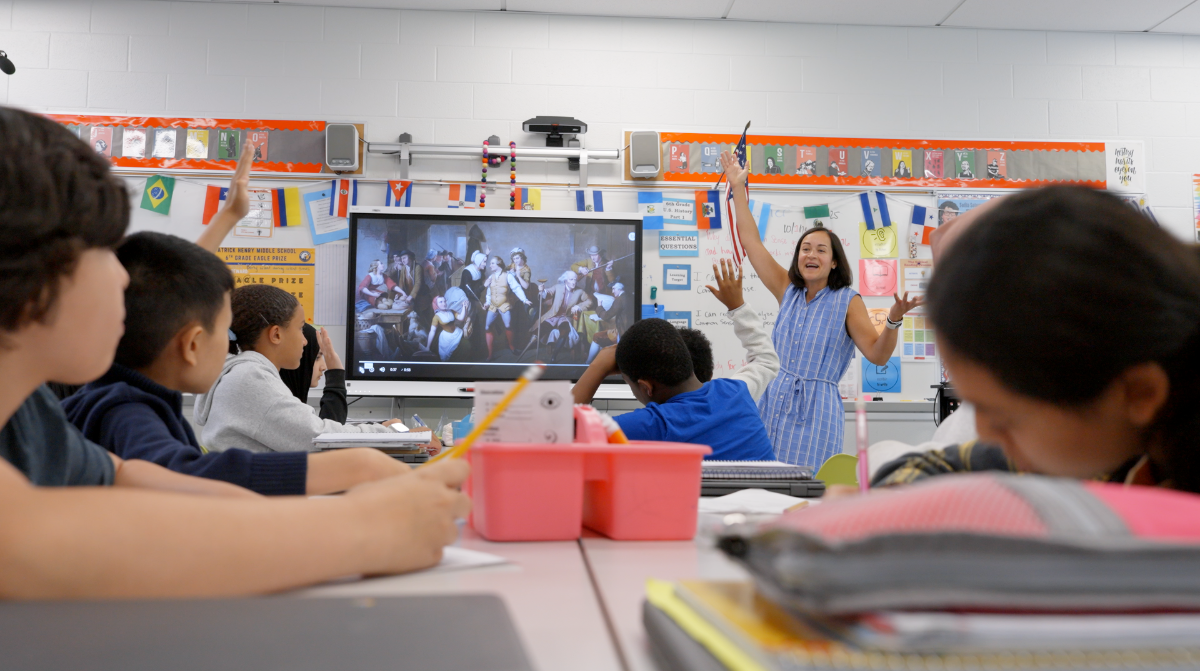
For teachers new to this content, embracing an approach less centered on memorizing facts can remove some unnecessary pressure. Instead of standing at the front of the room attempting to be an all-knowing authority, a teacher can use resources from PBS LearningMedia to help students take ownership of their learning through media viewing, discussion, and the opportunity to wrestle with questions that don’t have simple answers.
Call to Action: Ask questions about the American Revolution that students don’t already know the answer to. Challenge them to consider the big questions the American Revolution raises.
Additional Resources To Support:
- “Analyzing Letters between John and Abigail Adams” (Grades 3-5)
- “The Complexities of the Articles of Confederation” (Grades 6-12)
- “The Debates of the Continental Congress” (Grades 6-12)
- “Freedom and Liberty: The Influence of Revolutionary Ideals” (Grades 9-12)
Final Thoughts: Moving Toward New Understandings of a Well-Covered Topic
The best history classrooms help students see the past for what it actually was: messy, complicated, human, and deeply connected to who we are as Americans today. As I think about the curriculum standards shifts in my state and district, I acknowledge that change can be an adjustment, but it also creates opportunities to rethink teaching habits, refresh instruction, and teach familiar content in more relevant and interesting ways.
You can explore the Educator Guide’s Planning Checklist (Page 8) to consider how you might incorporate more visual storytelling into your teaching using PBS LearningMedia’s The American Revolution Classroom Collection. Further, the Quick Guide (Page 11) offers a full list of the collection’s resources, including links to each topic coverage area with relevant grade bands and other details to help you find those that best fit your curricular needs, as well as the ones that will offer the most meaningful connections for your students.
As you think about new approaches to teaching the Revolutionary era, remember that everyday experiences, immersive media, and complex stories are some of the best ways to encourage students’ critical thinking and engagement. If you are teaching this era for the first time, I encourage you to give yourself permission to move past the version of this history that many of us were taught. Of course, students must learn major figures, foundational ideas, and key turning points, but if students leave a classroom debating fairness, freedom, power, and perspective instead of only remembering that George Washington crossed the Delaware, that feels like a win to me.