Overview
ChatGPT has caught on fast because it is free and produces convincing responses to requests for, well, almost anything — from poetry and essays to jokes and math equations. In this lesson, students will learn what ChatGPT is, how it works, and how to recognize AI-generated content, and then put these skills to the test to separate AI-generated social media posts from human-generated posts.
Objectives
Students will be able to:
- Explain how ChatGPT produces convincing responses
- Explain why ChatGPT is prone to produce misinformation or disinformation
- Identify content that is created by artificial intelligence such as ChatGPT
Grade Levels
Grades 6-12Downloadable Lesson Documents
Key Vocabulary
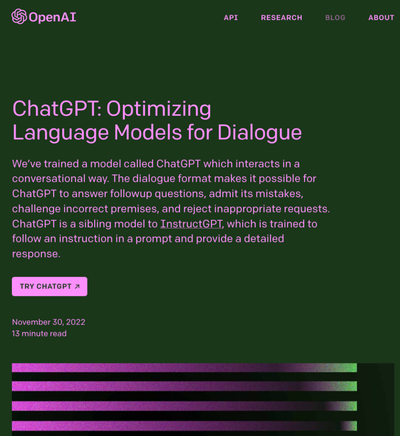
- ChatGPT – ChatGPT is an AI language model developed by OpenAI that is capable of generating human-like text based on the input it receives. It uses a deep neural network trained on a massive dataset of text to generate responses to a wide variety of questions and prompts. (source: ChatGPT)
- Misinformation – false information that is spread, regardless of intent to mislead. “Disinformation” is false information that is spread intentionally.
Before You Watch
Brainstorm as many words as you can to describe ChatGPT. Discuss with the class.
While You Watch
Watch the MediaWise Teen-Fact Checking Network (TFCN) video and answer the following questions. According to the video…
- ChatGPT is fed millions of pieces of writing from the _______________ , including Wikipedia and Reddit pages and It uses complex________________ to figure out what to say next — specifically, a special calculation to pick its next word based on all of the words that have already been generated online. This helps it make its responses sound more like a _______________ .
- Some reasons why ChatGPT helps spread misinformation: (1) It is _______________ to use, (2) it does not provide_______________ for any information it provides, (3) the information it provides sounds _______________ , even if false, (4) it will provide convincing _______________ information if it is asked to do so, (5) artificial intelligence (AI) is becoming more _______________ and will become harder to detect AI content.
- According to ChatGPT, three ways to identify written content was generated by AI are (1) check for patterns and _______________ , (2) look for signs of _______________ error, and (3) check the _______________ .
- What are three developments that will help identify information created by artificial intelligence like ChatGPT?
- What media literacy strategies you have learned can you use to check if content is AI-generated?
AFTER YOU WATCH
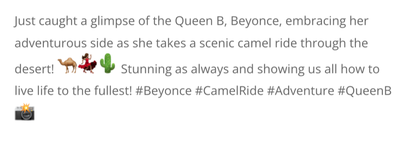
- What elements make this social media post seem believable? What clues indicate that it could be AI-generated?
- What long-tail keyword search phrase could you use to find credible sources through lateral reading to check the authenticity of the information in this social media post?
Extension Activity
- Put your new artificial intelligence identification skills to the test. See if you can tell which of the six social media posts in the extension activity document are real and which were generated by ChatGPT. Use what you learned in the video to evaluate each one, label each as real or fake, and explain how you arrived at each label by using long-tail keyword search terms, lateral reading, and upstream reading
- Watch this story produced by a student from the PBS NewsHour Student Reporting Labs — " A student offers his take on the promise and perils of ChatGPT "
Subjects
media literacy, social studies, language arts, journalism
Standards
Common Core ELA
CC.8.5.6-8; CC.8.5.9-10.A; CC.8.5.11-12.A - Citing informational text
College, Career, and Civic Life (C3)
D3.1.6-8. Gather relevant information from multiple sources while using the origin, authority, structure, context, and corroborative value of the sources to guide the selection.
D3.1.6-12. Gather relevant information from multiple sources representing a wide range of views while using the origin, authority, structure, context, and corroborative value of the sources to guide the selection.
ISTE
6-12.1.4.a Students: know and use a deliberate design process for generating ideas, testing theories, creating innovative artifacts or solving authentic problems.
Additional resources
- MediaWise “Is This Legit?” series
- How to combat political misinformation from PBS NewsHour Student Reporting Labs
- Fact-checking lesson for Student Journalists
- Misinformation Overload : Interviews from PBS NewsHour Student Reporting Labs
- StoryMaker Media Literacy Learning
- 10 tips to spot media misinformation
- Journalism in Action , a history of journalism in the U.S., including political satire, from PBS NewsHour Classroom
These lessons were developed by PBS NewsHour Student Reporting Labs in partnership with MediaWise and the Teen Fact-Checking Network, which are part of the Poynter Institute. This partnership has been made possible with support from Google.