by Nikhil Rughwani, 11th grade, Collegiate School, New York City
The U.S. Surgeon General declared a national epidemic of loneliness and social isolation in 2023, noting that nearly half of American adults experience significant disconnection, an impact on health equivalent to smoking 15 cigarettes a day. As the days grow shorter and the winter chill sets in, this isolation often deepens.
But what if one of the most powerful solutions to overcome that isolation and the "winter blues" is something as simple and ancient as singing with someone?
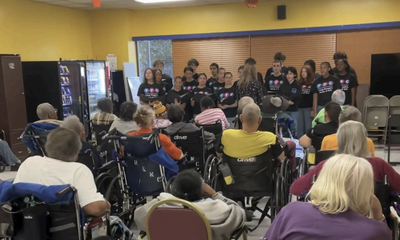
One crisp winter day, 30 other choristers and I from the Young People’s Chorus of New York City, a multicultural children’s choir, visited an elder care facility in Harlem. We were performing in the memory-care unit, where approximately 50 residents sat before us in their wheelchairs.
In fact, around 73% of 16- to 24-year-olds report that they struggle with loneliness.
As we entered, the room felt hushed and subdued, reflecting the bleakness of the weather outside. I noticed a TV in the corner playing ‘Jeopardy’ at low volume, but no one seemed to be watching. The residents seemed withdrawn, and our own conversation quickly quieted. I shuddered, apprehensive to begin singing to these fragile adults. At that moment, I realized the importance of our visit.
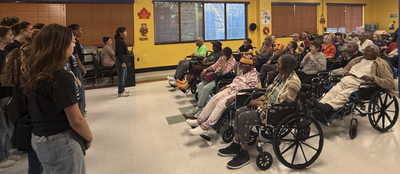
Young People Care, a community service initiative in New York City that makes music more accessible to marginalized groups, especially the elderly, performs at a senior center. Credit: Nikhil Rughwani
Researchers have long known that music does more than entertain. It biologically binds us together. Studies show that singing releases oxytocin, the “bonding hormone” that reduces stress and increases trust. Music synchronizes breathing and heart rates, creating a connection between people who had previously been strangers. Intergenerational programs offer especially powerful benefits, and older adults in group singing environments have shown improved mood, memory and engagement.
I had read these studies about how music brings people together, but that day in the elder care facility, I watched the connection ignite right in front of me.
Social isolation can affect young people too, especially during the winter months when outdoor activities vanish. In fact, around 73% of 16- to 24-year-olds report that they struggle with loneliness. As a teen singing in a program that brings together children from multiple cultural and socioeconomic backgrounds across all New York City boroughs, I have experienced firsthand how music significantly reduces social barriers. We sing repertoire from many cultures and religions, yet when our voices blend, the borders between us blur.
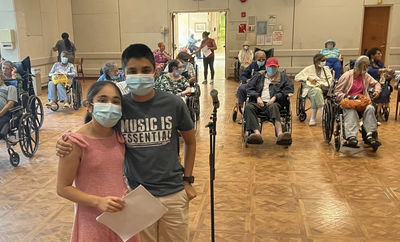
Nikhil Rughwani and his sister, Anya Rughwani, who is also a member of the Young People’s Chorus of New York City, have been singing together at elder care facilities for several years prior to founding Young People Care.
Music also bonds us across continents, and I was very lucky to experience this at the 2023 World Choir Games in Auckland, New Zealand. Standing beside singers from more than 40 countries, including an Indigenous Māori choir with whom we virtually rehearsed for months, I felt a unique connection: people who had little in common becoming a community through song. I still remember how their haka-like warm-ups echoed through the Zoom call. Our vowels were different, our accents distinct, but our harmonies perfectly aligned. Music did more than just connect us as individuals. It connected entire worlds.
These memories came rushing back to me in the gloom of the nursing home. We entered the room quietly, almost hesitantly, feeling invisible to the residents around us. Then we lifted our folders and began to sing “Winter Wonderland.”
Something shifted immediately. The adults perked up, like plants reaching toward sunlight after a long absence. An elderly woman in the front row opened her eyes, strummed her finger against the metal armrest of her wheelchair and mouthed the lyrics. Others began tapping their feet, bobbing their heads and humming in harmony. A man who’d seemed asleep all afternoon suddenly opened his eyes and met mine.
Music reminded them, and us, that they still belong in the world. And in a time that can feel cold and isolating, music is the simplest and most powerful gift we can give one another.
The change was also in me. I began to sing more openly, expressing myself through the music. I noticed one chorister beside me wipe away a tear. At that moment, I realized that this wasn’t just a performance. It was a shared human experience that mattered much more than the music. As we packed up, several residents were still humming the melody.
After this performance, I understood in a new way why programs that bring music to our most vulnerable community members are essential. We hadn’t just shared a song, but we had awakened something in people who are too often forgotten. Music reminded them, and us, that they still belong in the world. And in a time that can feel cold and isolating, music is the simplest and most powerful gift we can give one another.
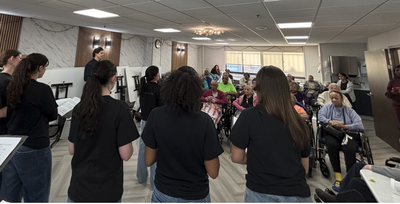
Choristers from Young People Care, a community service initiative of the Young People’s Chorus of New York City, perform for the elderly in New York City. Credit: Nikhil Rughwani
In the remainder of this winter season, take a moment to think about those who aren’t surrounded by loved ones and consider how we can bring connection to them. We can encourage senior living communities to host weekly community sing-alongs, support partnerships between schools and elder care facilities, and strengthen funding for musical programs in both settings. We can visit, sing, hum, listen, or simply show up. Tackling the loneliness epidemic doesn’t always require sweeping policy changes or expensive interventions. Sometimes it begins with the courage to sing a single note with another human being to break the winter silence.
About the author
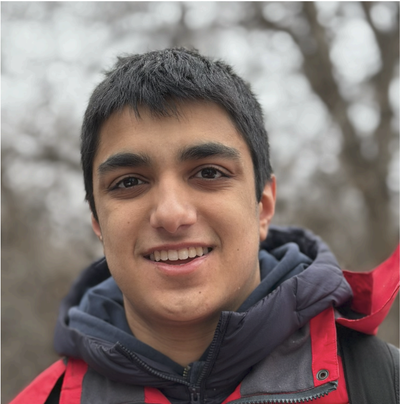
Credit: Nikhil Rughwani
Nikhil Rughwani, a high school junior in New York City, is a singer and published researcher whose work centers on ethnomusicology, the study of music as a cultural and social force. Nikhil has been a member of the award-winning Young People’s Chorus of New York City since 2020, and within the chorus, he founded Young People Care, a community service initiative that makes music more accessible to marginalized groups, especially the elderly. Through these intergenerational choral performances at elder care facilities across New York City, he explores how culturally familiar songs carry memory, identity, and shared history, and how music can bridge generational and social divides.
If you are a middle or high school student and would like to pitch a Student Voice idea to PBS News Hour Classroom, contact vpasquantonio@newshour.org.
Sign up to receive our weekly newsletter with Daily News Lessons and community events.