SUMMARY
Minerals extracted from the earth help power many of our devices, from computers to car batteries. But what about the communities whose land is at the center of acquiring these minerals? Ali Rogin reports on the fight between companies seeking minerals from these lands and the Indigenous tribes fighting to preserve them.
View the transcript of the story.
News alternative: Check out recent segments from the NewsHour, and choose the story you’re most interested in watching. You can make a Google doc copy of discussion questions that work for any of the stories here.
KEY TERMS
lithium — a lightweight metal that's commonly used to make batteries
uranium — a heavy metal used for nuclear fuels and weapons
regressive — used to describe ideas or systems that are old-fashioned and do not encourage change or development
WARM-UP QUESTIONS
- Who are the people being affected negatively by mineral mining on their lands?
- What is mineral mining?
- Where is the "lithium triangle" located?
- When did the U.S. adopt the United Nations Declaration on the Rights of Indigenous Peoples?
- According to Rick Tallman, how can the U.S. avoid producing new mines?
FOCUS QUESTIONS
Rick Tallman says we've run into a dilemma: "Across the world, Indigenous people are going to be the most impacted by sourcing these critical minerals that all of us need for a successful energy transition. But if we don't mine those minerals, they'll also be the most impacted by climate change if we fail."
Why is it important for the United States and other countries to work together with Indigenous communities on solutions for critical issues such as mineral mining? Explain your response.
Media literacy: Have you learned about any other environmental issues affecting people worldwide?
Alternative: See, Think, Wonder: What did you notice? What did the story make you think? What would you want to learn more about?
FOR MORE
What students can do:
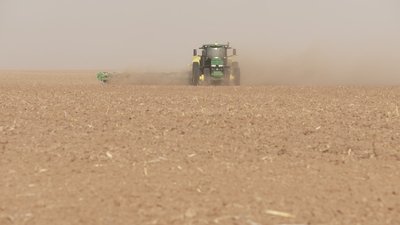
Learn how farmers in the Great Plains are dealing with groundwater scarcity using this Daily News Lesson.
Then, listen to this episode from the On Our Minds podcast featuring activist Sophia Kianni to learn about how young people can get involved with climate activism.
This post was written by Gianfranco Beran, a senior at Amherst College, and an intern with PBS NewsHour Classroom, and edited by NewsHour's Vic Pasquantonio.
Fill out this form to share your thoughts on Classroom’s resources.