ABOUT COMMUNITY CONNECTIONS: Community Connections is a lesson collection designed for adult learners and community colleges, with the goal of inspiring student civic action. This might be respectful debate or conversation about a local issue, planning a community event, or a creative project that helps connect local, national and global issues.
To use this lesson: First, watch the video and answer the questions below as a warm up. Next, choose one or more of the activities under "Take Action" that best fits your classroom. Or, use the segment above to inspire your own original classroom activities — the spirit of these lessons is to connect current events to actions that make your community a better place for everyone!
SUMMARY
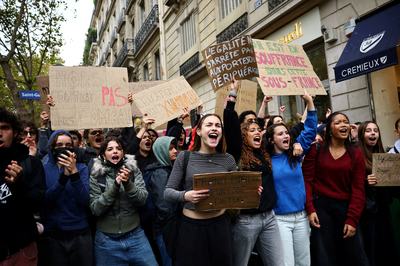
Since the attack by Hamas and Israel’s ongoing response, there have been bitter debates on many college campuses over which side bears responsibility. This plays into already raging debates at many schools over free speech and academic freedom. Judy Woodruff visited four colleges to understand how this fits into the nation's political divide. It's part of her series, America at a Crossroads.
For a transcript, click here.
WARM-UP QUESTIONS
- Who are some of the people profiled in this story?
- How do students describe attempts to shout down some campus speakers in this story?
- Why did Ilya Shapiro resign from his job at Georgetown Law School?
- What is Florida law SB 266, and what restrictions does it impose on college subjects?
- Where is New College, and why was it profiled in this story?
FOCUS QUESTIONS
- What example stood out to you in this story the most?
- How do you think college administrations should best foster a climate of free speech and student safety?
- One student in this story, Rebecca Sparacio, says "I do think it's important to hear all of these views [including racist and sexist views], because when you are out in the real world, I think you hear people discussing things that are not for the good of society. And you have to learn how to react." Do you agree with Sparacio? Why or why not?
Media literacy: This story mentions a number of states that are imposing restrictions on what can be taught at public universities. Where can you go to find out more about those restrictions? Is your school impacted?
Alternative: See, Think, Wonder: What did you notice? What did the story make you think? What story would you want to find out more about? Where would you go to learn more?
TAKE ACTION
Return to the quote from the student Rebecca Sparacio above. She says that it's important to hear all views, including those that are racist and sexist, because they exist in the real world and people need to learn how to react to them. Do you agree with this viewpoint? Use this activity to set up a debate on whether or not schools should condone offensive viewpoints on campus.
You might also debate the following question: Do you think your campus could or should change its policies to better foster free speech while maintaining a safe environment for students?
Read the following article about threats on campus amidst the Israel-Hamas conflict and discuss as a class — what obligations do campuses have to protect students from threatening speech? What should campus administrations do to encourage dialogue and free speech at a time when both Jewish and Muslim students, among others, might feel unsafe?
Threats to Jewish Cornell University students in online discussion board provoke police investigation
This project was funded under the 2024 Leonore Annenberg Civic Mission of the Nation Initiative, sponsored by the Leonore Annenberg Institute for Civics. LAIC is a project of the Annenberg Public Policy Center of the University of Pennsylvania.
Fill out this form to share your thoughts on Classroom’s resources.