NOTE: If you are short on time, watch the video and complete this See, Think, Wonder activity: What did you notice? What did the story make you think about? What would you want to learn more about?
SUMMARY
PBS News Student Reporting Labs, our journalism training program, takes us to a family farm in Upper Marlborough, Maryland, to meet Cameron Oglesby. They bring you the story of her family’s struggle to hold onto their land, which inspired her to want to tell stories of environmental justice.
View the transcript of the story.
News alternative: Check out recent segments from the News Hour, and choose the story you’re most interested in watching. You can make a Google doc copy of discussion questions that work for any of the stories here.
Key terms
environmental justice — a movement that addresses unequal impacts of environmental harms and land use on certain people, including racial and other minorities
WARM-UP QUESTIONS
- Who is Cameron Oglesby?
- Where is Oglesby's farm?
- When did Oglesby's family first begin farming the land she hopes to preserve?
- How has Oglesby's family farm been threatened?
- Why is preserving the farm a matter of "environmental justice" according to Oglesb?
ESSENTIAL QUESTIONS
In this segment, Cameron Oglesby says, "Land is wealth in this country, and I have seen that right stripped away from so many people for no other factor than they are descendant of enslaved peoples or that they are indigenous."
- What do you think she means when she says that "land is wealth" in the United States?
- What are some of the ways she points to land being stripped away from descendants of slaves and from indigenous peoples? Can you think of any other ways this has happened?
- How do you think land ownership might be connected to "environmental justice"? (See definition above.)
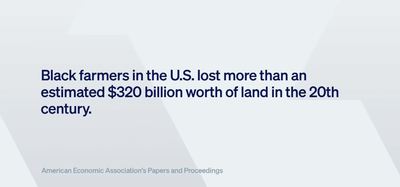
Media literacy: Why do you think the producers included the following graphic? How does it add to the story about Oglesby's family farm?
NEWS: THEN & NOW
The News: Then & Now section of the Daily News Lessons allows students to see connections between current and past news events. The activity provides historical context using primary sources from the Library of Congress.
See PBS News Hour Classroom's Journalism in Action website for interactive examples of how journalists covered key events in U.S. history while honing your primary source, civics and digital news literacy skills.
Then
While there were some Black landowners before the Civil War, the vast majority of farmland was owned and operated by white Americans. This changed after the Civil War, when many formerly enslaved established farms in the South or migrated to the Midwest or West to look for new opportunities. Still, many newly freed people had difficulty purchasing or maintaining their land in the face of discrimination and lack of inherited wealth.
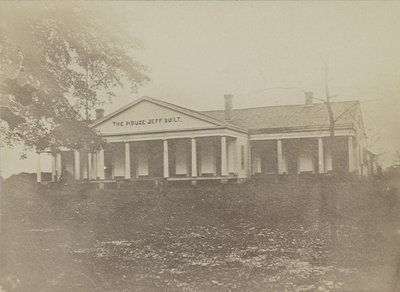
Brierwood, Jefferson Davis’ plantation home on Davis Bend, in 1862 during the Civil War. The Montgomery family lived here after purchasing it in 1866. Photo: George Holmes Bixby. Courtesy of the Library of Congress
While some Black farmers were able to build communities and establish farms that lasted for generations, many farmers relied on small plots to feed families. Many of these farmers would leave rural communities behind and travel to cities in the North as part of the Great Migration to seek better conditions for their families.
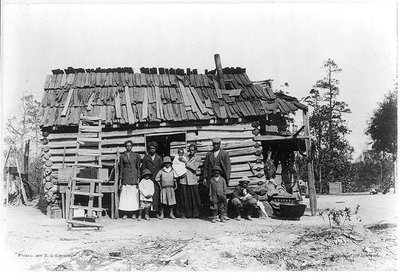
Neds family near Southern Pines, N.C., circa 1914. Courtesy of the Library of Congress
Now
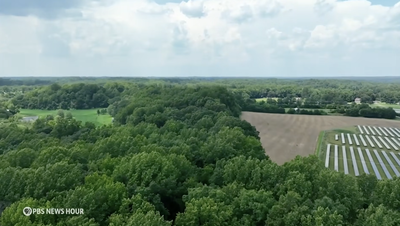
Cameron Oglesby's farm today. Image courtesy of PBS News Hour
Black ownership of farmland peaked around 1910 at 16-19 million acres, according to a study by the USDA. That was around the time that Oglesby's family started the farm she is trying to save. One hundred years after the peak, Black-owned farmland was down to 1.5 million acres, according to the same study. That represents just 2% of all privately owned farmland in the U.S. As a class, discuss —
- Why do you think Black farm ownership has decreased so significantly?
- How do you think this decrease impacts prospects for building wealth for Black families?
To learn more about the history of Black farmland in the 20th century and beyond, check out the following oral history resources:
- Cameron Oglesby's Environmental Justice Oral History Project
- The Library of Congress's oral history interviews with multi-generational Black farm owners
Sign up to receive our weekly newsletter with Daily News Lessons and community events.
To provide feedback on News Hour Classroom's resources, including this lesson, click here.