Updated Dec. 18, 2025 with "News: Then & Now" activity with primary sources from the Library of Congress.
NOTE: If you are short on time, watch the video and complete this See, Think, Wonder activity: What did you notice? What did the story make you think about? What would you want to learn more about?
SUMMARY
"The American Revolution," the latest work from filmmaker Ken Burns, debuted Nov. 16, 2025, on PBS. The six-part, 12-hour history of the war of independence from Britain and the beginnings of the American experiment in democracy comes at a moment of deep divisions. Jeffrey Brown has our look for our series Art in Action, exploring the intersection of art and democracy as part of our CANVAS coverage.
View the transcript of the story.
News alternative: Check out recent segments from the NewsHour, and choose the story you’re most interested in watching. You can make a Google doc copy of discussion questions that work for any of the stories here.
WARM-UP QUESTIONS
- When were the first shots heard of the Revolutionary War?
- Who are Ken Burns and Sarah Botstein?
- How was the American Revolution also a civil war and global war, according to the directors?
- Why does Burns say it was pivotal to include Native history in "The American Revolution" documentary?
- What aspect of the film does Burns say he thinks will resonate with the public?
ESSENTIAL QUESTIONS
"You can't water it down. It is really complicated and you have to tell that complication," said Ken Burns, "Everyone is drawn to the stories that are real and complicated. And any idea of boiling it down to simplistic slogans is not American."
- What factors in history make the American Revolution complicated, according to Burns?
- Why do you think Burns says it is un-American to boil U.S. history down to simple slogans?
Media literacy: Why do co-directors Burns and Botstein say those chose to use re-enactors? What do you think of their decision?
NEWS: THEN & NOW
The News: Then & Now section of the Daily News Lessons allows students to see connections between current and past news events. The activity provides historical context using primary sources from the Library of Congress.
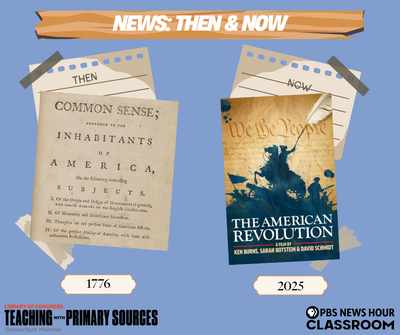
Then:
Decades before the American Revolution, the British had established newspapers in several major colonial cities. To help the British Parliament communicate with its North American constituents, newspapers freely shared news stories and announcements from Britain and throughout the colonies. This press network later became an important factor in unifying the colonies against Great Britain.
From the Library of Congress:
"The influential 'Join, or Die' cartoon first appeared in the May 9, 1754 issue of the Pennsylvania Gazette. It represented the British North American colonies as a severed snake cut into eight segments, with the New England region as its head. Benjamin Franklin published the cartoon along with an editorial urging colonial political unity in relation to conflict and negotiations with the French and the Haudenosaunee, or Iroquois Confederacy. ...The woodcut was widely reprinted. It became a popular iconic rallying cry for colonial unity leading into the American Revolution."
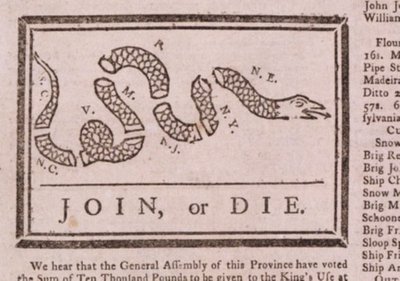
Benjamin Franklin's warning to the British colonies in America to "join, or die" during the Seven Years’ War, printed in the Pennsylvania Gazette, May 9, 1754. The cartoon reappeared in colonial newspapers during the Stamp Act crisis and the Revolutionary War. Library of Congress
One of the most famous and radical pamphleteers was Thomas Paine, an English-born immigrant who came to the colonies in 1774, just as things were heating up. Paine articulated the ideological justification for independence in publications like Common Sense and The Crisis. “By which the world may know that so far as we approve of monarchy,” the Paine wrote, “that in America The Law Is King."
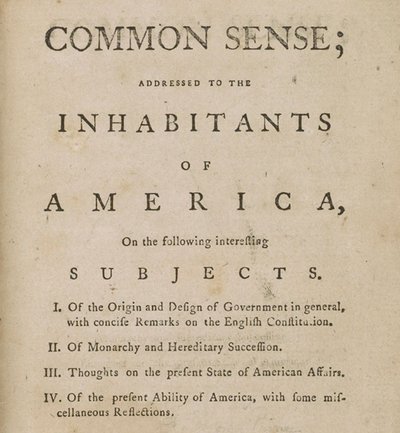
Thomas Paine’s Common Sense. Philadelphia, 1776. Library of Congress
Publisher Mary Katharine Goddard played a key role in the Revolutionary War era, editing impassioned articles, including her own account of the Battle of Bunker Hill on June 17, 1775. One letter to the editor stated that “a British parliament has no more right to tax an American in anything than they have the right to tax the people in Japan.” Goddard was most well known for printing the first copy of the Declaration of Independence, which featured the signers’ names—as well as her own—a bold move, as it was an act of treason for all involved.
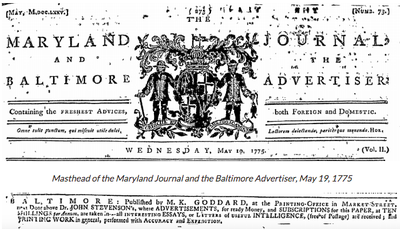
Maryland Journal and the Baltimore Advertiser, May 19, 1775. Edited to include both masthead on the top portion and publisher’s name on the bottom portion. Permission has been granted for educational purposes only by the New York Public Library.
Now:
"The American Revolution" from filmmakers Ken Burns and Sarah Botstein debuted on PBS (Public Broadcasting Service) on Nov. 16, 2025. Burns has been producing historical documentaries for PBS for more than four decades.

TODAY -- Pictured: Ken Burns on Thursday, February 13, 2020 -- (Photo by: Nathan Congleton/NBC/NBCU Photo Bank)
PBS produced the program A More Perfect Union featuring a conversation with Burns and Botstein, Yuval Levin of the American Enterprise Institute, Jeffrey Rosen of the National Constitution Center and Melody Barnes of UVA’s Karsh Institute of Democracy discussing how America's founding and values 250 years ago remain critical to democratic governance today.
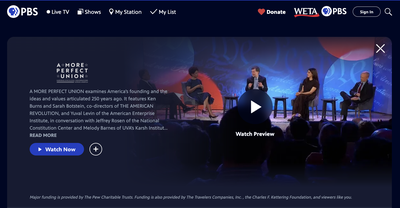
Screenshot: PBS WETA "A More Perfect Union" program from Nov. 4, 2025.
Watch the first 10-minutes of "The American Revolution."
Discussion questions:
- Do you think it is important to study the American Revolution? Why or why not? What has been your experience studying the American Revolution?
- How do primary sources help us to understand the importance of the American Revolution?
- Have you seen a modern-day documentary? What was it about? What strengths or weaknesses do you see with this form of media?
- Why do you think Burns and Botstein chose to start the documentary with Native American voices?
- If you would like to know more about the Great Law of Peace, or the Haudenosaunee (Iroquois) Constitution, check out News Hour Classroom's Journalism in Action's case study on the Haudenosaunee Confederacy.
Additional sources:
PBS News Hour Classroom is a member of the Library of Congress' Teaching with Primary Sources (TPS) Consortium. News Hour's TPS project, Journalism in Action, focuses on the role of journalism and civics in U.S. history. Sign up for the newsletter here.
Check out these additional sources on the American Revolution from TPS members:
- Digital Inquiry Group: Reading Like a Historian's Revolutionary War and Early U.S. lesson unit
- Citizen U Primary Source Nexus: American Revolution resources
- iCivics' DBQuest: America's Founding Preambles

Screenshot: PBS WETA American Revolution
And also check out these additional resources from Ken Burns' "The American Revolution":
- "The American Revolution" Engagement Resource Center from PBS WETA includes documentary overview, military history, Faith and Freedom in America and Spirit of Service: Civic Engagement sections, community events and more.
- More learning resources at PBS Learning Media including lessons on Life in the British Colonies; Causes of the American Revolution and Key Events and Figures of the Revolutionary Era and much more.
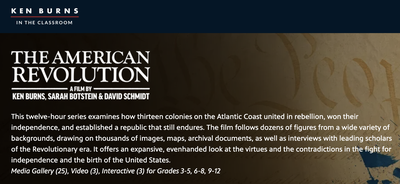
Credit: Screenshot of PBS Learning Media's "The American Revolution" Ken Burns Collection
Sign up to receive our weekly newsletter with Daily News Lessons and community events.
To provide feedback on News Hour Classroom's resources, including this lesson, click here.