NOTE: If you are short on time, watch the video and complete this See, Think, Wonder activity: What did you notice? What did the story make you think about? What would you want to learn more about?
SUMMARY
Lacrosse is a uniquely American sport. We spoke with sports reporter Scott Price about his book, "The American Game: History and Hope in the Country of Lacrosse," for our series, Race Matters.
View the transcript of the story.
News alternative: Check out recent segments from the News Hour, and choose the story you’re most interested in watching. You can make a Google doc copy of discussion questions that work for any of the stories here.
WARM-UP QUESTIONS
- When was Lacrosse first played?
- Who invented the game?
- What did the game of Lacrosse mean to the people who developed it, according to reporter Scott Price?
- Why did Oren Lyons found the "Iroquois Nationals" in 1983?
- Where will Lacrosse first be played as part of the Olympics?
ESSENTIAL QUESTIONS
- Why do you think the origin of the sport of Lacrosse is important, and why do you think a reporter chose to write a book about it?
- If you could add one sport to the Olympics that is not already there, what would it be?
Media literacy: Did you know about the origin of Lacrosse? If so, where did you learn about it? If not, why do you think you're learning about it for the first time?
NEWS: THEN & NOW
The News: Then & Now section of the Daily News Lessons allows students to see connections between current and past news events. The activity provides historical context using primary sources from the Library of Congress.
Then
This segment refers to the Iroquois tribes, also known as the Haudenosaunee. The Haudenosaunee were a federation of tribes including the Mohawk, Oneida, Cayuga, Seneca, Onondaga and later the Tuscarora, mostly based in what is now the U.S. northeast and centered in New York State (see map below).
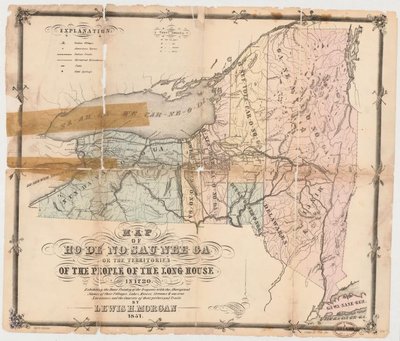
Map of Ho-De-No-Sau-Nee-Ga : or the territories of the People of the Long House in 1720. Courtesy of the Library of Congress
The Haudenosaunee have helped shape U.S. past and present in countless ways (beyond inventing Lacrosse), including helping to inspire the U.S. Constitution through the "Great Law of Peace."
The Great Law of Peace, or Gayanesshagowa (gaya-ness-HA-gowa), has its roots in the 12th century and formally organized the Iroquois Federation, splitting decision-making power among separate tribes.
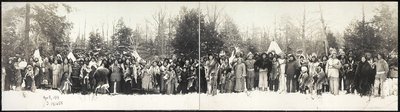
“Iroquois Indians.” United States, ca. 1914. Photograph by William Drennant. Courtesy of the Library of Congress
The Great Law of Peace's influence on the Constitution was acknowledged by the authors, including Benjamin Franklin. Popular accounts of the Law's influence have also been presented in the media for hundreds of years, such as in this article from the New York Sun in 1918.
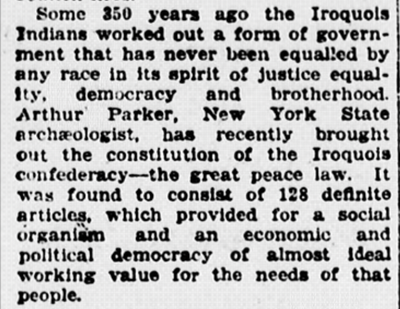
Excerpt from The Sun (New York [N.Y.]), February 17, 1918. Image courtesy of the Library of Congress
Still, many U.S. citizens know little about the impact of the document on the design of the U.S. federal system.
Learn more and answer questions at Journalism in Action, our site on the ways journalists (and storytellers) have shaped U.S. history.
Now
The United States will celebrate the 250th anniversary of the signing of the constitution in 2037 (the 250th anniversary of the Declaration of Independence will take place a little sooner in 2026). As the nation prepares to celebrate, how will it acknowledge the importance of the Great Law of Peace?
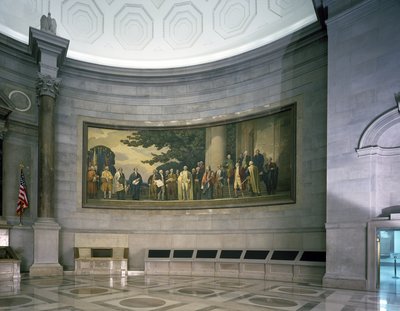
UNITED STATES - AUGUST 28: Barry Faulkner 1936 Constitution mural in the rotunda of the National Archives, Washington, D.C. (Photo by Carol M. Highsmith/Buyenlarge/Getty Images)
- Examine the image above, which is of the rotunda in the National Archives displaying an original copy of the the Constitution, as well as a mural of the signing. How might you add to this space to acknowledge the influence of the Great Law of Peace?
Additional resources
- Educator Guide on the Haudenosaunee from the Smithsonian
- Official website of the Haudenosaunee Confederacy
Sign up to receive our weekly newsletter with Daily News Lessons and community events.
To provide feedback on News Hour Classroom's resources, including this lesson, click here.