NOTE: If you are short on time, watch the video and complete this See, Think, Wonder activity: What did you notice? What did the story make you think about? What would you want to learn more about?
SUMMARY
According to the nonpartisan Congressional Budget Office, President Trump’s One Big Beautiful Bill Act will slash more than a trillion dollars in federal spending from Medicaid and the Children’s Health Insurance Program by 2034. Judy Woodruff examines what those cuts could mean for home and community care providers who serve adults with special needs. It's part of her series, Disability Reframed.
View the transcript of the story.
News alternative: Check out recent segments from the NewsHour, and choose the story you’re most interested in watching. You can make a Google doc copy of discussion questions that work for any of the stories here.
KEY TERMS
Medicaid — A federal health insurance program for children, the elderly, pregnant women, people who are disabled of any age and people with low incomes based on strict guidelines. Medicaid currently enrolls almost 77 million people in the U.S., or 1 in 5 Americans.
WARM-UP QUESTIONS
- Who is Sidikie Kamara, and what organization did he help build?
- How does Medicaid help people with disabilities attend Bright Center?
- What services does Medicaid provide? Who does Medicaid serve?
- Why are states going to lose billions in Medicaid funding by 2034?
- Where will Medicaid cuts affect people? Which states?
ESSENTIAL QUESTIONS
- Do you think benefit programs like Medicaid are a critical role of federal government? Explain.
- What would you advise to individuals and their families who will lose their health insurance as a result of the Medicaid cuts?
Media literacy: The story opens with anchor Amna Nawaz discussing how President Trump's One Big Beautiful Bill, passed by Congress, will slash more than one trillion dollars in federal spending from Medicaid and the Children's Health Insurance Program (CHIP) by 2034. In a later clip, we hear Robert F. Kennedy Jr., head of the Dept. of Health and Human Services (DHHS) say, "there are no cuts to Medicaid," something the Trump administration has said repeatedly.
- What should you do when you are watching a news story and hear conflicting or confusing information? What questions should you ask?
WHAT STUDENTS CAN DO
Learn more about what it is like to live with a disability in the United States. Choose another story in the Disability Reframed series to watch with a friend, family member or classmate. Why did you choose that particular story? What were your takeaways?
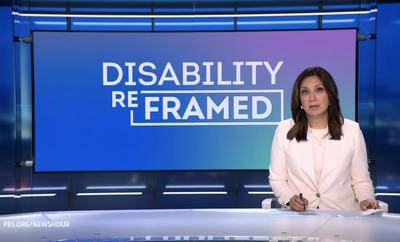
Credit: PBS News Hour screenshot of Amna Nawaz, PBS News Hour anchor, at the broadcast desk with a background graphic that reads "Disabilities Reframed."
You may also want to complete this Daily News Lesson: What is Medicaid? And what happens when we lose health care.
Sign up to receive our weekly newsletter with Daily News Lessons and community events.
To provide feedback on News Hour Classroom's resources, including this lesson, click here.