NOTE: If you are short on time, watch the video and complete this See, Think, Wonder activity: What did you notice? What did the story make you think about? What would you want to learn more about?
SUMMARY
In her new book, award-winning novelist Namwali Serpell takes on Toni Morrison, one of the towering figures in American literature. Serpell guides readers through Morrison’s extraordinary body of work, offering close readings that illuminate the depth of Morrison’s imagination, innovation and craft. Geoff Bennett sat down with Serpell to discuss "On Morrison."
View the transcript of the story.
News alternative: Check out recent segments from the News Hour, and choose the story you’re most interested in watching. You can make a Google doc copy of discussion questions that work for any of the stories here.
WARM-UP QUESTIONS
- Who was Toni Morrison?
- Why does Namwali Serpell say she didn't have the need to meet Morrison in person?
- What is "village literature" and why was it important to Morrison, according to Serpell?
- How and why was Morrison's writing underappreciated, according to her friend, writer Fran Lebowitz?
- When did Morrison write her novels?
ESSENTIAL QUESTIONS
- Toni Morrison used to tell her students I don't want to hear about your little selves; don't write about yourselves. I want you to write about other people, according to Serpell, paraphrasing. Why do you think Morrison told her students this? Do you agree? Explain.
- Have you read a book by Toni Morrison? Did you find her work difficult to understand? Do you agree with Serpell that the difficulty in Morrison's writing isn't a flaw but rather a demand placed on the reader? Have you found this with other writers you've enjoyed?
Media literacy: Namwali Serpell says: "It's a very tricky time to be willful, to be unreasonable, to be angry.
These are all ways in which Black women get relegated to the category of being difficult. But I think we have to have a faith and a commitment to the complexity of our experience, to the complexity of our lives, and to the incredible complexity of art itself.
How could you explore this part of the interview with Serpell more? How could you learn more how race and gender played a role in Morrison's literary works?
WHAT STUDENTS CAN DO
- Discuss the following quote by Namwali Serpell with a classmate, family member or neighbor and ask them if they had the chance to meet one of their favorite writers, singers or athletes would they want to do so and why?
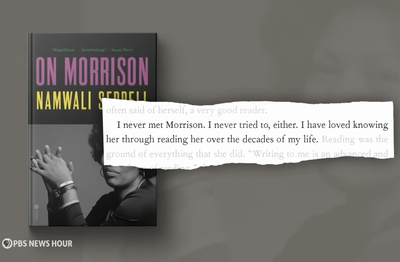
Credit: PBS News Hour screenshot of quote by Namwali Serpell
- What was the last book you read in which you immediately wanted to seek someone out and talk to them about it?
Sign up to receive our weekly newsletter with Daily News Lessons and community events.
To provide feedback on News Hour Classroom's resources, including this lesson, click here.