SUMMARY
To discuss the state of the war with Iran and the diplomatic efforts to end it, John Yang spoke with Ray Takeyh and Alan Eyre. Takeyh was a senior State Department adviser on Iran during the Obama administration and is now at the Council on Foreign Relations. Eyre was part of the Obama administration's negotiating team for the Iran nuclear deal and is now at the Middle East Institute.
View the transcript of the story.
NOTE: If you are short on time, watch the video and complete this See, Think, Wonder activity: What did you notice? What did the story make you think about? What would you want to learn more about?
News alternative: Check out recent segments from the News Hour, and choose the story you’re most interested in watching. You can make a Google doc copy of discussion questions that work for any of the stories here.
Dig deeper: To better understand the current conflict, read PBS News Hour Classroom's Backgrounder: History of Iran — Late 19th century to present, contributed by World History Association educators.
WARM-UP QUESTIONS
- How long will the new ceasefire be extended?
- Where are negotiations supposed to take place between the U.S. and Iran?
- Who was going to lead negotiations from the U.S. side?
- Why have talks stalled?
- What is the major sticking point in negotiations?
ESSENTIAL QUESTIONS
- What do you think is the most likely outcome from the current negotiations?
- How do you think the heads of other countries such as Pakistan might help push forward negotiations?
Media literacy: How do you think the producers of this segment were able to conduct interviews with people inside Iran? Why do you think they did so?
WHAT STUDENTS CAN DO
As a class, skim through the following article on the ways President Trump has given different projected timelines for negotiations. After reading, discuss as a class —
- Do you think President Trump is giving conflicting descriptions of negotiations as a strategy, or because of uncertainty? Why do you think so?
- Has reading this article changed your mind at all on how long the current period of negotiations (or longer conflict) is likely to last? Why do you think so?
A timeline of Trump's shifting statements about how long the Iran war will last
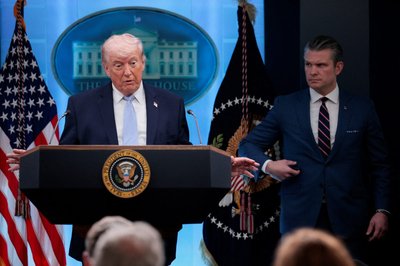
U.S. President Donald Trump holds a press conference accompanied by U.S. Secretary of Defense Pete Hegseth in the James S. Brady Press Briefing Room at the White House in Washington, D.C., U.S., April 6, 2026. REUTERS/Evan Vucci
Check out this CFR Education resource from the Council on Foreign Relations for more background in Iran and its decades of conflict with the United States.
Sign up to receive our weekly newsletter with Daily News Lessons and community events.
To provide feedback on News Hour Classroom's resources, including this lesson, click here.