SUMMARY
This year is becoming one of the worst for U.S. wildfires in at least a decade. There have been more fires and more acreage burned at this point in the year compared to any in the last ten. With fire seasons growing longer, early detection is critical. Special correspondent Ben Tracy of Climate Central reports on how AI is being used to spot fires faster. It's part of our series, Tipping Point.
View the transcript of the story.
NOTE: If you are short on time, watch the video and complete this See, Think, Wonder activity: What did you notice? What did the story make you think about? What would you want to learn more about?
News alternative: Check our recent segments from the News Hour, and choose the story you’re most interested in watching. You can make a Google doc copy of discussion questions that work for any of the stories here.
WARM-UP QUESTIONS
- How does 2026 compare to other recent years in terms of severity of wildfires in the U.S.?
- Who is Ben Tracy, and what is his background?
- What is FireSat, and how does it work?
- Why is artificial intelligence a critical part of the FireSat system?
- Why has the tool become a "have to have" according to fire rescue assistant chief Brendan Finnegan?
ESSENTIAL QUESTIONS
- Do you think it's a good idea to rely on AI to detect wildfires? What are some of the opportunities and some of the drawbacks of incorporating AI into detection systems?
- Can you think of any other uses for this technology that would help prevent natural disasters and protect communities?
Media literacy: The special correspondent for this segment is Ben Tracy of Climate Central. What can you find out about the organization Climate Central? What is its purpose? Why do you think Tracy was chosen to help tell the story in this segment?
WHAT STUDENTS CAN DO
Aside from close monitoring through FireSat, what are some other ways communities can prepare for wildfire season? First, read through the article, "Heat wave expected to bring record-breaking temps, heighten wildfire risk to parts of Western U.S." Then brainstorm ways that communities might prepare for wildfire risk. Some goals you might consider:
- Keep community members safe
- Prevent wildfires from starting in the first place
- Limit the damage to property
- Limit the damage to forests and ecosystems
- Plan to safely evacuate people in harm's way
After you've written down 2-3 ideas, come back together as a class and share. What ideas do you think might be easiest to try? What might require more resources, including funding?
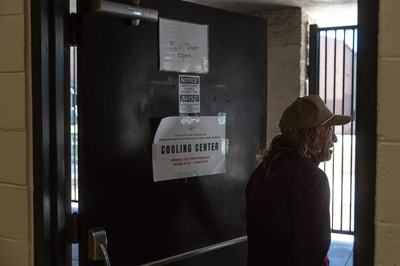
Daniel Aragonez leaves a cooling center in Los Angeles, Friday, July 31, 2026. (AP Photo/Jae C. Hong)
Sign up to receive our weekly newsletter with Daily News Lessons and community events.
To provide feedback on News Hour Classroom's resources, including this lesson, click here.